A colleague bites into a sandwich at lunch. Within minutes, their lips swell, their voice goes hoarse and they say their throat feels tight. Or a contractor is stung by a wasp on site, and suddenly they are pale, wheezing and dizzy. This is anaphylaxis, a severe, life threatening allergic reaction that can develop within minutes and needs treatment straight away.
In this guide, we explain in plain English how to recognise anaphylaxis at work, what to do and what not to do, based on advice from Anaphylaxis UK, Allergy UK, the NHS and the government’s medicines regulator. We also explain how it links to what you learn on an Emergency First Aid at Work (EFAW) course in London. If you want to see a real course page as you read, here is the Emergency First Aid at Work course in London.
Important Notes First
- This guide is general information, not medical advice or training. A trainer can show you how an adrenaline auto injector works on a training device.
- Anaphylaxis is always an emergency. Call 999 and say the word anaphylaxis.
- Adrenaline is the key treatment. It is given by an adrenaline auto injector, often called an AAI or by brand names such as EpiPen, Jext or Emerade.
- A workplace first aider does not give other medicines. You help the person use their own prescribed auto injector, or follow the call handler’s advice.
- This guide is mainly for adults. Children need extra care, so learn about them on a paediatric first aid course.
The Short Answer
If you think someone is having anaphylaxis, use their adrenaline auto injector straight away, into the outer middle part of the thigh, then call 999 and say it is anaphylaxis, pronounced ana fil ax is. Lie them flat with their legs raised, or let them sit up slightly if breathing is hard. Never let them stand or walk. Note the time. If there is no improvement after five minutes and a second auto injector is available, give a second dose. Stay with them, and be ready to start CPR if they become unresponsive and stop breathing normally. They must go to hospital, even if they seem better.
What Is Anaphylaxis?
Anaphylaxis is a severe, whole body allergic reaction. The immune system overreacts to something it wrongly sees as a threat, called an allergen, and releases chemicals that can cause blood vessels to widen, blood pressure to fall and airways to swell and narrow. Symptoms usually start within minutes of exposure, but can sometimes take longer.
Anaphylaxis is different from a mild allergic reaction, which might cause a rash or itchy eyes but does not affect breathing or circulation. The difficulty is that a reaction can start mildly and become severe quickly, so every allergic reaction needs watching.
Common Triggers
The most common triggers of anaphylaxis include:
- Foods. Peanuts, tree nuts, milk, eggs, fish, shellfish, sesame, soya and wheat are common.
- Insect stings. Especially wasps and bees.
- Medicines. Including some antibiotics and painkillers.
- Latex. For example, in gloves or balloons.
- Exercise, sometimes together with a food.
- Other causes, or no cause that can be found.
A person who has had a serious allergic reaction in the past is at higher risk, but anaphylaxis can also happen to someone for the first time.
Signs of Anaphylaxis
The signs can affect the skin, airway, breathing and circulation, and may include several at once. Allergy charities use the letters A, B and C to help people remember the serious ones.
A: Airway
- Swelling of the throat, tongue or upper airway.
- A hoarse voice.
- Difficulty swallowing.
- A feeling of tightness in the throat.
- Swelling of the lips, face or eyelids.
B: Breathing
- Sudden wheezing.
- Noisy breathing.
- Shortness of breath, or difficulty breathing.
- A persistent cough.
C: Circulation
- Feeling dizzy, faint or weak.
- Pale, clammy skin, or a floppy feeling.
- A fast pulse.
- Collapse or loss of consciousness.
- In severe cases, cardiac arrest.
Other signs that often accompany it
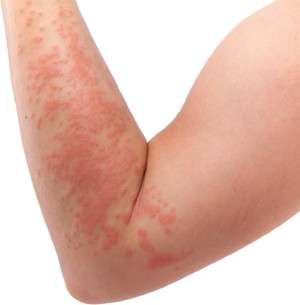
- Hives, an itchy raised rash, or red, flushed skin.
- Stomach pain, nausea or vomiting.
- A sense of something being very wrong, or a feeling of doom.
- Confusion.
Not everyone gets skin signs, and a lack of a rash does not rule out anaphylaxis. If someone with a known allergy has any of the serious signs of airway, breathing or circulation trouble after possible exposure, treat it as anaphylaxis.
Step by Step: First Aid for Anaphylaxis
Step 1: Recognise it and act immediately
If you see signs of a severe allergic reaction, especially after a known trigger, act at once. Time is critical. Do not wait to see if it settles, and do not wait for the rash to appear.
Step 2: Use the adrenaline auto injector without delay
Adrenaline is the main treatment for anaphylaxis, and the sooner it is given, the better. If the person has an auto injector, help them use it, or use it for them if they cannot.
- Follow the instructions on the device. Brands differ, so read the label. Many have pictures.
- Remove the safety cap or cover, as shown on the device.
- Hold the device firmly in your fist and place the tip against the outer middle part of the thigh. You can inject through clothing, so do not waste time undressing the person.
- Push firmly until you hear a click or the device activates, and hold it in place for the time the instructions say. Some devices need holding for about 3 seconds and others about 10 seconds, so follow your device.
- Remove the device, and gently massage the area if the instructions say so.
- Note the time of the injection. This is important for the ambulance crew.
- Keep the used device to hand to the paramedics.
Adrenaline auto injectors are designed for use by lay people, including people with no medical training. UK guidance says to use the auto injector at the first signs of a severe allergic reaction.
Step 3: Call 999 and say anaphylaxis
Call 999 immediately after using the auto injector, or ask someone to do it, and say that this is an emergency case of anaphylaxis, pronounced ana fil ax is. Give your exact location. If you are alone, some guidance says to use the auto injector first and then call. If you have a second person, one should call 999 while the other helps with the injection.
Call 999 even if the person seems to improve. NHS guidance on adrenaline auto injectors says that after every use, an ambulance should be called, even if symptoms are improving.
Step 4: Lie them flat with their legs raised
Help the person lie flat and raise their legs, which helps blood flow to the heart and vital organs. Allergy charities stress that the person should not be stood up, because standing can cause blood pressure to fall suddenly and may be fatal.
- If breathing is difficult, allow them to sit up slightly, supported, with their legs raised if possible.
- If they are unresponsive but breathing, place them in the recovery position.
- If they are pregnant, lie them on their left side.
- Do not let them stand or walk, even if they feel better.
Step 5: Stay with them, and watch the time
Stay with the person and keep them calm. Note when the adrenaline was given. Watch their breathing, colour and level of response.
Step 6: Give a second dose if there is no improvement
If the person does not improve, or gets worse, after five minutes, and another auto injector is available, a second dose can be given, ideally in the other thigh. NHS and government guidance describes the second dose as being given between 5 and 15 minutes after the first if there is no improvement. People at risk are advised to carry two auto injectors at all times for this reason. If a second device is not available, wait for the ambulance, and tell the call handler.
Step 7: Be ready for CPR
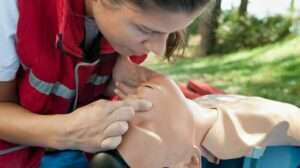
If the person becomes unresponsive and is not breathing normally, call 999 if you have not already, send for an AED and start CPR immediately. See our guide to adult CPR step by step.
Step 8: Hand over to the ambulance crew
Tell the paramedics what happened, what you think triggered it, when and how many doses of adrenaline were given, how the person responded and any known allergies or medical conditions. Give them the used auto injectors.
Step 9: Make sure they go to hospital
Any person who has had an allergic reaction that needed adrenaline should always go to hospital for observation and further treatment. Anaphylaxis can sometimes return after the first episode seems to have settled, so they should not be left or allowed to go home.
If Asthma Symptoms Are Present
Many people with severe allergies also have asthma, and wheezing can be part of anaphylaxis. Adrenaline remains the first treatment for anaphylaxis. Once it has been given, and the ambulance has been called, a person who also has asthma may use their blue reliever inhaler if they have one, as advised by the call handler. See our guide on how to help someone with an asthma attack.
What If There Is No Auto Injector?
If the person has no auto injector with them, call 999 straight away, say anaphylaxis, lay them flat with their legs raised, or sit them up slightly if breathing is hard, keep them still and follow the call handler’s advice. Ask the call handler about the best next steps, including whether it is appropriate to use another person’s auto injector in an emergency, and whether an auto injector can be fetched from elsewhere in the workplace. Do not give antihistamines instead of adrenaline. They may help mild symptoms but do not treat anaphylaxis.
In the UK, the law allows adrenaline to be given by anyone in an emergency to save a life, but this is not a reason to delay, and the call handler can advise. This is general information, not legal advice.
What Not to Do
- Do not wait to see if it gets better.
- Do not delay the injection to call 999 first, if you can do both, or if you are alone.
- Do not let the person stand up, sit up quickly or walk, even if they feel better.
- Do not rely on antihistamines or inhalers instead of adrenaline.
- Do not give food or drink.
- Do not leave the person alone.
- Do not send them home or let them go back to work, even if they recover quickly. They must be assessed in hospital.
- Do not assume a mild first reaction means that the next will be mild.
- Do not use an out of date or visibly damaged auto injector if another is available, but if it is the only one, an expired device is better than none, so ask the call handler.
Anaphylaxis or Something Else?
It can be hard to tell the difference, and you do not need to be certain.
- Anaphylaxis: sudden onset after a trigger, with airway, breathing or circulation problems, often with hives or swelling. Needs adrenaline and 999.
- A mild allergic reaction: a rash, itching or a runny nose, without breathing or circulation problems. Watch closely, because it can progress.
- An asthma attack: wheeze and breathlessness, usually with a history of asthma. Needs a blue inhaler, but if there are signs of anaphylaxis, give adrenaline.
- Fainting or panic: dizziness, tingling and fast breathing. If unsure, treat as a medical emergency.
- Choking: sudden difficulty breathing while eating, with an inability to speak or cough.
- Shock from other causes: pale, clammy skin and a fast pulse. See our guide on shock in first aid.
If you are unsure, call 999, and follow the call handler’s advice. If a person has a known severe allergy and symptoms after possible exposure, many allergy plans say if in doubt, give adrenaline.
Allergies at Work: What Employers Should Do
The Health and Safety (First Aid) Regulations 1981 require employers to provide adequate and appropriate first aid for their employees. Employers can go further in making workplaces safer for people with serious allergies.
- Know who is at risk. If an employee chooses to share that they have a severe allergy, ask about their allergy action plan and where they keep their auto injectors, with confidentiality.
- Keep auto injectors accessible. Staff should carry them with them, and not locked away.
- Train first aiders and colleagues. A short briefing on what to do reduces fear and delay.
- Have a clear emergency procedure. Who calls 999, who fetches the auto injectors, who stays with the person, who meets the ambulance.
- Control allergen risks. In canteens, kitchens and events, good practice on allergen information and cross contamination matters. Food businesses have legal duties to provide allergen information.
- Make reasonable adjustments. A severe allergy may count as a disability under the Equality Act 2010, depending on its effects, and employers may need to consider reasonable adjustments. This is general information, not legal advice. If you are unsure, check with Acas or a legal adviser.
- Consider the workplace environment. For example, latex gloves, stinging insects at outdoor sites and shared kitchens.
- Offer support afterwards. Anaphylaxis can be frightening for the person and for witnesses.
As a starting point for low hazard workplaces, HSE suggests at least one appointed person for fewer than 25 employees, at least one first aider trained in Emergency First Aid at Work for 25 to 50 employees, and at least one first aider trained in First Aid at Work for every 100 employees above that, or part of 100. Higher hazard workplaces need more. A first aid needs assessment gives the best answer.
Allergy Action Plans
People with serious allergies often have a personal allergy action plan, written with their doctor. It lists their allergens, their signs, their medicines and what to do. Plans from groups such as the British Society for Allergy and Clinical Immunology are available for different auto injector brands. If a colleague has shared a plan with you, learn where it is and follow it. It reflects their own medical advice.
After the Incident
Once the ambulance has gone, there is more to do.
- Record what happened. Date, time, trigger if known, signs, doses given and times, what help arrived.
- Report to your employer. Accidents and incidents should be recorded.
- Replace auto injectors. The person will need new ones, and should speak to their doctor.
- Look at the cause. Employers should review what happened and how to prevent it.
- Look after yourself and others. Witnessing anaphylaxis can be very upsetting. Talk to someone you trust, and use any support your employer offers.
- Respect confidentiality. Health information belongs to the person.
Where an EFAW Course Fits
An Emergency First Aid at Work course teaches the core skills that matter in an anaphylaxis emergency: assessing an incident safely, checking a casualty, calling for help clearly, managing an unresponsive casualty, using the recovery position, recognising and managing shock, giving CPR, using an AED if needed and handing over to the ambulance crew. You practise with a trainer and work through scenarios.
Some providers include adrenaline auto injector training as part of an EFAW course or as an add on, but it is not part of every course, and the longer First Aid at Work course covers a wider range of medical conditions, including anaphylaxis, in more detail. Exact content varies by awarding organisation and provider, so check the course outline and ask whether practice with a training auto injector is included.
EFAW is a one day, regulated Level 3 qualification, and HSE guidance says it should include at least six hours of training time, not counting breaks. The certificate is valid for three years. HSE strongly recommends a short refresher each year, although it is not a legal requirement.
Choosing a Good Course in London
Look for:
- A regulated Level 3 Award in Emergency First Aid at Work (RQF) or First Aid at Work from a recognised awarding organisation.
- The right training time: at least six hours for EFAW, and at least 18 hours for FAW, not counting breaks.
- Hands on practice, including the recovery position, CPR and, if offered, a training auto injector.
- A clear course outline, so you can see how anaphylaxis is covered.
- Practical assessment in person. HSE guidance expects this for a workplace first aider, so online only courses are generally not suitable.
- Qualified, experienced trainers.
- Small classes. Many awarding organisations set a maximum of around 12 learners per trainer.
- A clear certificate and a clear total price.
HSE stopped approving first aid training providers in 2013, so be cautious of any claim that a course is HSE approved. In London in 2026, public prices for a one day EFAW course commonly range from about £65 to £150 per person. One provider page, linked above, lists £89 per person for classroom training and £75 per person for groups of five or more, at the time of writing in October 2026, and First Aid at Work at around £200 to £300 per person. Prices change, so always confirm. You can review the Emergency First Aid at Work training page to see how one provider presents its courses, prices and booking options.
Why London Workplaces Should Be Ready
London has a huge number of restaurants, cafés, canteens, hotels, events and busy offices, with shared kitchens, catering and outdoor spaces, all places where allergens and insect stings are present. Roads and public transport can be congested, so ambulances may take time to arrive, and adrenaline given in the first minutes can be life saving. There is also a very large number of training providers and dates in London, and many deliver training at your workplace, which is a practical way to prepare a whole team.
Final Thoughts
So, how do you act on anaphylaxis at work? Recognise the signs of airway, breathing or circulation trouble after a possible trigger, use the person’s adrenaline auto injector straight away in the outer thigh, call 999 and say anaphylaxis, and lie them flat with their legs raised, sitting up slightly only if breathing is hard. Never let them stand. Note the time, give a second dose after five minutes if there is no improvement and a second device is available, and be ready for CPR. They must go to hospital, even if they recover.
Acting fast, and knowing what not to do, can save a life. When you are ready to learn with a trainer, take a look at the Emergency First Aid at Work course in London and choose a date that suits you.
Frequently Asked Questions
1. What should you do if someone has anaphylaxis at work?
Use their adrenaline auto injector straight away in the outer thigh, call 999 and say anaphylaxis, lie them flat with their legs raised, or sit them up slightly if breathing is hard, and never let them stand. Note the time, and give a second dose after five minutes if there is no improvement and a second device is available.
2. Where do you inject an adrenaline auto injector?
Into the outer middle part of the thigh, and you can inject through clothing. Hold the device in place for the time shown in its instructions, which differs between brands.
3. Why must the person lie flat and not stand up?
Lying flat with the legs raised helps blood flow to the heart and vital organs. Standing or sitting up suddenly can cause blood pressure to drop dangerously. If breathing is difficult, they can sit up slightly with support, but they should not stand or walk.
4. Do I still need to call 999 if the person feels better after adrenaline?
Yes. Always call 999 after using an adrenaline auto injector, even if symptoms improve. Anaphylaxis can return after the first episode seems to have settled, so the person must go to hospital for observation.
5. When should a second dose of adrenaline be given?
If there is no improvement, or the person gets worse, after five minutes, and another auto injector is available, a second dose can be given, ideally in the other thigh. UK guidance describes the second dose as being given 5 to 15 minutes after the first if needed.
6. What are the signs of anaphylaxis?
Swelling of the lips, face, tongue or throat, a hoarse voice, difficulty swallowing, wheezing, noisy or difficult breathing, dizziness, pale clammy skin, collapse, and often hives, stomach pain or vomiting. Any serious airway, breathing or circulation signs after a possible trigger should be treated as anaphylaxis.
7. Can I use antihistamines or an inhaler instead of adrenaline?
No. Adrenaline is the key treatment for anaphylaxis. Antihistamines may help mild symptoms, and an asthma inhaler may be used alongside adrenaline if the person also has asthma, but neither replaces adrenaline.
8. What if the person has no auto injector?
Call 999 straight away, say anaphylaxis, lie them flat with their legs raised, or sit them up slightly if breathing is hard, and follow the call handler’s advice, including whether another auto injector can be used or fetched.
9. Does an EFAW course cover anaphylaxis?
An Emergency First Aid at Work course covers assessing an incident, calling for help, the recovery position, shock, CPR and AED use. Some providers include auto injector practice, and the longer First Aid at Work course covers anaphylaxis in more detail. Check the course outline.
10. Where can I learn first aid in London?
You can book an Emergency First Aid at Work or First Aid at Work course through a training provider that offers the regulated qualification, either as a public course or as training at your workplace. Check the practical content, the awarding organisation, the class size and the total price before you book