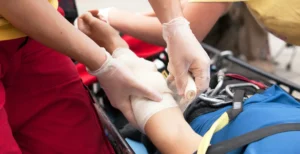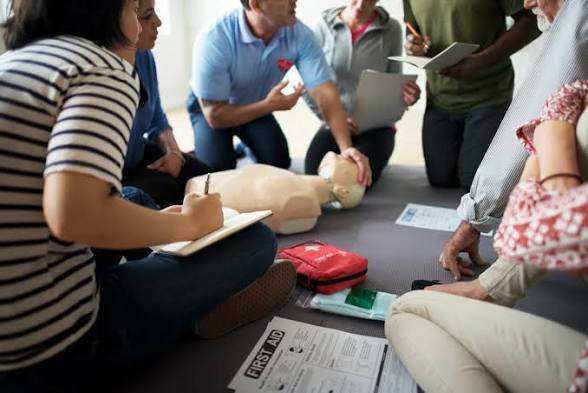
Say you are booking first aid training and you spot two options: Emergency First Aid at Work and Paediatric First Aid. Both sound sensible. Both teach life-saving skills. So which one do you need?
The answer depends on who you look after. If you mainly work with adults, the work-focused course is usually the better fit. If you care for babies and young children, you will most likely need paediatric first aid. And in some cases, you may need both. This guide explains the difference in plain English and helps you decide. If you want to see a real course page as you read, here is the Emergency First Aid at Work course in London.
The Short Answer
- Choose Emergency First Aid at Work (EFAW) if you are a first aider in a low-risk workplace and mainly help adults, such as staff, customers and visitors.
- Choose Paediatric First Aid if you look after babies and young children, for example in a nursery, as a childminder, a nanny or in a school nursery or reception class.
- Choose both if your workplace has adults and young children, or if you want wider cover.
The key point is that adults and children have different bodies and different needs. First aid for a baby or small child is not simply a smaller version of first aid for an adult.
What Is Emergency First Aid at Work?
EFAW is a one-day, regulated Level 3 first aid qualification built for workplaces. HSE guidance says it should include at least six hours of training time, not counting breaks. It prepares you to act as a first aider in a low-risk workplace.
On the course, you learn how to:
- Assess an incident and a casualty safely.
- Give adult CPR and use an AED.
- Place an unresponsive, breathing person in the recovery position.
- Help a choking adult.
- Control bleeding and spot shock.
- Treat minor injuries, such as small cuts, grazes and burns.
The certificate is valid for three years. HSE also recommends a short yearly refresher, although it is not a legal rule.
Because it is designed under the Health and Safety (First Aid) Regulations 1981, which cover employees at work, the course mainly focuses on adults.
What Is Paediatric First Aid?
Paediatric first aid is training for people who care for babies and children. It teaches how to deal with emergencies and common problems in young children, including how their bodies and risks are different from adults.
Typical topics include:
- Checking and helping an unresponsive baby or child.
- CPR for infants and children, which differs from adult CPR in technique.
- Choking in babies and children, with different back blows and thrusts.
- Common childhood illnesses and conditions, such as high temperatures, seizures, asthma and allergic reactions.
- Bleeding, burns and scalds, and head injuries.
- Bites, stings, poisoning and other injuries common in young children.
There are different lengths of course. A fuller course usually runs over about two days. Shorter emergency versions also exist. The right length depends on the rules that apply to your setting, so ask your provider and check the current guidance.
The Main Differences at a Glance
Who it is for
- EFAW: employees, first aiders and others in low risk workplaces.
- Paediatric: people caring for babies and young children.
Focus
- EFAW: adult emergencies at work.
- Paediatric: emergencies and common conditions in babies and children.
CPR and choking
- EFAW: adult techniques.
- Paediatric: infant and child techniques as well.
Length
- EFAW: one day, at least six hours of training time.
- Paediatric: varies, often about two days for the fuller course and shorter for emergency versions.
Typical settings
- EFAW: offices, shops, small businesses, schools (staff), gyms and similar.
- Paediatric: nurseries, childminders, nannies, preschools, school early years and similar.
Why EFAW Is Not Enough for Early Years Settings
In England, early years providers must follow the Early Years Foundation Stage (EYFS) rules. These say that settings must have staff with a suitable paediatric first aid qualification. Details, such as how many staff need the certificate, which course length applies and how it counts towards staff ratios, are set out in the statutory framework and guidance from the Department for Education and Ofsted. These rules can be updated, so always check the current version or ask your local authority or inspector.
The key point is that EFAW alone does not meet this requirement. It focuses on adults, and it does not cover the extra topics that babies and children need. If you work in a nursery or as a childminder, you should look for a paediatric first aid course that matches the EYFS requirements.
What About Schools and After-School Clubs?
Schools are a mixed case, so the right choice depends on the age group and the setting.
- Early years and reception classes in schools must follow the EYFS, so they need paediatric first aid trained staff.
- Primary and secondary schools often train many staff in EFAW or First Aid at Work to cover adults and older pupils. Some schools also train staff in paediatric first aid for younger classes and trips.
- After school clubs, holiday clubs and nurseries on school sites need to check which rules apply to them.
A simple approach is to ask: who are we caring for, and how old are they? Then match the course to the people.
What About Other Roles?
Nannies and au pairs
You are often alone with the child, so paediatric first aid is the better fit. Many parents and agencies ask for it.
Parents and grandparents
There is no legal duty, but paediatric first aid is a smart choice if you care for babies and young children. Many people also take it for peace of mind.
Sports coaches and youth leaders
If you work with children, paediatric first aid or a course that covers children is helpful. If you work with mixed ages, consider both.
Office, shop and gym workers
If your work involves adults, EFAW is usually the right choice. If your workplace welcomes children, for example a family café or soft play centre, think about extra training for child emergencies.
Teachers and school staff
Teachers often take EFAW or First Aid at Work. If you work with the youngest children, check whether paediatric first aid is needed too.
Do You Need Both?
Many workplaces do. Here are examples.
- A nursery with office staff. Paediatric first aid for those caring for children, and EFAW for managers and staff who cover adults and the wider site.
- A family café or soft play centre. EFAW for the adult emergencies that occur at work, plus paediatric first aid for staff who deal with children.
- A school. EFAW or First Aid at Work for general cover, and paediatric first aid for early years staff.
- A leisure centre or gym with a crèche. EFAW for staff, paediatric first aid for crèche workers.
Some providers also offer combined or blended courses that cover both adult and child first aid. The content and length differ, so check the course outline.
How Many First Aiders Do You Need?
For adult first aid at work, a first aid needs assessment gives the answer. As a starting point for low risk workplaces, HSE suggests at least one appointed person for fewer than 25 employees, at least one trained first aider for 25 to 50 employees, and at least one first aider per 50 employees above that. Higher-risk workplaces usually need the three-day First Aid at Work course.
For children, the number depends on the rules for your setting. Early years settings have their own requirements about how many paediatric first aiders must be on site and on trips. Check the current EYFS guidance.
How to Decide: A Simple Checklist
Answer these questions and see which side you land on.
- Who do I look after? Adults, children or both?
- How old are the children? Babies and toddlers need specific training.
- Do special rules apply? For example, EYFS rules for early years settings.
- Is my workplace low risk? If not, you may need First Aid at Work instead of EFAW.
- Will I be alone with children? If yes, paediatric training is especially valuable.
- What does my employer, insurer or regulator expect? Ask them directly.
If you tick adults only, choose EFAW. If you tick babies or young children, choose paediatric first aid. If you tick both, plan for both.
What Makes a Good Course in London?
Whichever course you pick, quality matters. Look for:
- A regulated qualification from a recognised awarding organisation.
- Experienced trainers with real emergency, medical or childcare backgrounds.
- Plenty of hands-on practice, including child and infant manikins for paediatric courses.
- Small groups and enough equipment for everyone.
- A clear timetable, content list and price.
- Friendly support before and after the course.
You can review the Emergency First Aid at Work training page to see how a course is described and what to check when comparing providers.
Certificates and Renewal
Both types of certificate usually last three years, though you should always check the details of your specific qualification. Put the expiry date in your diary and book your renewal early. For both adult and child first aid, skills like CPR fade without practice, so a short yearly refresher is a good habit. HSE recommends this for workplace first aiders, although it is not a legal rule.
Why Train in London?
London has thousands of workplaces, nurseries, schools and family businesses. It is also busy and crowded, so the first minutes of an emergency often depend on the people already there. There is a wide choice of training venues, and many providers can deliver on-site training for teams. That makes it easier to match the course to your setting.
Final Thoughts
Emergency First Aid at Work and paediatric first aid are both valuable, but they are built for different people. EFAW is the usual choice for adult first aiders in low risk workplaces. Paediatric first aid is the right choice for people who care for babies and young children, and early years settings have specific rules that EFAW does not meet. Many workplaces need both.
Start with who you look after, check the rules for your setting, and then pick the course that fits. When you are ready, take a look at the Emergency First Aid at Work course in London and choose a date that suits you.
Frequently Asked Questions
1. What is the difference between Emergency First Aid at Work and Paediatric First Aid?
Emergency First Aid at Work is a one-day course focused on adult emergencies in low risk workplaces. Paediatric first aid is designed for people who care for babies and young children and covers infant and child techniques and common childhood conditions.
2. Is Emergency First Aid at Work enough for a nursery?
No. Early years settings in England must follow the Early Years Foundation Stage rules, which require a suitable paediatric first aid qualification. EFAW mainly focuses on adults, so it does not meet that requirement on its own.
3. Does the EFAW course teach CPR for children?
The course mainly teaches adult CPR. Some providers may add a short section on children, but this is not the same as a full paediatric first aid course. Check the course outline.
4. Who needs paediatric first aid training?
Nursery and preschool staff, childminders, nannies, early years teachers and anyone caring for babies and young children benefit. Many parents and grandparents also take it for peace of mind.
5. Which course is better for teachers?
Many teachers take Emergency First Aid at Work or First Aid at Work to cover adults and older pupils. Early years and reception teachers may also need paediatric first aid. Check your school’s policy and the age of the children you teach.
6. Can I take both courses?
Yes. Many workplaces train staff in both, especially settings with adults and young children. Some providers offer combined courses, so ask about the content and length.
7. How long does each course take?
Emergency First Aid at Work is a one day course with at least six hours of training time, not counting breaks. Paediatric first aid varies, with fuller courses often lasting about two days and shorter emergency versions also available.
8. How long are the certificates valid?
Emergency First Aid at Work certificates are valid for three years, and paediatric certificates typically are too. Always check the details of your own qualification and plan your renewal early.
9. Do I need a first aid certificate to look after my own children?
No, there is no legal requirement for parents. But the training is useful if you care for babies or young children, and many people find it reassuring.
10. Where can I book an Emergency First Aid at Work course in London?
You can book through a training provider that offers the regulated qualification, either as a public course or as on site training for your team. If you also need paediatric first aid, ask the provider what is available and check the content matches your needs