
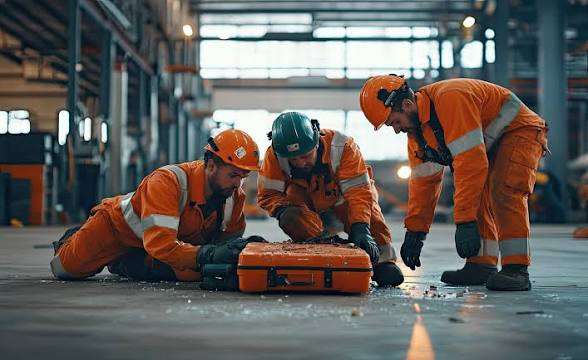
Most of us hope we never need first aid at work. But accidents and sudden illness do not ask for permission. A colleague slips on a wet floor. A customer chokes at lunch. Someone feels dizzy and faints near the stairs. In those first few minutes, what happens next can shape the whole outcome.
That is the heart of workplace first aid. In this guide, we explain what it is for, what the law says, how it helps people and businesses, and what you need to put in place. If you are thinking about training, you can see a real course page here: Emergency First Aid at Work course in London.
The Short Answer
The purpose of workplace first aid is to give quick, safe help to someone who is injured or suddenly ill at work, until they can be treated by a medical professional or recover fully. It matters because the first few minutes are often the most important, and because employers in the UK have a legal duty to make sure help is available.
What Is Workplace First Aid?
First aid is the immediate help given to a person with an injury or illness. In a workplace, it covers everything from a small cut to a life-threatening emergency such as cardiac arrest.
First aid is not medical treatment. A first aider is not a doctor or nurse. Their role is to act quickly, keep the person safe, call for professional help when needed and stay with the casualty until help arrives.
In practice, workplace first aid has three parts:
- People. Trained first aiders or appointed persons.
- Equipment. A suitably stocked first aid kit and, where relevant, an AED.
- Information. Clear notices and a plan, so everyone knows who to call and where to go.
The Three Core Aims of First Aid
First aid is often summed up in three simple goals, sometimes called the three Ps.
1. Preserve life
This comes first. If someone is not breathing, has severe bleeding or is choking, the priority is to keep them alive. Quick actions such as CPR, using a defibrillator or controlling bleeding can make a real difference before an ambulance arrives.
2. Prevent the situation from getting worse
A first aider protects the casualty from further harm. That might mean moving a hazard away, keeping the person still, stopping bleeding or placing them in the recovery position so their airway stays clear.
3. Promote recovery
Good first aid helps the person recover. It reduces pain and fear, treats minor injuries properly and helps prevent small problems turning into bigger ones.
What Does the Law Say?
In Great Britain, the Health and Safety (First Aid) Regulations 1981 require employers to provide adequate and appropriate equipment, facilities and people to give first aid to their employees if they are injured or become ill at work.
The law does not give a single list of what every workplace must have. Instead, employers must work out what is right for them by doing a first aid needs assessment. This looks at things such as:
- The type of work and how risky it is.
- The number of staff, and visitors or customers on site.
- Where the workplace is and how fast an ambulance could arrive.
- Shift patterns, lone working and out-of-hours work.
- Past accidents and illnesses.
- Any special needs of staff, such as known health conditions.
Based on the result, the employer decides how many first aiders to have, what level of training they need and what equipment to provide.
HSE guidance also says that, for low risk workplaces, an employer with fewer than 25 employees may need only an appointed person. For 25 to 50 employees, at least one trained first aider is suggested, and for larger workplaces, at least one first aider per 50 employees. Higher risk workplaces usually need more first aiders and the three-day First Aid at Work qualification.
Why Workplace First Aid Matters
Here are the main reasons first aid is worth taking seriously.
It can save lives
In a cardiac arrest, every minute without CPR and a defibrillator reduces the chance of survival. A trained colleague who acts quickly can keep someone alive until paramedics arrive. In a place as busy as London, where traffic can slow an ambulance, this can be vital.
It reduces the severity of injuries
Quick, correct first aid can stop bleeding, protect a burn or stabilise a broken limb. These small actions often reduce the pain, the time to recover and sometimes the long-term damage.
It protects people from avoidable harm
Some well-meant actions can make things worse, such as moving someone with a possible spinal injury or giving the wrong help to a choking person. Trained first aiders know what to do and what to avoid.
It meets your legal duty
Employers must provide adequate first aid. Having trained people, stocked kits and clear arrangements shows that you take this duty seriously and can reduce legal and insurance risks.
It builds confidence and trust
Staff feel safer when they know trained help is nearby. Customers and visitors notice well run workplaces too. A visible first aid arrangement shows that you value people.
It helps keep the business running
When someone is injured, work can stop. A calm, trained response limits disruption. Better first aid can also mean fewer lost working days after minor injuries.
It supports a safety culture
When people learn first aid, they often become more aware of risks. They spot hazards, report near misses and think about prevention. In this way, first aid supports safer behaviour across the whole workplace.
The Real-Life Side of First Aid
It helps to think about everyday scenarios.
- A kitchen worker burns a hand. A trained first aider cools the burn properly and decides whether it needs medical care.
- A colleague cuts themselves on broken glass. The first aider controls the bleeding, covers the wound and checks for shock.
- A visitor chokes in the canteen. Quick back blows and abdominal thrusts can clear the blockage.
- Someone collapses at their desk. A first aider checks for breathing, calls 999, starts CPR and sends for an AED.
- An employee has a fall. The first aider keeps them still, calls for help and prevents further injury.
None of these need a doctor in the first few minutes. They need a calm, trained person who knows what to do.
What Does a Workplace Need to Provide?
Under HSE guidance, a good first aid arrangement usually includes:
- Trained first aiders or appointed persons. Based on your needs assessment.
- A suitably stocked first aid kit. Easy to reach and checked regularly.
- Clear information. Staff should know who the first aiders are and how to reach them.
- A plan for absences. Cover for holidays, sickness, shifts and out-of-hours work.
- Record keeping. A simple way to record accidents and the first aid given.
- An AED, where suitable. Some workplaces keep one on site, and everyone should know where it is.
The first aid kit does not have to follow a fixed list under the law, but it should match your risks and the number of people on site.
What Training Do First Aiders Need?
The level of training depends on your needs assessment. The two most common qualifications for workplace first aiders are:
- Emergency First Aid at Work (EFAW). A one day course, with at least six hours of training time, not counting breaks. It suits many low-risk workplaces. You learn how to assess an incident, give adult CPR, use an AED, place someone in the recovery position, help a choking adult, control bleeding, manage shock and treat minor injuries.
- First Aid at Work (FAW). A three day course that covers more injuries and illnesses and suits higher-risk or larger workplaces.
Both are regulated Level 3 qualifications, and the certificates last three years. HSE recommends a short yearly refresher, although it is not a legal rule.
What First Aid Does Not Cover
It is also good to be clear about the limits.
- It is not full medical care. First aiders do not diagnose or treat in the way a clinician would.
- It does not cover every health issue. Mental health first aid, for example, is a separate type of training. Standard first aid courses focus on physical emergencies.
- It does not replace safety measures. Prevention comes first. Good risk assessments, safe equipment and training reduce the need for first aid in the first place.
- It may not meet special rules. Early years settings in England, for example, need paediatric first aid, which is different.
Understanding these limits helps employers plan properly and helps first aiders stay safe.
Common Myths About Workplace First Aid
- Myth: We have a first aid kit, so we are covered. Fact: A kit alone is not enough. You also need people who know how to use it.
- Myth: Only high risk workplaces need first aid. Fact: Every employer needs to provide first aid. Offices and shops have emergencies too.
- Myth: Calling 999 is all we need to do. Fact: Ambulances take time to arrive. What happens in the meantime matters.
- Myth: Anyone can just wing it. Fact: Untrained help can be hesitant or unsafe. Training builds confidence and accuracy.
- Myth: Training is a big burden. Fact: The Emergency First Aid at Work course takes one day and gives long-lasting value.
How to Get Started
If you are an employer or manager, here is a simple plan.
- Do a first aid needs assessment. Look at your risks, people and location.
- Decide how many first aiders you need. Include extra cover for absences.
- Choose the right course. For many low-risk workplaces, EFAW is a good fit.
- Pick a competent provider. Look for a regulated qualification and experienced trainers.
- Stock your first aid kit. Check it regularly.
- Tell your team. Make sure everyone knows who the first aiders are and where the kit is.
- Review often. Update your plan when your business changes.
You can look at the Emergency First Aid at Work training page to see how a course is described and what to compare when choosing a provider.
Why Train in London?
London is full of busy workplaces, from small studios to huge offices, and many people commute long distances. Roads and public transport can be crowded, so the people already on site are often the first help available. London also offers a wide choice of training venues, and many providers can deliver on site training for teams.
Final Thoughts
The purpose of workplace first aid is simple: to give quick, safe help when someone is hurt or suddenly unwell, until professional care takes over. It matters because those first minutes can change everything. It protects people, supports your legal duty and builds a safer, more confident workplace.
If you are ready to make sure your workplace is prepared, take a look at the Emergency First Aid at Work course in London and choose a date that suits you.
Frequently Asked Questions
1. What is the purpose of first aid at work?
The purpose is to give immediate help to someone who is injured or suddenly ill at work, until professional medical help arrives or the person recovers. It aims to preserve life, prevent the situation getting worse and promote recovery.
2. Why is first aid important in the workplace?
Quick, correct first aid can save lives, reduce the severity of injuries and prevent small problems becoming serious. It also helps employers meet their legal duty and builds staff confidence.
3. Is first aid at work a legal requirement in the UK?
Yes. The Health and Safety (First Aid) Regulations 1981 require employers to provide adequate and appropriate first aid equipment, facilities and people for their employees.
4. What do employers need to provide for first aid?
Employers should provide trained first aiders or an appointed person, a suitably stocked first aid kit, clear information about who to contact and arrangements to cover absences. The exact needs depend on a first aid needs assessment.
5. How many first aiders does a workplace need?
It depends on the risks. As a starting point for low-risk workplaces, HSE suggests at least one appointed person for fewer than 25 employees, at least one trained first aider for 25 to 50 employees and at least one per 50 employees above that. Higher risk workplaces need more.
6. What is the difference between a first aider and an appointed person?
An appointed person takes charge in an emergency, calls an ambulance and looks after the first aid kit, but has not had first aid training. A first aider has completed a first aid course and can give hands-on help.
7. What is a first aid needs assessment?
It is a review of your workplace that helps you decide what first aid you need. It looks at hazards, staff numbers, location, shift patterns, past incidents and special needs.
8. Which first aid course is best for a low-risk workplace?
For many low risk workplaces, the one-day Emergency First Aid at Work course is a common choice. Higher risk or larger workplaces usually need the three-day First Aid at Work course. Your needs assessment gives the answer.
9. How long does a workplace first aid certificate last?
Both Emergency First Aid at Work and First Aid at Work certificates are valid for three years. HSE recommends a short yearly refresher, but it is not a legal requirement.
10. Where can I book an Emergency First Aid at Work course in London?
You can book through a training provider that offers the regulated qualification, either as a public course or as on site training for your team. Check the trainer’s experience, the class size and what the price includes before you book.