You find a course advertised at £89. You book it. Then you remember the train fare, the lunch, the day off work and the fact that the certificate will need renewing in three years. Suddenly the real cost feels a little different from the number on the website.
That gap is what this guide is about. We look at the Emergency First Aid at Work (EFAW) course fees in London in 2026 from the learner’s point of view. You will see what the course fee covers, what extras can appear, how VAT changes the picture and how the total works out for an individual, a freelancer and a small team. If you want to see a real course page as you read, here is the Emergency First Aid at Work course in London.
The Short Answer
In London in 2026, most learners pay a course fee of roughly £65 to £150 for a regulated one day Emergency First Aid at Work course, depending on the provider, venue and whether VAT is included. On top of that, some learners also pay for travel, food, time away from work and, in some cases, extras such as certificate or resit fees.
For example, the provider page linked above lists the course at £89 per person for classroom training and £75 per person for groups of five or more, at the time of writing in October 2026. Always confirm the latest price with your provider.
Why the Advertised Price Is Not the Full Story
When you compare courses, it is tempting to look only at the biggest number on the page. But two courses with the same headline price can cost you very different amounts in total. Consider these questions.
- Does the price include VAT, or is it added later?
- Does it include the certificate and course materials?
- Is lunch provided, or do you need to buy your own?
- How much does it cost to get to the venue?
- Are you paying for a day away from paid work?
- What happens if you need a resit?
The rest of this guide goes through these one by one.
What We Saw in the London Market in 2026
To get a feel for the range, we looked at public London listings. They are not a complete survey, but they show how much prices can vary.
- Some listings were around £65 per person.
- Others were around £80.
- One listing showed £90 plus VAT, which came to £108.
- Some central London listings were higher, at £138 and £149.
The spread is wide. That does not mean the cheapest is poor or the dearest is excellent. It means you need to compare carefully.
Part One: The Course Fee
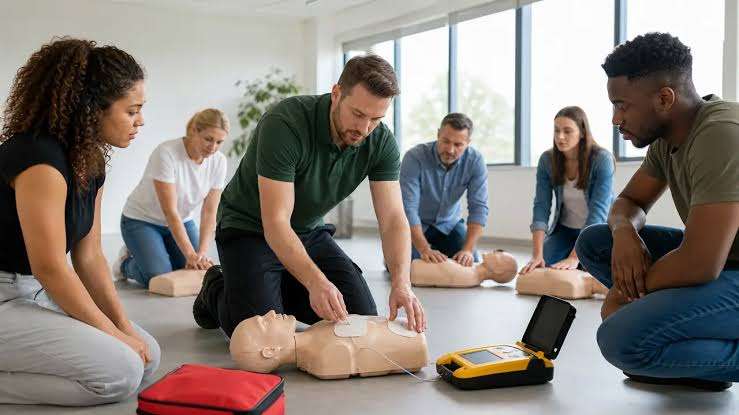
The course fee is the main cost. It usually pays for:
- A full day of training, with at least six hours of training time, according to HSE guidance.
- A qualified trainer.
- Equipment such as manikins, training defibrillators and dressings.
- The practical assessment.
- Your certificate.
The EFAW course is a regulated Level 3 qualification, and the certificate is valid for three years. A fair course fee should cover these basics without surprise extras.
Part Two: VAT
VAT is where many learners get caught out. Some providers show prices with VAT included. Others show a lower price and add VAT at checkout.
Here is the difference in practice. A course shown at £90 plus VAT costs £108 in total. A course shown at £89 with VAT included costs £89. If you only compare the headline numbers, the £90 course looks about the same, but it costs nearly £20 more.
Tip: always look for the words total, including VAT or plus VAT before you decide.
Part Three: Extras That Can Appear
Some providers keep the headline price low and charge for extras. Watch for:
- Booking fees. A small charge added at checkout.
- Certificate fees. An extra charge to receive your certificate, or a charge for a printed copy.
- Course materials. Notes or books that are not included.
- Refreshments and lunch. Sometimes included, sometimes not.
- Resit fees. Some providers offer a free resit if you do not pass first time, and others charge. The page we mentioned says resit opportunities are available at no extra cost, but terms can change, so confirm them.
- Rescheduling fees. A charge for moving your date at short notice.
A good provider lists what is included clearly. If it is not clear, ask before you pay.
Part Four: The Costs Outside the Course Fee
These are not paid to the provider, but they are real costs for learners.
Travel
Your return journey to the venue is part of your cost. In London, this can vary a lot depending on where you live and where the course is held. A venue close to home may save you more than a small difference in course fee.
Food and drink
If lunch is not included, you will need to bring or buy your own. Check this before the day.
Time away from work
If you are employed, your employer may pay you for the day. If you are self employed, a day on a course may mean a day without earnings. This can be the largest cost of all.
Childcare or other arrangements
Some learners need to arrange childcare or other cover for the day.
Worked Examples: What Learners Actually Pay
These examples are illustrations only. They use the £89 and £75 prices listed on the provider page, together with assumed amounts for other costs. Your own numbers will differ.
Example 1: An employee whose employer pays
This is the simplest case. If your employer pays the course fee and your wages for the day, your own cost may be close to zero. Many employers pay for first aid training because it is part of their duty under the Health and Safety (First Aid) Regulations 1981 to provide adequate and appropriate first aid. If you are not sure, ask your manager before you book.
Example 2: An individual paying for themselves
Imagine you pay the course fee yourself at £89. Suppose, as an assumption, that your return travel is £8 and you buy lunch for £8.
- Course fee: £89
- Travel: £8
- Lunch: £8
- Total: £105
Spread over the three year life of the certificate, that is about £35 a year.
Example 3: A freelancer or self employed person
A freelancer pays the same course fee, but also loses a day of work. Suppose, as an assumption, that a normal working day earns £150.
- Course fee: £89
- Lost earnings: £150
- Travel: £8
- Lunch: £8
- Total: £255
Over three years, that is about £85 a year. Many freelancers see this as a worthwhile investment, because some clients and venues ask for a valid first aid certificate.
Example 4: A small business training six staff
Using the group rate of £75 per person for groups of five or more, six staff cost:
- Course fees: 6 x £75 = £450
Now add the cost of staff time. Suppose, as an assumption, that a day of paid time costs the business £120 per person.
- Staff time: 6 x £120 = £720
- Total: £1,170
That is about £195 per person, or about £65 per person per year across the three year certificate. Training at your workplace could reduce travel costs, and quotes vary by provider.
Example 5: Why the cheapest advertised price is not always cheapest
Imagine two courses. Course A is advertised at £65 but is far from your home, so your travel is higher, and lunch is not included. Course B is advertised at £89, is close to you and includes everything. Depending on your travel and food costs, Course B may cost you the same or less in total. Always compare the total, not just the headline.
How Group Size Changes the Fee
Group size is one of the biggest ways to bring the fee down. Providers often offer a lower price per person for groups, for example from five people. The page we mentioned lists £75 per person for groups of five or more, compared with £89 for an individual. For a team, that is a saving of £14 per person on the course fee alone.
Training at your workplace is usually quoted based on group size and location. It may also reduce other costs, such as staff travel.
EFAW vs First Aid at Work: Fees Compared
The longer First Aid at Work (FAW) course costs more, because it takes three days and covers more topics. The page we mentioned lists FAW at around £200 to £300. Other providers vary.
The right course depends on your workplace, not on the price. As a starting point for low hazard workplaces, HSE suggests at least one appointed person for fewer than 25 employees, at least one first aider trained in Emergency First Aid at Work for 25 to 50 employees, and at least one first aider trained in First Aid at Work for every 100 employees above that, or part of 100. Higher hazard workplaces need more. A first aid needs assessment gives the best answer.
The Cost of Renewing
Your certificate is valid for three years. After that, you need to retake the course, so the fee comes round again. HSE also recommends a short yearly refresher to keep skills fresh, although it is not a legal rule. Prices for refreshers differ between providers. When you budget, think of the course fee as a cost that repeats every three years, with an optional smaller cost each year.
When a Low Fee Is a Warning Sign
A low fee is not automatically a problem, but it is worth a closer look. Check these points.
- Is it a regulated Level 3 Award in Emergency First Aid at Work (RQF)?
- Is there at least six hours of training time, not counting breaks?
- Is there real practical training and assessment? HSE guidance expects this for a workplace first aider.
- Is the trainer qualified and the group a sensible size?
- Is there a named awarding organisation?
- Is the course described as HSE approved? HSE stopped approving training providers in 2013, so this is a warning sign.
If a course fails these checks, a low fee is not a bargain, because you may need to pay for another course.
Ways to Pay Less Without Losing Quality
Here are sensible ways to reduce what you pay.
- Ask your employer to pay. Training first aiders is part of their duty.
- Book as a group. Colleagues, friends or neighbours can share a group rate.
- Choose a venue close to you. This can save travel time and money.
- Compare totals, not headlines. Include VAT, extras and travel.
- Ask about discounts. Some providers offer rates for charities, volunteers or early bookings.
- Check what is included. A slightly higher price with lunch, materials and a free resit can be better value.
- Plan your renewal early. This avoids rushing and paying more for urgent bookings.
Questions to Ask Before You Pay
Use this short list when you contact a provider.
- What is the total price per person, including VAT?
- What is included in the price?
- Are there any booking, certificate or other fees?
- Is there a free resit if I do not pass?
- What is the cancellation and rescheduling policy?
- Is there a group rate, and from how many people?
- Is lunch included?
- Is it a regulated Level 3 qualification, and who is the awarding organisation?
You can review the Emergency First Aid at Work training page to see how one provider presents its price and what it says is included.
Is It Worth the Money?
For most learners, yes. For a modest sum, you gain practical skills that can help in a serious emergency, a certificate valid for three years and, for employers, a way to meet the duty to provide adequate first aid. A good Emergency First Aid at Work course teaches you how to assess an incident safely, give adult CPR, use an AED, place someone in the recovery position, help a choking adult, control serious bleeding, manage shock and treat minor injuries.
Why London Fees Vary
London has a very large number of providers and venues, from small independent trainers to large training companies. Venue costs, trainer costs and competition all shape the fee. That is why you can see a wide spread of prices. Many providers also deliver training at your workplace, which can be good value for teams. The key is to compare like with like and look at the total cost.
Final Thoughts
So, what do learners actually pay for an EFAW course in London in 2026? The course fee is usually somewhere between about £65 and £150, with some providers adding VAT. One provider page lists £89 per person and £75 per person for groups of five or more. On top of that, you may pay for travel, food and time away from work, and you will need to budget for renewal in three years.
Compare the total, not just the headline, and make sure the course is a regulated qualification with real practical training. When you are ready, take a look at the Emergency First Aid at Work course in London and choose a date that suits you.
Frequently Asked Questions
1. How much do learners pay for an EFAW course in London in 2026?
Most learners pay a course fee of roughly £65 to £150, depending on the provider, venue and whether VAT is included. One provider page lists £89 per person. Always confirm the current price before you book.
2. Is VAT included in EFAW course fees?
It depends on the provider. Some include VAT in the price they show, while others add it at checkout. A course advertised at £90 plus VAT costs £108 in total, so always check the final amount.
3. What is usually included in the course fee?
A good fee normally covers a full day of training, a qualified trainer, equipment, the practical assessment and your certificate. Some also include materials, refreshments and a free resit. Ask your provider to confirm.
4. Are there hidden costs with first aid courses?
Possible extra costs include booking fees, certificate fees, materials, lunch, rescheduling fees and resit fees. You may also pay for travel and time away from work. A good provider lists what is included clearly.
5. How much cheaper is a group booking?
Many providers offer a lower price per person for groups, often from around five people. One provider lists £75 per person for groups of five or more, compared with £89 for an individual. Ask for a written quote.
6. How much does it really cost a freelancer?
A freelancer pays the course fee and may also lose a day of earnings, plus travel and food. The total depends on your usual daily income, so work it out for your own situation. Many see the cost as an investment, because clients may ask for a valid certificate.
7. Does the employer have to pay for first aid training?
Employers must provide adequate and appropriate first aid under the Health and Safety (First Aid) Regulations 1981, which includes making sure first aiders are properly trained. Many employers pay for the course. Check your own employer’s policy before you book.
8. How much does it cost to renew an EFAW certificate?
The certificate is valid for three years, and you need to retake the course to renew it, so you pay the course fee again. HSE also recommends a short yearly refresher, although it is not a legal requirement. Prices vary by provider.
9. Is a cheap EFAW course worth it?
It can be, if it is a regulated Level 3 qualification with at least six hours of training time, a qualified trainer and real practical assessment. Be careful of very cheap online only offers, which do not meet HSE expectations for a workplace first aider.
10. Where can I book an Emergency First Aid at Work course in London?
You can book through a training provider that offers the regulated qualification, either as a public course or as training at your workplace. Compare the total price, what is included and the awarding organisation before you book.