A glass breaks in a restaurant kitchen. A box cutter slips in a stockroom. A colleague trips on a building site and gashes their leg. Blood is everywhere, the person is frightened and everyone looks at you. What do you do first?
Severe bleeding is one of the most frightening situations a workplace first aider can face, but it is also one of the most treatable. In this guide, we explain in plain English how to give first aid for severe bleeding, and what you learn about it on an Emergency First Aid at Work (EFAW) course in London. If you want to see a real course page as you read, here is the Emergency First Aid at Work course in London.
Important Notes First
- This guide is general information, not training. A trainer can show you how to apply pads and bandages and check your technique.
- Call 999 for severe bleeding. If you are alone, put the phone on speaker so you can follow the call handler’s advice while you treat.
- Protect yourself. Blood can carry infections. Wear disposable gloves if you can, and avoid contact with blood.
- This guide is mainly for adults. Children and babies need extra care, so learn about them on a paediatric first aid course.
The Short Answer
For severe bleeding, call 999, put a clean pad or dressing firmly on the wound and press hard and steadily. Keep pressing, secure the pad with a bandage, add more pads if blood soaks through, keep the person lying down and warm, and watch for signs of shock until help arrives. If something is stuck in the wound, do not remove it, and press on either side of it instead.
How to Recognise Severe Bleeding
Not every bleed is an emergency. A small cut can bleed a lot for a moment and then settle. Severe bleeding is different. Signs include:
- Blood that is spurting or pumping out.
- Blood that is pouring out and does not slow down with pressure.
- Blood soaking quickly through a dressing, or a large pool of blood.
- A deep or large wound, or a wound that gapes open.
- A wound with something stuck in it.
- A partly or fully severed body part.
- Signs of shock, such as pale, cold, clammy skin, a fast pulse, dizziness, confusion or feeling faint.
St John Ambulance describes a life threatening bleed as extreme bleeding likely to cause death in minutes, and says that a severe bleed is likely to be slowed with pressure and usual bleeding treatments, whereas a life threatening bleed will not. When you cannot tell, treat it as serious and call 999.
Step by Step: First Aid for Severe Bleeding
Step 1: Make the scene safe and protect yourself
Look around for dangers, such as broken glass, machinery, traffic or sharp objects. If it is not safe, make it safe or wait for help. Put on disposable gloves if you have them. If you have a cut of your own, cover it first. After the incident, wash your hands thoroughly.
Step 2: Call 999
Call 999, or ask someone to, and tell the call handler where the wound is and how bad the bleeding is. If you are on your own, use the speaker so that your hands are free. The call handler will give advice as you go. Send someone to fetch the first aid kit, and if there is one, an AED. Send someone to meet the ambulance.
Step 3: Help the person lie down
Sit or lie the person down, ideally on a clean surface. This lowers the risk of fainting and falling, and it is the safest position if they go into shock. Reassure them. Talking calmly helps.
Step 4: Check the wound and look for anything stuck in it
Expose the wound by removing or cutting away clothing if you need to. Look for any object stuck in the wound. If there is one, do not remove it, because it may be acting as a plug and reducing the bleeding. Take care not to press directly on the object.
Step 5: Apply firm direct pressure
This is the key step.
- Place a clean pad, dressing, or cloth directly over the wound. If you have nothing else, use your gloved hand, or a piece of clean clothing.
- Press down firmly and steadily with the flat of your hand or fingers. Keep pressing. Do not keep lifting the pad to check, because that disrupts the clot.
- If you are using a hand, press harder than you think you need to. Real pressure is needed to slow serious bleeding.
- Keep up the pressure until help arrives, or until the bleeding stops and the dressing is firmly secured.
Step 6: If something is embedded, press on either side
If an object is stuck in the wound, do not pull it out. Instead, press firmly on either side of the object to push the edges of the wound together. Place pads around the object, and build up padding so that you can bandage without pressing on it.
Step 7: Secure the dressing with a bandage
Once the bleeding has slowed, or you need your hands for something else, bandage the pad firmly in place. Wrap the bandage over the pad and around the limb, and tie it off. It should be firm enough to maintain pressure, but not so tight that it stops circulation. For a limb, check below the bandage for warmth, colour and feeling, and loosen slightly if the fingers or toes turn pale, blue or cold.
Step 8: If blood soaks through, add more
If blood soaks through the dressing, do not remove it. Add more pads and a fresh bandage on top, and keep pressing. Removing the first pad can disturb any clotting and restart the bleeding.
Step 9: Raise and support the injured part if appropriate
If the wound is on an arm or leg and there is no sign of a broken bone, raising the injured part can help slow bleeding. Support it comfortably. Do not move it if it hurts a lot or looks broken.
Step 10: Treat for shock and keep monitoring
Severe bleeding can lead to shock, which is a life threatening condition where the body is not getting enough blood flow. Signs include pale, cold, clammy skin, a fast pulse, fast breathing, dizziness, confusion, thirst and sometimes loss of consciousness. To help:
- Keep the person lying down.
- If there is no sign of leg injury, you can raise their legs to help blood flow to the vital organs, but do not delay stopping the bleeding to do this.
- Keep them warm with a coat or blanket.
- Loosen tight clothing.
- Do not give them anything to eat or drink.
- Keep checking their responsiveness and breathing.
- Be ready to start CPR if they become unresponsive and stop breathing normally.
Step 11: Hand over to the ambulance crew
When paramedics arrive, tell them what happened, where the wound is, how long it has been bleeding, how much blood you think was lost, what you did and when, any object stuck in the wound and anything you know about medical conditions or medication, such as blood thinners. Then let them take over.
Life Threatening Bleeding: Escalating When Pressure Is Not Enough
Most bleeding can be controlled with firm direct pressure. But some bleeding, called life threatening or catastrophic bleeding, will not stop that way. Treat it as life threatening if:
- Blood is pumping or spurting from the wound.
- The bleeding is not slowed by firm direct pressure.
- The person is soaking through dressing after dressing.
- The wound is on a limb and the person is becoming pale, weak or confused.
In these cases:
- Call 999 straight away if you have not already, and follow the call handler’s instructions carefully.
- Keep pressing hard. Add more pads rather than removing soaked ones.
- Be aware of other tools. For life threatening bleeding from a limb, a tourniquet may be used. St John Ambulance describes a tourniquet being placed around the limb, and says that once it is applied it should not be loosened, because the bleeding will start again. A haemostatic dressing, which helps blood to clot, can be used on a life threatening wound to the head, neck, chest or abdomen.
- Use tourniquets and haemostatic dressings only as taught, or as instructed. Tourniquets are used as a last resort to save a life, and if applied incorrectly they can cause further injury. UK guidance says that an improvised tourniquet should only be made on the instruction of the ambulance call handler, if no proper tourniquet is available. Many workplaces do not carry these items, and not every first aid course covers them in depth, so ask your provider what their course includes.
The key message is simple: if direct pressure is not working, keep the call handler on the line, keep pressing and follow their advice.
Special Situations
An object stuck in the wound
Do not remove it. Press either side, pad around it and bandage without pressing on it. Call 999.
A head wound
Head wounds can bleed heavily, because the scalp has a rich blood supply. Apply pressure with a pad unless there is a suspected skull fracture or an object embedded, in which case press around the edges. Call 999 for a significant head injury, and watch for drowsiness, vomiting, confusion or unconsciousness. If there is clear fluid or blood coming from an ear or nose after a head injury, do not plug it.
An abdominal wound
Do not press directly if organs are protruding. Cover with a clean, non fluffy dressing, such as cling film or a clean cloth, call 999 and keep the person still and warm. Do not push anything back in.
A nosebleed
A nosebleed is usually minor. Sit the person up, leaning forward, and pinch the soft part of the nose for about 10 to 15 minutes. If it lasts longer, or follows a head injury, or the person is on blood thinners, seek medical advice or call 999.
A severed or partly severed body part
Control the bleeding with firm pressure, and call 999. If a part has been fully severed, wrap it in clean non fluffy material, place it in a plastic bag and keep it cool, but not in direct contact with ice, and send it with the person to hospital. Follow the call handler’s advice.
A minor cut
For a minor cut or graze, wash your hands, put on gloves, rinse the wound under clean running water, press with a clean pad until the bleeding stops and cover with a plaster or dressing. If the bleeding does not slow after 10 minutes, or the wound is deep, large, dirty or caused by a rusty or dirty object, seek medical advice.
Possible internal bleeding
Internal bleeding is not visible, but can be serious, for example after a heavy fall or a blow to the body. Signs include pale, cold, clammy skin, a fast pulse, dizziness, bruising, pain or swelling, and sometimes vomiting blood or blood in urine or stools. Call 999, lay the person down, keep them warm and treat for shock.
What Not to Do
- Do not remove an object stuck in a wound.
- Do not remove a soaked dressing. Add another on top.
- Do not keep lifting the dressing to check.
- Do not use a tourniquet unless you are trained or instructed, and do not loosen one once applied.
- Do not give food or drink to a person who is badly injured.
- Do not wash a deep wound or probe it.
- Do not move a person with a suspected spinal injury unless there is danger.
- Do not put yourself at risk. Wear gloves, and avoid contact with blood.
- Do not delay calling 999.
After the Incident
Once the ambulance has gone, there are still jobs to do.
- Wash your hands thoroughly. And change out of heavily stained clothing if needed.
- If you were exposed to blood on broken skin, in your eyes or mouth, or by a needle stick, wash the area thoroughly with soap and water, rinse eyes and mouth with water, and seek medical advice promptly. Report it to your employer.
- Deal with blood spills safely. Follow your employer’s procedure, using gloves and appropriate disposal, and clean and disinfect the area.
- Record the incident. Date, time, place, what happened, what you did and what help was arranged.
- Report it to your employer. Some serious injuries must be reported to the authorities under the Reporting of Injuries, Diseases and Dangerous Occurrences Regulations, often called RIDDOR, and your employer decides what is needed.
- Restock the first aid kit.
- Look after yourself and others. Seeing a serious injury can be upsetting. Talk to someone you trust, and use any support your employer offers.
What You Learn on an EFAW Course
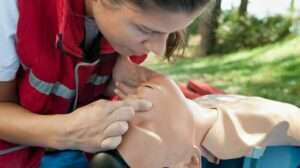
On an Emergency First Aid at Work course, you practise controlling serious bleeding in a hands on way.
- A trainer demonstrates. You see how to apply a pad and a bandage.
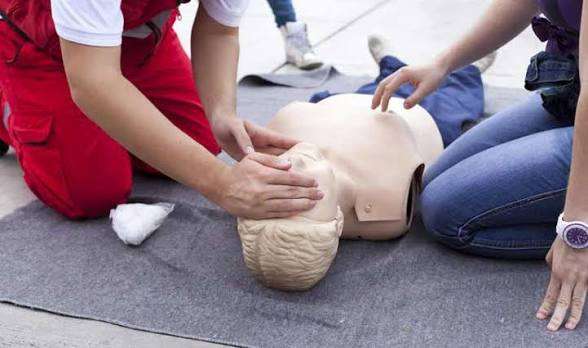
- You practise with a partner or a training model. You apply firm pressure, secure dressings and check circulation.
- You learn what to do with embedded objects. And how to pad around them.
- You learn about shock. How to recognise it and what to do.
- You practise calling for help. And describing the injury to a call handler.
- You learn when to escalate. And when bleeding is life threatening.
- You work through scenarios. For example, a colleague cutting their arm in the kitchen.
- You are assessed in person. A qualified trainer watches your skills.
The course is a one day, regulated Level 3 qualification, and HSE guidance says it should include at least six hours of training time, not counting breaks. You also learn how to assess an incident safely, give adult CPR, use an AED, place someone in the recovery position, help a choking adult and treat minor injuries such as small burns and cuts. The certificate is valid for three years. The longer First Aid at Work course covers a wider range of injuries in more detail.
What Workplaces Should Have Ready
The Health and Safety (First Aid) Regulations 1981 require employers to provide adequate and appropriate first aid for their employees. For bleeding, preparation matters.
- Trained first aiders on every shift. As a starting point for low hazard workplaces, HSE suggests at least one appointed person for fewer than 25 employees, at least one first aider trained in Emergency First Aid at Work for 25 to 50 employees, and at least one first aider trained in First Aid at Work for every 100 employees above that, or part of 100. Higher hazard workplaces need more. A first aid needs assessment gives the best answer.
- A well stocked first aid kit. The contents depend on your needs assessment, but should include disposable gloves and dressings. Workplaces with sharp tools or machinery may need larger dressings.
- Easy access to the kit. Kits should be clearly marked and quick to reach, including in kitchens, workshops and vehicles.
- A clear procedure. Who calls 999, who stays with the casualty, who meets the ambulance.
- Spill kits and disposal arrangements. For cleaning up blood safely.
- Prevention. Guards on machinery, safe knife handling, good housekeeping and the right protective equipment.
- Regular refreshers. HSE strongly recommends them, although they are not a legal requirement.
Choosing a Good Course in London
Look for:
- A regulated Level 3 Award in Emergency First Aid at Work (RQF) from a recognised awarding organisation.
- At least six hours of training time, not counting breaks.
- Hands on practice with dressings and bandages.
- Practical assessment in person. HSE guidance expects this for a workplace first aider, so online only courses are generally not suitable.
- Qualified, experienced trainers.
- Small classes. Many awarding organisations set a maximum of around 12 learners per trainer.
- A clear course outline, including what is covered about bleeding and whether tourniquets are included.
- A clear certificate and a clear total price.
HSE stopped approving first aid training providers in 2013, so be cautious of any claim that a course is HSE approved. In London in 2026, public prices for a one day course commonly range from about £65 to £150 per person. One provider page, linked above, lists £89 per person for classroom training and £75 per person for groups of five or more, at the time of writing in October 2026. Prices change, so always confirm. You can review the Emergency First Aid at Work training page to see how one provider presents its course, price and booking options.
Why London Workplaces Need This Skill
London has many kitchens, restaurants, workshops, building sites and busy offices, and many workplaces are small, tightly packed and spread over several floors. Roads and public transport can be crowded, so ambulances may take time to arrive, and the minutes before they do can decide how much blood is lost. There is also a very large number of training providers and dates in London, and many deliver training at your workplace, which is a practical way to teach a whole team to control bleeding together.
Final Thoughts
So, what is the first aid for severe bleeding? Call 999, protect yourself with gloves, lay the person down and press firmly on the wound with a clean pad. Keep pressing, bandage the pad in place, add more pads if blood soaks through, never remove an object stuck in the wound and press on either side of it instead. Keep the person warm, treat for shock, and hand over clearly to the ambulance crew. If bleeding is life threatening and pressure is not working, keep the call handler on the line and follow their advice.
The steps are simple, but practice makes them natural. When you are ready to learn with a trainer, take a look at the Emergency First Aid at Work course in London and choose a date that suits you.
Frequently Asked Questions
1. What is the first aid for severe bleeding?
Call 999, put on gloves if you can, lay the person down, press a clean pad firmly on the wound, keep pressing, bandage the pad in place, add more pads if blood soaks through and watch for shock. If an object is stuck in the wound, do not remove it, and press on either side instead.
2. Should I remove a soaked dressing?
No. If blood soaks through, do not remove the dressing. Add more pads and a fresh bandage on top, and keep pressing. Removing it can disturb any clotting and restart the bleeding.
3. What should I do if something is stuck in the wound?
Do not pull it out, because it may be reducing the bleeding. Press firmly on either side of the object to push the edges of the wound together, place pads around it and bandage without pressing on it. Call 999.
4. When should I call 999 for bleeding?
For severe bleeding, such as spurting or pouring blood, bleeding that does not slow with pressure, a deep or large wound, an object stuck in the wound, a severed body part or any bleeding with signs of shock. If you are not sure, call.
5. What are the signs of shock from blood loss?
Pale, cold, clammy skin, a fast pulse, fast breathing, dizziness, confusion, thirst and feeling faint. Lay the person down, keep them warm, do not give food or drink and watch their breathing and responsiveness.
6. Should I use a tourniquet?
Only if you are trained or the ambulance call handler instructs you. Tourniquets are used as a last resort for life threatening bleeding from a limb, and once applied they should not be loosened. If applied incorrectly they can cause further injury. Not every first aid course covers them, so ask your provider.
7. How do I stop a nosebleed?
Sit the person up, leaning forward, and pinch the soft part of the nose for about 10 to 15 minutes. Seek medical advice if it lasts longer, follows a head injury or the person takes blood thinners.
8. How do I protect myself from blood?
Wear disposable gloves if available, cover your own cuts, avoid touching your face, wash your hands afterwards and clean up spills following your employer’s procedure. If you are exposed on broken skin or in the eyes or mouth, wash thoroughly and seek medical advice.
9. Does an EFAW course cover severe bleeding?
Yes. You learn how to control serious bleeding with direct pressure and dressings, how to deal with embedded objects, how to recognise and manage shock and how to call for help. EFAW is a one day regulated Level 3 qualification with at least six hours of training time.
10. Where can I learn first aid for bleeding in London?
You can book an Emergency First Aid at Work course through a training provider that offers the regulated qualification, either as a public course or as training at your workplace. Check the practical content, the awarding organisation, the class size and the total price before you book.