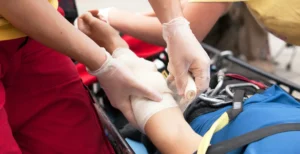
If you work in an office, shop, warehouse, or any low-risk workplace in London, your employer may need at least one trained first aider on site. That’s where the Emergency First Aid at Work Course London comes in. It’s a single-day qualification that teaches you exactly what to do in those first critical minutes before professional help arrives — and it could genuinely help you save someone’s life.
In this guide, we’ll walk you through everything the course covers, who needs it, how the day unfolds, and what you’ll walk away with. We’ll also answer the most common questions people search for before booking.
What Is the Emergency First Aid at Work (EFAW) Course?
The Emergency First Aid at Work course, often shortened to EFAW, is a nationally recognised qualification regulated under the Health and Safety (First-Aid) Regulations 1981. It’s designed for people working in lower-risk environments — think offices, retail shops, libraries, and small businesses where the chance of a serious accident is relatively low but basic first aid cover is still a legal requirement.
Unlike the longer First Aid at Work (FAW) course, which runs over three days and covers more complex injuries, EFAW is a focused, one-day programme. It gives you the core skills needed to respond confidently to common emergencies: choking, bleeding, shock, seizures, and unresponsiveness.
By the end of the day, you’ll have the knowledge and hands-on practice to act quickly and calmly, rather than freezing up when something goes wrong.
Who Should Take This Course?
This course is ideal for:
- Employees nominated as workplace first aiders, especially in offices, shops, warehouses, and other lower-risk settings
- Business owners and managers who want at least one qualified person on-site at all times
- HR and health and safety officers responsible for keeping their organisation compliant
- Anyone new to first aid who wants a practical, beginner-friendly introduction
- People renewing basic first aid knowledge even if they’re not required to for work
No previous first aid experience or qualification is needed. The course is built from the ground up, so complete beginners and people brushing up on old skills both get real value from the day.
Why London Employers Need This Course
London workplaces are busy, fast-paced, and often spread across multiple floors or sites. Under UK health and safety law, every employer must carry out a first aid needs assessment and make sure there’s adequate first aid provision for staff and visitors. For most low-risk offices and shops across the city, an EFAW-qualified first aider satisfies this requirement.
Beyond ticking a compliance box, having a trained colleague nearby genuinely changes outcomes. The first few minutes after a collapse, a severe bleed, or a choking incident are often the most important. Someone who knows what to do and isn’t afraid to act can make a real difference while waiting for the ambulance.
What You’ll Learn: The Full One-Day Breakdown
The course runs for a minimum of six hours and combines classroom-style teaching with hands-on practical exercises. Here’s what’s typically covered.
1. The Role of the First Aider
You’ll start by understanding what’s expected of you as a first aider: staying calm, assessing a scene for danger, protecting yourself and the casualty, and knowing when and how to call for emergency help. This includes basic hygiene practices to avoid cross-infection and the importance of accurate record keeping after an incident.
2. Assessing an Emergency Situation
Before you can help anyone, you need to know how to read a situation safely. You’ll learn the primary survey (checking for danger, response, airway, breathing) and the secondary survey, which helps you work out exactly what’s wrong and what to do next.
3. Dealing with an Unresponsive Casualty
This is one of the most important parts of the day. You’ll practise how to check if someone is breathing, how to place them in the recovery position, and when CPR is needed.
4. Cardiopulmonary Resuscitation (CPR)
You’ll get hands-on practice performing CPR on a training manikin, learning the correct rhythm, depth, and technique for chest compressions and rescue breaths.
5. Using an Automated External Defibrillator (AED)
Public access defibrillators are now common in London offices, shopping centres, and train stations. You’ll learn how to use one safely alongside CPR, following the device’s voice prompts.
6. Choking
You’ll learn to recognise mild and severe choking and the correct back-blow and abdominal-thrust technique to help clear an obstructed airway.
7. Bleeding and Shock
This section covers how to control different types of bleeding, apply direct pressure and dressings correctly, and recognise and manage shock, which can develop quickly after an injury.
8. Seizures
You’ll learn how to keep someone safe during a seizure, what not to do, and how to care for them once it ends.
9. Minor Injuries
The course also covers everyday workplace injuries — small cuts, grazes, minor burns, and splinters — and how to treat them appropriately with basic first aid supplies.
10. Record Keeping and First Aid Kits
Finally, you’ll learn what a workplace first aid kit should contain, how to maintain it, and why accurate incident records matter for both legal and practical reasons.
How the Day Is Structured
Most EFAW courses in London run from around 9am or 10am to 4pm or 5pm, with a mix of short presentations, group discussion, and plenty of hands-on practice using manikins and training defibrillators. Trainers assess you continuously throughout the day rather than through a single written exam, so there’s no need to stress about sitting a formal test. As long as you take part and show you can apply the skills, you’ll pass.
Class sizes tend to be kept small — often no more than 12 people — so everyone gets enough individual time to practise and ask questions.
What Qualification Will You Receive?
On successful completion, you’ll be awarded a Level 2 or Level 3 Emergency First Aid at Work certificate (the exact level depends on the awarding body), valid for three years. After that, it’s recommended you take a shorter requalification or refresher course to keep your skills and certificate up to date.
This certificate is recognised across the UK and satisfies the requirements most low-risk employers need from their nominated first aiders.
What to Bring on the Day
- A form of photo ID
- Comfortable clothing, since you’ll be kneeling and moving during practical sessions
- A notepad if you like to take your own notes, although most providers supply course materials
Why Choose a London-Based Course
Training in London means you can usually find a course close to your workplace or home, with flexible weekday and sometimes weekend dates. Many providers also offer group bookings for businesses that need to train several staff members at once, which is often more convenient and cost-effective than sending employees to courses outside the city.
Final Thoughts
The Emergency First Aid at Work course is one of the most practical, genuinely useful qualifications you can get in a single day. Whether you’re doing it because your employer requires it or because you simply want to be ready to help in an emergency, you’ll leave with real, usable skills — not just a certificate.
If you’re searching for a reliable Emergency First Aid at Work course in London, you can find course dates and book your place directly here: Emergency First Aid at Work Training.
Frequently Asked Questions
1. How long is the Emergency First Aid at Work course?
The course takes one day to complete, usually a minimum of six hours including both classroom teaching and practical, hands-on training.
2. Do I need any previous experience to take the EFAW course?
No. The course is designed for complete beginners, so no prior first aid knowledge or qualification is required to join.
3. Is there an exam at the end of the course?
There’s no formal written exam. Instead, your trainer assesses you continuously throughout the day by watching how you take part in discussions and practical exercises.
4. How long is the EFAW certificate valid for?
Your certificate is valid for three years from the date you complete the course. After that, you’ll need to take a requalification course to renew it.
5. What’s the difference between EFAW and the full First Aid at Work course?
EFAW is a one-day course suited to lower-risk workplaces like offices and shops. The full First Aid at Work (FAW) course runs over three days and covers more advanced skills for higher-risk environments.
6. What topics are covered on the course?
You’ll learn how to manage an unresponsive casualty, perform CPR, use a defibrillator, help someone who is choking, control bleeding, manage shock and seizures, and treat minor injuries.
7. Who is legally required to have an EFAW-qualified first aider?
Under UK health and safety law, employers must assess their first aid needs. Most offices, shops, and other low-risk workplaces meet this requirement by having at least one EFAW-qualified employee on site.
8. Can I take this course if I have no connection to a workplace?
Yes. Many people take the EFAW course simply to learn lifesaving skills for home, family, or general confidence, even if it isn’t required for their job.
9. What age do I need to be to take the course?
Most providers require learners to be at least 16 or 18 years old, though this can vary slightly, so it’s worth checking with your training provider before booking.
10. How do I book an Emergency First Aid at Work course in London?
You can view available dates and book your place through the course page here: Emergency First Aid at Work Training.