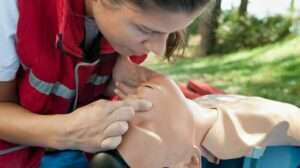

If you look at an Emergency First Aid at Work course in London, you will often see a long title: Level 3 Award in Emergency First Aid at Work (RQF). It sounds formal and a little confusing. What does Level 3 mean? What is RQF? Is this the same as the one day course your employer wants you to take?
In this guide, we break the title into small pieces and explain each one in plain English. You will also learn why a regulated qualification matters, how to check that yours is genuine, and how to choose a good course. If you want to see a course while you read, here is the Emergency First Aid at Work course in London.
The Short Answer
A Level 3 Award in Emergency First Aid at Work (RQF) is the regulated, one day first aid qualification for workplaces in England. It teaches you how to give emergency first aid, such as CPR, using a defibrillator, helping a choking person and controlling bleeding. It is called Level 3 because of where it sits on the national qualifications ladder, and RQF is the name of that ladder.
It is the same course people usually call EFAW. Passing it gives you a certificate that is valid for three years.
Breaking Down the Title
Let us take the name one word at a time.
Level 3
In England, qualifications are grouped into levels. The level shows how demanding the qualification is, and what kind of knowledge it covers. Level 3 sits at a similar level to A levels in the framework.
This does not mean the course is hard or academic. First aid at work is a practical subject, and Level 3 is simply where this type of qualification is placed. You do not need any exams or prior study to attend. Most people pass by taking part and practising the skills.
Award
In the qualification system, an Award is a smaller qualification. It is shorter than a Certificate or a Diploma. The EFAW Award is short because it focuses on a narrow set of emergency skills and can be completed in a day.
Emergency First Aid at Work
This is the subject. It means the training prepares you to give emergency first aid in a workplace. It is aimed at low risk workplaces such as offices, shops and small businesses.
RQF
RQF stands for Regulated Qualifications Framework. It is the system that places vocational and technical qualifications in England on a set of levels. Qualifications on the RQF are regulated, which means they must meet national standards. The regulator for qualifications in England is Ofqual.
So when you see RQF in the title, it tells you the qualification is part of the official, regulated system.
Why Does a Regulated Qualification Matter?
Not every first aid certificate is the same. Some are in house certificates made by a company for its own use. Others come from regulated qualification providers. Here is why the regulated route is so useful.
- Trusted standard. The qualification has to meet national rules for how it is designed, taught and assessed.
- Recognised by employers. Employers, safety managers and insurers know what a Level 3 regulated award means.
- Quality checks. Awarding organisations must monitor the training centres that offer their qualifications.
- Clear paperwork. Regulated qualifications come with proper certificates and records.
- Peace of mind. You can be more confident that your training matches what the Health and Safety Executive (HSE) expects.
It is important to say that the law does not tell employers they must choose a regulated course. But HSE guidance says employers should check that their training provider is competent, and a regulated qualification from a reputable awarding organisation is one of the clearest ways to show this.
Does HSE Approve First Aid Training Providers?
Not any more. Years ago, HSE approved first aid training providers directly. That stopped in 2013. Today, employers are responsible for choosing a competent provider.
HSE gives guidance on what to look for. This includes things like qualified trainers, a proper syllabus, enough practical time and the right assessment. A regulated Level 3 EFAW qualification covers these needs well, which is why it is so popular.
What Is an Awarding Organisation?
A regulated qualification is not created by the training centre itself. It comes from an awarding organisation. This is a body that is approved by the regulator to design and award qualifications.
The awarding organisation:
- Sets the syllabus and learning outcomes.
- Approves training centres to teach the course.
- Checks the quality of teaching and assessment.
- Issues the certificates.
The training centre then delivers the course in a classroom or at your workplace. If you want to know who awarded your qualification, check the name on your certificate.
What Does the Level 3 Award Cover?
The EFAW qualification focuses on the key emergency skills. A typical course covers:
- The role of a first aider. What you should and should not do, and how to stay safe.
- Assessing an incident. Checking for danger and checking the casualty.
- Adult CPR. Chest compressions and rescue breaths.
- Using an AED. Following the spoken instructions of a defibrillator.
- The recovery position. Keeping an unresponsive, breathing casualty safe.
- Choking. Back blows and abdominal thrusts for an adult.
- Bleeding. Controlling serious bleeding and dressing wounds.
- Shock. Recognising it and giving basic help.
- Minor injuries. Small burns, cuts and grazes.
The course mainly focuses on adults. If you work in early years care, you will normally need a separate paediatric first aid qualification.
How Long Does the Course Take?
The Level 3 Award in EFAW is a one-day course. HSE guidance says it should last at least six hours of training time, not counting breaks. So most courses run for a full day.
This is different from the First Aid at Work (FAW) qualification, which takes three days and covers more injuries and illnesses.
How Is the Award Assessed?
You do not have to sit a long written exam. Assessment on an EFAW course usually has two parts:
- Practical assessment. Your trainer watches you carry out skills such as CPR and managing an unresponsive casualty.
- Simple questions. You may answer short questions to show you understand the main points.
The assessment checks that you can do the tasks safely. If you need extra support, such as help with reading, tell your provider before the course so they can plan ahead.
How Long Is the Certificate Valid?
The certificate is valid for three years. After that, you must retake the course to stay qualified.
HSE also recommends a short yearly refresher. It is not a legal rule, but skills like CPR fade quickly without practice. A yearly top up helps you stay confident and up to date.
Tip: Put your expiry date in your diary and book the renewal early, so there is no gap in cover.
Who Needs a Level 3 Award in Emergency First Aid at Work?
The Health and Safety (First-Aid) Regulations 1981 require employers to provide adequate and appropriate first aid. The right level depends on a first aid needs assessment. For low-risk workplaces, HSE gives this simple starting point:
- Fewer than 25 employees: at least one appointed person.
- 25 to 50 employees: at least one trained first aider.
- More than 50 employees: at least one first aider for every 50 people.
The Level 3 Award in EFAW suits first aiders in low risk workplaces. Many other people take it too, such as teachers, gym staff, volunteers and self-employed workers.
Highervrisk workplaces usually need the three day First Aid at Work qualification. Early years settings need paediatric first aid.
Level 3 EFAW vs First Aid at Work
The two courses are closely related. Here is a quick comparison.
Level 3 Award in Emergency First Aid at Work
- One day, about six hours.
- Focus on emergencies.
- Suits low risk workplaces.
- Valid for three years.
Level 3 Award in First Aid at Work
- Three days.
- Covers emergencies, plus a wider range of injuries and illnesses.
- Suits higher risk or larger workplaces.
- Valid for three years.
Both are regulated Level 3 qualifications. The difference is the depth and range of what they cover.
How to Check That Your Qualification Is Genuine
Before you pay for a course, take a few minutes to check these points.
- Look for the full title. It should say Level 3 Award in Emergency First Aid at Work (RQF).
- Ask who the awarding organisation is. A good provider will tell you straight away.
- Check the regulator. Regulated qualifications in England appear on the official register that Ofqual keeps, which you can search online.
- Ask about the trainer. They should be qualified to teach first aid and have real experience.
- Check the certificate. It should show your name, the qualification title, the date and the awarding organisation.
- Be careful of very cheap offers. If a price seems too low, find out what is included.
If anything is unclear, ask the provider. A good provider is happy to answer.
Does the RQF Apply Across the UK?
The Regulated Qualifications Framework is the system used in England. Other parts of the UK have their own frameworks and regulators. In practice, a regulated first aid qualification from a recognised awarding organisation is widely accepted by employers across the UK. If you work outside England, check your local requirements.
How to Choose a Good Course in London
Once you know the qualification, look for a good place to study. Here are simple points to compare.
- Hands-on practice. There should be enough manikins, AED trainers and dressings for everyone.
- Experienced trainers. Trainers with real emergency or medical backgrounds bring the subject to life.
- Small groups. Smaller classes give more time with the trainer.
- Clear details. The provider should list the content, timing and price.
- Flexible options. Public courses and on-site training make it easy to fit training into your schedule.
- Support. You should be able to ask questions before and after the course.
You can look at the Emergency First Aid at Work training page to see how a course is described and compare it with these points.
Why Train in London?
London is one of the busiest cities in the world. Workplaces are close together, roads can be crowded and many people travel long distances to work. In an emergency, the people nearby are the first line of help.
There are also many training venues across the city, so you can pick one close to home or work. Many teams also choose on-site training, where the trainer comes to the workplace. It saves travel time and lets everyone learn together.
Final Thoughts
So, what is a Level 3 Award in Emergency First Aid at Work (RQF) in London? It is the regulated, one-day first aid qualification for low-risk workplaces. Level 3 shows where it sits on the national ladder, Award means it is a short qualification, and RQF shows it is part of the official regulated system. You learn how to give CPR, use an AED, help a choking person and control bleeding, and you receive a certificate that lasts three years.
Before you book, check the awarding organisation, the trainer and what is included. Then choose a date that suits you. When you are ready, take a look at the Emergency First Aid at Work course in London.
Frequently Asked Questions
1. What is a Level 3 Award in Emergency First Aid at Work (RQF)?
It is a regulated, one day first aid qualification designed for workplaces in England. It teaches emergency skills such as CPR, using a defibrillator, helping a choking person and controlling bleeding. The certificate is valid for three years.
2. What does RQF stand for?
RQF stands for Regulated Qualifications Framework. It is the system that sets out the levels of regulated vocational and technical qualifications in England.
3. What does Level 3 mean in first aid?
Level 3 shows where the qualification sits on the national framework. It does not mean the course is hard. The training is practical, and you do not need previous experience.
4. Is a Level 3 Award in EFAW the same as an EFAW course?
Yes. EFAW is the common short name for the Level 3 Award in Emergency First Aid at Work. Both names describe the same one-day course.
5. How long does the Level 3 Award in Emergency First Aid at Work take?
It is a one-day course. HSE guidance says it should include at least six hours of training time, not counting breaks.
6. How long is the certificate valid?
The certificate is valid for three years. HSE recommends a yearly refresher, but it is not a legal requirement. After three years, you need to retake the course.
7. Does HSE approve first aid training providers?
No. HSE stopped approving providers in 2013. Employers now need to choose a competent provider, and a regulated Level 3 qualification from a reputable awarding organisation is a strong sign of quality.
8. How can I check that my first aid certificate is regulated?
Check the qualification title, the awarding organisation named on the certificate and the official register that Ofqual keeps for regulated qualifications in England. You can also ask your training provider.
9. What is the difference between the Level 3 Award in EFAW and First Aid at Work?
EFAW is a one day course for low-risk workplaces. First Aid at Work is a three-day course that covers a wider range of injuries and illnesses and suits higher-risk or larger workplaces. Both are regulated Level 3 qualifications.
10. Where can I take a Level 3 Award in Emergency First Aid at Work in London?
You can book with a training provider that offers the regulated qualification, either on a public course or as on-site training for your team. Check the awarding organisation, the trainer and what the price includes before you book.