
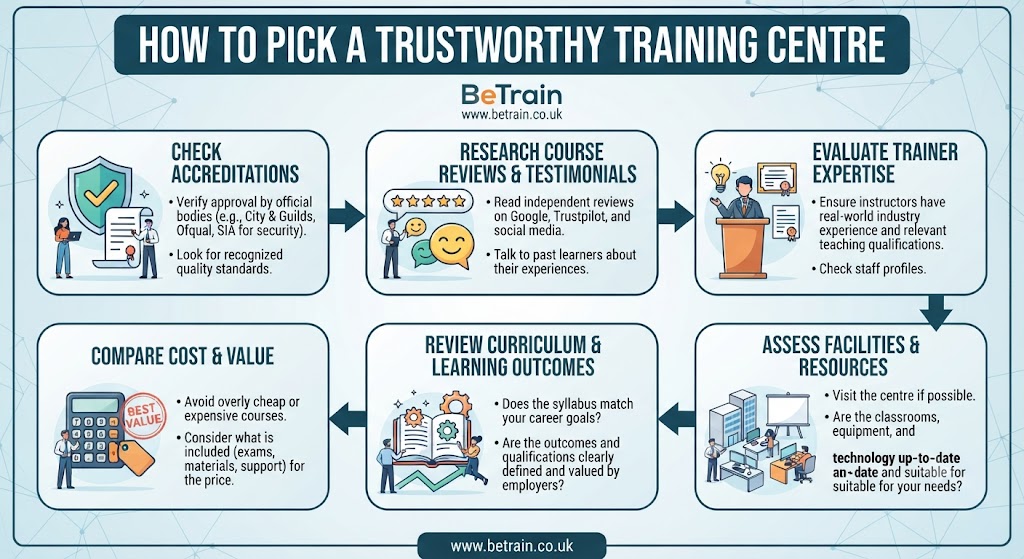
How to Pick a Trustworthy Training Centre
Choosing the right training centre is one of the most important decisions you will make when starting a career in the UK private security industry. A good training provider does much more than help you pass an exam. It gives you the knowledge, practical skills, and confidence needed to work professionally and safely in real security roles.
With many providers offering SIA-related courses, it can be difficult to know which one to choose. Some centres advertise very low prices, while others promise quick results. However, the cheapest or fastest option is not always the best. A trustworthy training centre will focus on quality teaching, recognised qualifications, and student support from the beginning of your course until you are ready to apply for your Security Industry Authority (SIA) licence.
This guide explains what to look for when choosing a training provider and how to avoid common mistakes.
Why Your Choice of Training Centre Matters
Your training centre plays a major role in preparing you for your future career.
A reputable provider helps you:
- Understand the course content
- Build practical skills
- Prepare for assessments
- Gain confidence
- Learn professional standards
- Receive guidance throughout the training process
Good training forms the foundation of a successful security career.
Choose an Approved Training Provider
The first thing to check is whether the training provider delivers recognised qualifications that meet current SIA licensing requirements.
Approved providers follow the required standards and offer courses designed to prepare learners for recognised security qualifications.
Before booking, ask the provider:
- Which qualifications they deliver
- Whether the course meets current licensing requirements
- What is included in the training
Choosing an approved provider helps ensure your qualification will support your licence application.
Check the Trainers’ Experience
Experienced instructors often make learning easier.
Look for trainers who:
- Have practical industry experience
- Explain topics clearly
- Encourage questions
- Create a supportive learning environment
- Use real-life examples
Learning from experienced professionals can improve your understanding and confidence.
Read Student Reviews
Reviews can provide useful insight into a training provider’s reputation.
Look for comments about:
- Teaching quality
- Customer service
- Course organisation
- Trainer knowledge
- Learning environment
- Student support
While no provider will have perfect reviews, consistently positive feedback is a good sign.
Compare More Than Just the Price
Many learners focus only on course fees.
Instead, compare:
- Course quality
- Trainer experience
- Learning support
- Training facilities
- Student reviews
- Flexibility
- Overall value
A slightly higher course fee may provide a much better learning experience.
Ask What Is Included
Different providers may include different services.
Before enrolling, ask whether the course includes:
- Training materials
- Practice assessments
- Student support
- Guidance on licence applications
- Refreshments (if applicable)
- Help after completing the course
Knowing exactly what is included helps avoid misunderstandings later.
Look for Flexible Course Dates
Many learners already have jobs or family responsibilities.
Good training centres often provide:
- Weekday classes
- Weekend courses
- Evening options
- Flexible schedules
Flexible learning makes it easier to complete your qualification.
Visit the Training Centre if Possible
If practical, visit the centre before booking.
A visit allows you to check:
- Classroom environment
- Cleanliness
- Professional atmosphere
- Accessibility
- Staff friendliness
A welcoming environment can make learning more enjoyable.
Good Communication Is Important
A professional training provider should respond clearly and promptly to your questions.
Good customer service includes:
- Clear course information
- Honest advice
- Friendly communication
- Prompt replies
- Transparent pricing
If communication is poor before you enrol, it may continue after you join the course.
Avoid Unrealistic Promises
Be cautious if a provider promises:
- Guaranteed licences
- Guaranteed jobs
- Passing without effort
- Extremely fast qualifications that seem unrealistic
A trustworthy provider will explain the process honestly rather than making exaggerated claims.
Ask About Practical Training
Quality security training should include opportunities to apply your knowledge.
Practical learning may involve:
- Group discussions
- Scenario-based activities
- Communication exercises
- Conflict management practice
- Physical intervention training (where applicable)
Practical experience helps prepare learners for real workplaces.
Student Support
Learning is easier when support is available.
Good providers encourage learners to:
- Ask questions
- Request clarification
- Receive constructive feedback
- Access revision guidance
Supportive trainers help students build confidence throughout the course.
Course Materials
Useful learning resources may include:
- Student handbooks
- Revision notes
- Practice questions
- Classroom presentations
- Practical demonstrations
High-quality materials support successful learning.
Assessment Preparation
A reliable training centre helps learners prepare for assessments by:
- Explaining the assessment process
- Providing practice questions
- Offering revision sessions
- Giving clear instructions
- Answering student questions
Preparation reduces stress and improves confidence.
Think About Your Long-Term Career
Some providers offer additional courses that support future career development.
These may include:
- CCTV qualifications
- Emergency First Aid
- Fire Safety
- Health and Safety
- Leadership training
- Customer Service
Choosing a provider that supports ongoing learning can benefit your long-term career.
Warning Signs to Watch For
Be cautious if you notice:
- Poor communication
- Unclear pricing
- Very limited course information
- Pressure to book immediately
- Unrealistic advertising
- Negative patterns in reviews
Trustworthy providers are transparent about their services.
Questions to Ask Before Booking
Before choosing a training centre, consider asking:
- What qualifications do you deliver?
- How experienced are your trainers?
- What is included in the course fee?
- Are practice assessments provided?
- What support is available during training?
- What happens after I complete the course?
The answers can help you compare providers more effectively.
Common Mistakes to Avoid
Many learners make avoidable mistakes when selecting a provider.
Avoid:
- Choosing purely based on price.
- Ignoring reviews.
- Booking without researching the provider.
- Assuming every provider offers the same quality.
- Waiting until the last minute to book.
Taking time to research can save disappointment later.
Frequently Asked Questions
How do I know if a training centre is trustworthy?
Look for recognised qualifications, experienced trainers, positive student reviews, clear communication, and transparent information about the course.
Should I choose the cheapest course?
Not necessarily. The overall quality of teaching and support is often more important than the lowest price.
Is practical training important?
Yes. Practical activities help learners apply classroom knowledge to real workplace situations.
Can I ask questions before booking?
Absolutely. A professional provider should be happy to answer your questions and explain the course in detail.
Does a good training provider guarantee a job?
No. While some providers may offer careers advice or introduce learners to employers, no reputable training centre can guarantee employment.
Final Thoughts
Choosing a trustworthy training centre is one of the first and most important steps towards building a successful career in the UK private security industry. A high-quality provider offers more than just a recognised qualification. It provides experienced instructors, practical learning, supportive guidance, and the confidence needed to succeed both in the assessment and in the workplace.
Before enrolling, take the time to compare providers, read reviews, ask questions, and understand exactly what is included in the course. Investing in quality training today can improve your knowledge, strengthen your professional skills, and help you begin your security career on the right path. A well-chosen training centre is not just where you earn a qualification—it is where you begin developing into a confident and capable security professional.