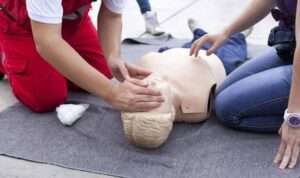

You took your Emergency First Aid at Work (EFAW) course three years ago. You have probably not used it in anger, thankfully. Your certificate is about to expire, and the idea of giving up another day, and another chunk of money, feels a little annoying. So is it really worth renewing?
For most people who act as workplace first aiders, the honest answer is yes. But it is fair to ask why, and to weigh the cost against the benefit. In this guide, we look at the real numbers, the safety case, the legal side, the career side and the cases where renewal may not be necessary. If you want to see a real course page as you read, here is the Emergency First Aid at Work course in London.
The Short Answer
Yes, renewing is usually worth it if you are, or want to remain, a workplace first aider. The cost works out at only a few pounds a month, the skills fade faster than most people expect and a valid certificate is how your employer shows that it provides adequate first aid. If you no longer need to be a first aider, or you have a different qualification that serves the same purpose, you may reasonably choose not to renew.
What Renewal Actually Is
An EFAW certificate is valid for three years. After that, it expires, and there is no general grace period. For Emergency First Aid at Work, renewal means retaking the one day course, which includes at least six hours of training time, not counting breaks, according to HSE guidance. You are assessed again in person, and you receive a new certificate valid for three years.
There is no shorter or cheaper official renewal route for EFAW. HSE recommends a short yearly refresher, although it is not a legal rule, and a refresher does not extend your certificate.
Looking at the Cost
Cost is the first objection, so let us put numbers on it. In London in 2026, public prices for a one day course commonly range from about £65 to £150 per person. One provider page, linked above, lists £89 per person for classroom training and £75 per person for groups of five or more, at the time of writing in October 2026. Prices change, so always confirm.
Using the £89 price as an example:
- Over three years, that is about £30 a year.
- That is about £2.50 a month.
- That is about 8 pence a day.
Add a day of paid time, assumed here at £120, and the total is about £209 per renewal, or roughly £70 a year. These are illustrations, and your numbers will differ. But they show that the cost, spread across the life of the certificate, is small compared with what is at stake.
If your employer needs you to remain a first aider, it is reasonable to expect them to pay for the course and give you paid time. The Health and Safety at Work etc. Act 1974 says employers must not charge employees for things provided because of a specific requirement of health and safety law. Check with HR, Acas or your union if you are unsure.
The Safety Case: Why Skills Matter
The strongest reason to renew is what the skills are for. Cardiac arrest is one of the main emergencies an EFAW first aider prepares for, and the numbers are sobering.
- More than 30,000 people have an out of hospital cardiac arrest in the UK each year, according to the British Heart Foundation.
- Fewer than one in ten of them survive.
- Every minute without CPR and defibrillation reduces the chance of survival by up to 10 percent.
- Early CPR and defibrillation can double someone’s chance of survival, and bystander CPR can increase it two or three times, according to the Resuscitation Council.
Most cardiac arrests happen at home, but some happen at work, and in a workplace you may be the nearest trained person. In a busy city such as London, where traffic can slow an ambulance, trained people on site matter even more. A first aider who has practised recently is far more likely to act quickly and correctly.
Why Skills Fade
People often assume that once they have learned CPR, they will remember it. In practice, skills fade. Experts note that confidence and accuracy can drop within months if skills are not used. Here is why renewal and refreshers matter.
- You rarely get to practise. Most people never use CPR at work.
- Details slip. Hand position, depth, rhythm and the steps for an AED are easy to forget.
- Confidence drops. Even if you remember, you may hesitate.
- Guidance changes. Training is updated from time to time.
- Equipment changes. Your workplace may have a new AED or kit.
A renewal course resets all of this. For many people, the second time is easier and more valuable, because they now have real questions and a better understanding of their workplace.
The Legal Case
The Health and Safety (First Aid) Regulations 1981 require employers to provide adequate and appropriate first aid for their employees. The law does not give a single number of first aiders. Employers decide through a first aid needs assessment. As a starting point for low hazard workplaces, HSE suggests at least one appointed person for fewer than 25 employees, at least one first aider trained in Emergency First Aid at Work for 25 to 50 employees, and at least one first aider trained in First Aid at Work for every 100 employees above that, or part of 100. Higher hazard workplaces need more.
If your certificate expires, you stop counting as a qualified emergency first aider, which may leave the workplace below its planned number of trained people. HSE stopped approving first aid training providers in 2013, so employers rely on regulated qualifications and good records to show their first aiders are properly trained. A current certificate is part of that evidence.
The Career and Reputation Case
A valid first aid certificate is useful beyond your current job.
- Job applications. Many roles in gyms, schools, activity centres, hospitality, care and community work value or require a valid certificate.
- Freelance and contract work. Clients, venues and agencies often ask for a current certificate before you start.
- Promotion and responsibility. Being a trusted first aider can show initiative and reliability.
- Moving jobs. A certificate that is in date is easier to use than one that has just expired.
- Across the UK. A regulated certificate is generally accepted by employers in England, Scotland, Wales and Northern Ireland.
For some people, the career benefit alone repays the cost.
The Confidence Case
Many people say the biggest benefit of renewal is how they feel. Knowing that you can act, rather than freeze, is valuable at work, at home and in public. A first aid certificate does not make you a medical professional, but it gives you a clear method: check for danger, check the person, call for help, check breathing and give care. Practising that method again every three years keeps it close to hand.
Common Reasons People Hesitate, and Honest Answers
I have never used my skills.
That is the best case, and it is exactly why skills fade. Renewal keeps you ready for something you hope never happens.
I still remember everything.
Possibly, but it is worth testing. A practical session with a trainer often reveals small gaps, such as hand position or rhythm, that you did not know you had.
It costs too much.
In many cases, the cost is about £30 a year, and your employer should pay if you are needed as a first aider.
I cannot spare a day.
That is a real concern. Choose a quiet date, ask about training at your workplace and plan paid time. Many providers offer weekend and weekday options.
Renewal is just the same course again.
For EFAW, it is the same one day format. But the second time, you bring experience, and good trainers update examples and guidance. Many people say they learn more the second time.
My colleague is also a first aider.
That is helpful, but it is wise to have more than one trained person, to cover holidays, sickness and shifts.
I could just watch videos.
Videos help you refresh, but HSE guidance expects practical training and in person assessment for a workplace first aider. A video cannot check your hand position or give you feedback.
When Renewal May Not Be Necessary
To be balanced, there are times when renewal may not be needed.
- You are no longer a first aider. If your role has changed and no one requires you to hold a certificate, you may choose not to renew.
- Your workplace has enough other trained people. If there is plenty of cover and you do not wish to be named as a first aider, that is a reasonable choice, though it is still a useful skill.
- You need a different qualification. If your workplace is higher hazard, you may need the three day First Aid at Work course instead. If you work with babies and young children, you may need paediatric first aid. If you hold a First Aid at Work certificate, a shorter requalification course exists for that route.
- You have a role specific certificate that serves the same purpose. Some specialist roles use other qualifications.
- You moved abroad. A local certificate may be required. See our guide on using an EFAW certificate abroad.
Even in these cases, you can still refresh your skills in other ways, such as a short practical session or a community CPR course.
A Simple Decision Checklist
Ask yourself these questions.
- Does my employer rely on me as a first aider?
- Does my job or contract require a valid certificate?
- Do I work with the public, children, athletes or vulnerable people?
- Would I feel confident acting in an emergency today?
- Is the cost small compared with the value to me and my workplace?
- Might I need the certificate for future work?
If you answered yes to any of these, renewal is very likely worth it.
What Employers Should Weigh
From an employer’s point of view, renewal is part of the cost of having a safe workplace. Consider:
- Cost per employee. For most small businesses, the yearly cost of keeping first aiders current works out at a modest amount per employee.
- Legal duty. Employers must provide adequate and appropriate first aid.
- Insurance and clients. Insurers and clients may expect valid certificates.
- Morale. Staff feel safer when trained help is nearby.
- Continuity. Tracking expiry dates and staggering renewals avoids gaps in cover.
One provider lists £75 per person for groups of five or more, and training at your premises is usually quoted by group size and location, which can lower the cost per head.
How to Make Renewal Worth More
If you are going to renew, make the most of it.
- Choose a good provider. A regulated Level 3 Award in Emergency First Aid at Work (RQF) with at least six hours of training time, practical training and in person assessment.
- Check trainer quality and class size. Many awarding organisations set a maximum of around 12 learners per trainer.
- Bring questions. About your real workplace and any situations that worry you.
- Ask for extra practice. On the skills you feel least sure about.
- Book as a group. Many providers charge less per person for groups.
- Renew a month or two early. It costs very little and avoids a gap.
- Plan your refreshers. HSE recommends a yearly refresher, although it is not a legal rule.
- Save your certificate. In two places, and note the new expiry date.
Be cautious of online only offers and any claim that a course is HSE approved.
You can review the Emergency First Aid at Work training page to see how one provider presents its price, group rate and booking options.
Why London Makes Renewal Practical
London has a very large number of providers, venues and dates, so you can usually find a renewal course close to home or work, on a weekday or at a weekend. Many providers also deliver training at your workplace. With busy roads and crowded transport, having confident, current first aiders on site matters in an emergency, because they are often the first help available.
Final Thoughts
So, is it worth renewing emergency first aid training every three years? For most workplace first aiders, yes. The cost is small, about £30 a year in our example, skills fade faster than people expect, an in date certificate supports your employer’s legal duty and the skills may one day matter a great deal. In a country where fewer than one in ten people survive an out of hospital cardiac arrest, every trained person counts.
If you no longer need the role, you may reasonably choose not to renew, but you can still keep your skills alive. When you are ready, take a look at the Emergency First Aid at Work course in London and choose a date that suits you.
Frequently Asked Questions
1. Is it worth renewing my Emergency First Aid at Work certificate?
For most workplace first aiders, yes. The cost works out at only a few pounds a month, skills fade over time, an in date certificate supports your employer’s legal duty and the training could help in a real emergency.
2. How much does it cost to renew EFAW in London?
Renewal means retaking the one day course, so it usually costs about the same as a first time course. In 2026, public prices commonly range from about £65 to £150 per person. One provider page lists £89 per person and £75 per person for groups of five or more.
3. Why do first aid certificates expire after three years?
Skills such as CPR fade without practice, and guidance and equipment change over time. A three year period ensures that first aiders are assessed again. HSE also recommends a short yearly refresher, although it is not a legal requirement.
4. What happens if I do not renew my certificate?
You stop counting as a qualified emergency first aider. Your employer may need to arrange other cover, and you may not meet job or client requirements. You can still help in an emergency, and you can renew later by retaking the full course.
5. Can I just take a refresher instead of renewing?
No. A refresher is useful but does not extend your certificate. For EFAW, you must retake the full one day course before the three years end to stay qualified.
6. Does my employer have to pay for renewal?
If your employer needs you to remain a first aider, it is reasonable to expect them to pay for the course and give you paid time. Employers generally should not charge staff for things the law requires them to provide. Check with HR, Acas or your union if you are unsure.
7. How likely is it that I will ever use my first aid skills at work?
Most people use them rarely, if ever, but cardiac arrest, choking and bleeding can happen anywhere. More than 30,000 people have an out of hospital cardiac arrest in the UK each year, and fewer than one in ten survive. Quick CPR and defibrillation can make a real difference.
8. When might I choose not to renew?
If you are no longer a first aider and no one requires you to hold a certificate, if your workplace has plenty of other trained people, or if you need a different qualification, such as First Aid at Work or paediatric first aid.
9. How can employers reduce the cost of renewals?
Book group rates, arrange training at the workplace, stagger renewals, choose quiet days and ask an accountant about tax treatment. In most cases, training staff as first aiders is likely to be an allowable business expense.
10. Where can I renew my Emergency First Aid at Work certificate in London?
You can book through a training provider that offers the regulated qualification, either as a public course or as training at your workplace. Check the total price, what is included, the awarding organisation and the practical assessment before you book.