
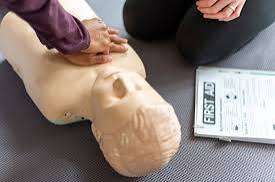
Most people do not forget their first aid certificate on purpose. They simply put it in a drawer, or an email folder, and three years later it is a surprise. The date has passed, the workplace is short of a first aider and everyone is rushing to find a course.
The good news is that tracking an expiry date takes about ten minutes to set up, and it can save weeks of stress. In this guide, we explain in plain English how to keep track of your Emergency First Aid at Work (EFAW) certificate expiry date, whether you are a single first aider or you manage a whole team. You will get step by step setups, a reminder schedule, a tracking template and tips to make the system stick. If you want to see a real course page as you read, here is the Emergency First Aid at Work course in London.
The Short Answer
Your EFAW certificate is valid for three years. To keep track of it, find the expiry date on your certificate (or add three years to the course date), then set calendar reminders for six months, three months and one month before. Save a digital copy of the certificate in two places, and tell your employer. For teams, keep one shared list with every first aider’s dates and review it every few months.
That simple routine is enough to prevent most lapses.
Why Tracking Matters
An EFAW certificate expires after three years, and there is no general grace period. Renewal means retaking the one day course. If your certificate lapses, you stop counting as a qualified emergency first aider until you renew, and your workplace may have a gap in cover.
The Health and Safety (First Aid) Regulations 1981 require employers to provide adequate and appropriate first aid for their employees. A good tracking system helps both individuals and employers meet that duty without last minute panic.
Skills also fade between renewals. HSE recommends a short yearly refresher, although it is not a legal rule, and a refresher does not extend the certificate. A tracking system can remind you of those dates too.
Step One: Find the Right Date
Before you track anything, make sure you have the correct date.
- Look at your certificate. Some show an expiry date directly. Others show the date of achievement and say it is valid for three years.
- If there is no expiry date, add three years to the course date. For example, a course completed on 10 October 2026 would run to around 10 October 2029.
- Check how your provider counts it. The exact last day can differ slightly, so ask if you are close to the date.
- Write down both dates. The course date and the expiry date.
- Choose a safe date to work from. Many people use the first day of the expiry month as their working deadline, which gives a small safety margin.
Step Two: Set Calendar Reminders
A calendar is the simplest and most reliable tool, because you already use it. You can use a phone calendar, an email calendar or a work calendar. The steps are almost the same on any of them.
How to do it
- Create a new event on your expiry date. Title it clearly, for example: First aid certificate expires today.
- Add reminders to that event, or create separate events, for these points before the date.
- Six months before.
- Three months before.
- One month before.
- One week before.
- In the notes box, add useful information: your provider, your awarding organisation, the certificate number and where you saved the file.
- Add a link or attachment to your digital certificate, if your calendar allows.
- Set the event to repeat every three years, if you plan to keep renewing.
- Share the event with a colleague or your manager, if appropriate.
What each reminder is for
Six months before: Tell your employer. Check how many course dates are available and what the course costs.
Three months before: Look at dates and book a place. Ask your provider how your new expiry date will be set.
One month before: Confirm your booking, arrange paid time and check what to bring.
One week before: Last check. If you have not booked, do it now and tell your employer.
This timeline gives you plenty of room, and it avoids the stress of a last minute search.
Step Three: Save Your Certificate Safely
A date is only useful if you can also find the certificate. Here is a simple storage plan.
- Save the digital file in two places. For example, your email and a cloud folder.
- Name the file clearly. For example: EFAW certificate, your name, expiry October 2029. Using the name and year makes it easy to find.
- Take a photo of a paper copy. Keep it on your phone.
- Give your employer a copy. They can keep it in your training record.
- Note the provider and awarding organisation. If you lose the certificate, you will know who to ask for a replacement.
Replacement fees vary. In examples we found in 2026, one university team charged £6 for a duplicate and one national provider charged £30, and some providers may reissue a digital copy for free. Saving your copy can spare you the cost and the wait.
Step Four: Add Email and Phone Backups
A second reminder method protects you if one fails.
- An email to yourself. Schedule an email for six months before expiry, if your email service allows scheduled sending.
- A task in a to do app. Create a task with a due date and a repeating reminder.
- A note on your phone. Keep a short note with your certificate details and dates.
- A sticky note on your certificate folder. Old fashioned, but it works.
You do not need all of these. Two methods are enough for most people.
A Simple Tracking Template for One Person
If you prefer a list, here is a layout you can copy into a note or a spreadsheet.
- Name:
- Qualification: Level 3 Award in Emergency First Aid at Work (RQF)
- Awarding organisation:
- Training provider:
- Course date:
- Expiry date:
- Certificate number:
- Where the file is saved:
- Six month reminder date:
- Three month reminder date:
- Renewal booked: yes or no, and the course date
- Yearly refresher dates:
Fill it in once, and update it after each renewal.
Tracking for Teams and Employers
If you manage several first aiders, a shared system is essential. Here is how to set one up.
The tracking sheet
Use a shared spreadsheet or your HR system, with one row per first aider and these columns.
- First aider’s name.
- Workplace area, floor or shift.
- Qualification and awarding organisation.
- Training provider.
- Course date.
- Expiry date.
- Renewal reminder date, for example six months before expiry.
- Renewal booked and date.
- Last refresher date.
- Certificate number.
- Where the copy is stored.
- Date the certificate was checked.
Colour coding
Many employers colour the expiry date to show urgency.
- Green: more than six months left.
- Amber: three to six months left.
- Red: less than three months left or expired.
This makes the list easy to scan in seconds.
Reminders
Set shared calendar reminders for each first aider, and a general reminder to review the whole list every quarter. Assign one person to own the list, with a named backup.
Staggered renewals
If you train everyone together, all certificates expire together, which can leave a gap. A smart approach is to stagger. Train a first group now and a second group six months to a year later, so renewals fall in different periods.
Cover planning
Alongside expiry dates, record how many first aiders each area or shift needs. As a starting point for low hazard workplaces, HSE suggests at least one appointed person for fewer than 25 employees, at least one first aider trained in Emergency First Aid at Work for 25 to 50 employees, and at least one first aider trained in First Aid at Work for every 100 employees above that, or part of 100. Higher hazard workplaces need more. A first aid needs assessment gives the best answer. Your tracking sheet should show at a glance whether you will still meet your plan if certificates expire.
Privacy and storage
Certificates contain personal information, so store them securely and keep only what you need. Tell staff why you hold their records.
A Sample Reminder Schedule for a Team
Here is one way to plan the year.
January: Review the whole list. Mark anyone expiring in the next twelve months.
April: Check amber items. Contact providers for quotes and dates.
July: Book courses for anyone expiring in the next six months.
October: Review again. Confirm attendance. Update the list after each course.
Ongoing: Remind first aiders about yearly refreshers, and update the list when staff join or leave.
What to Do When a Reminder Fires
A reminder is only useful if you act on it. Here is a quick action list.
- Check the date. Is it still correct?
- Tell your manager. Or, if you are the manager, tell the first aider.
- Look at course dates. Compare a few providers and venues.
- Ask your provider how the new expiry will be dated. In most cases, a new certificate runs for three years from the new course date, so renewing a month or two early costs very little.
- Book your place.
- Arrange paid time and payment. If your employer needs you to remain a first aider, it is reasonable to expect them to pay and give you paid time. The Health and Safety at Work etc. Act 1974 says employers must not charge employees for things provided because of a specific requirement of health and safety law. Check with HR, Acas or your union if you are unsure.
- After the course, update everything. New certificate, new dates, new reminders.
What Does Renewal Cost?
Because EFAW renewal means retaking the one day course, it usually costs about the same as a first time course. In London in 2026, public prices commonly range from about £65 to £150 per person. One provider page, linked above, lists £89 per person for classroom training and £75 per person for groups of five or more, at the time of writing in October 2026. Prices change, so always confirm. Knowing your expiry date well in advance gives you time to compare providers and book a group if you can.
You can review the Emergency First Aid at Work training page to see how one provider presents its price, group rate and booking options.
Tools You Can Use
You do not need special software. Here are options, from simple to advanced.
- A phone or work calendar. Best for individuals.
- A note or document. For storing details.
- A spreadsheet. Best for small teams.
- A shared task board. Good for teams that use project tools.
- An HR or training management system. Best for larger employers, often with automatic alerts.
- Provider reminders. Some training providers send renewal reminders. Ask whether yours does, but do not rely on it alone.
Choose the tool you will actually use.
Habits That Make Tracking Work
Systems fail when they are ignored. A few habits keep them alive.
- Set it up on the day you get your certificate. Do not wait.
- Use more than one reminder method.
- Name one owner for team lists.
- Review quarterly.
- Update after every course.
- Tell colleagues who the first aiders are.
- Keep the process simple.
Common Mistakes to Avoid
- Relying on memory. Three years is a long time.
- Setting only one reminder. If you miss it, there is no backup.
- Forgetting to update after renewal. The old date stays in the system and causes false alarms.
- Storing the certificate in only one place. If that email account is lost, so is the certificate.
- Assuming a refresher renews the certificate. It does not.
- Assuming there is a grace period. For EFAW, there is none.
- Leaving renewal until the last month. Dates fill up, and you risk a gap.
HSE stopped approving first aid training providers in 2013, so when you renew, choose a regulated Level 3 Award in Emergency First Aid at Work (RQF) with at least six hours of training time, practical training, in person assessment and a qualified trainer. Be cautious of online only offers and any claim that a course is HSE approved.
Why London Makes It Easy to Renew in Time
London has a very large number of providers, venues and dates, so you can usually find a renewal course close to home or work when your reminder fires. Many providers also deliver training at your workplace, which helps teams renew together. With busy roads and crowded transport, keeping first aiders current matters, because they are often the first help available in an emergency.
Final Thoughts
So, how do you keep track of your first aid certificate expiry date? Find the date, set reminders for six months, three months, one month and one week before, save your certificate in two places and tell your employer. For teams, keep a shared list with every first aider’s dates, review it every quarter and stagger renewals. A few minutes of setup now can save weeks of stress later.
Set your reminders today. When you are ready to renew, take a look at the Emergency First Aid at Work course in London and choose a date that suits you.
Frequently Asked Questions
1. How do I keep track of my first aid certificate expiry date?
Find the expiry date on your certificate, or add three years to the course date. Set calendar reminders for six months, three months, one month and one week before, save a digital copy in two places and tell your employer.
2. How long is an Emergency First Aid at Work certificate valid?
It is valid for three years. After that, you need to retake the one day course. There is no general grace period for EFAW.
3. When should I set reminders for my certificate expiry?
Six months, three months, one month and one week before the expiry date works well. This gives you time to tell your employer, compare providers, book a course and arrange paid time.
4. What should I record about my first aid certificate?
Your name, the qualification and awarding organisation, the training provider, the course date, the expiry date, the certificate number, where the file is saved, your reminder dates and when you booked renewal.
5. How can employers track first aider certificates?
Use a shared spreadsheet or HR system with each first aider’s name, course date, expiry date, renewal reminder date and certificate details. Colour code the dates, review the list every quarter and assign one owner.
6. What is the best way to avoid a gap in first aid cover?
Track expiry dates, book renewals a month or two early, stagger renewals so not everyone expires together and train one extra person for cover. If a gap happens, an appointed person can take charge in an emergency until a trained first aider is available.
7. Do refreshers extend my certificate?
No. HSE recommends a short yearly refresher, although it is not a legal requirement, but a refresher does not extend your certificate. You must retake the full course before it expires.
8. What if I lose my certificate and cannot see my expiry date?
Contact the training provider that ran your course with your details and ask for a replacement or confirmation of the date. Replacement fees vary, from free to around £30 in the examples we found. A replacement does not extend the expiry date.
9. How much does renewal cost, and can I plan for it?
Renewal means retaking the one day course, so it usually costs about the same as a first time course. In London in 2026, public prices commonly range from about £65 to £150 per person. Knowing your date early lets you compare providers and book a group rate.
10. Where can I renew my Emergency First Aid at Work certificate in London?
You can book through a training provider that offers the regulated qualification, either as a public course or as training at your workplace. Check the total price, what is included, the awarding organisation and the practical assessment before you book.