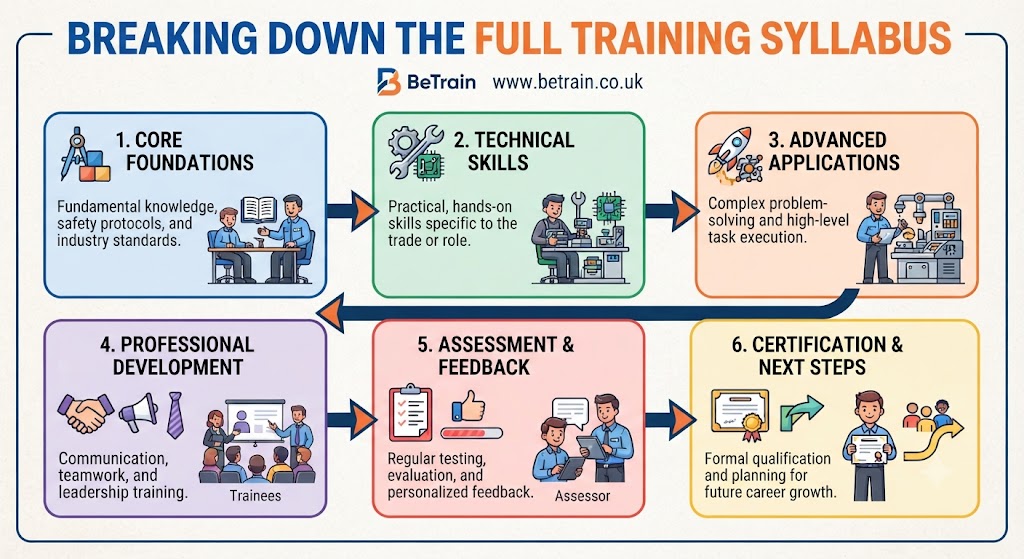
Breaking Down the Full Training Syllabus
If you are planning to start a career in the UK private security industry, one of the first questions you may ask is, “What will I actually learn during the training?” Understanding the training syllabus before you begin can help you feel more confident and better prepared.
Many people think security training is only about guarding buildings or handling difficult situations. In reality, modern security courses cover a wide range of subjects, including customer service, communication, health and safety, emergency procedures, conflict management, and professional responsibilities. The aim is to prepare learners for real workplace situations while helping them meet the requirements for an SIA (Security Industry Authority) licence.
This guide explains the typical topics covered in a Door Supervisor or similar SIA training course and why each subject is important for your future career.
Why Is There a Training Syllabus?
Every approved security training course follows a structured syllabus to ensure learners gain the knowledge and practical skills needed to work safely and professionally.
The syllabus is designed to help you:
- Understand your responsibilities.
- Protect the public.
- Work within the law.
- Communicate professionally.
- Respond to emergencies.
- Prevent conflict.
- Build confidence in the workplace.
Each topic supports the skills needed in day-to-day security work.
Module 1: Working in the Private Security Industry
Most courses begin with an introduction to the security industry.
This module explains:
- The role of security professionals
- Different types of security jobs
- Professional standards
- Legal responsibilities
- Industry expectations
- Ethical behaviour
Understanding the industry helps learners appreciate the importance of professionalism from the very beginning.
Module 2: The Role of the Security Officer
Students learn about the duties they may perform after becoming licensed.
Typical responsibilities include:
- Monitoring premises
- Protecting people
- Preventing crime
- Reporting incidents
- Controlling access
- Supporting customers
- Working with emergency services
Every workplace has different requirements, but these core responsibilities remain important across the industry.
Module 3: Health and Safety
Health and safety is one of the most important parts of security work.
Topics often include:
- Risk awareness
- Safe working practices
- Accident prevention
- Fire safety
- Emergency procedures
- Personal safety
Learning how to identify and reduce risks helps create safer workplaces.
Module 4: Communication Skills
Professional communication is essential for every security role.
Students develop skills such as:
- Active listening
- Clear verbal communication
- Professional behaviour
- Customer service
- Giving instructions
- Team communication
Strong communication often prevents situations from becoming more serious.
Module 5: Customer Service
Modern security professionals interact with the public every day.
Training covers:
- Welcoming visitors
- Helping customers
- Providing information
- Handling complaints
- Remaining polite under pressure
- Building positive relationships
Excellent customer service improves both safety and public confidence.
Module 6: Conflict Management
Conflict management is a major part of the syllabus.
Learners study:
- Recognising early warning signs
- Preventing conflict
- De-escalation techniques
- Professional communication
- Managing difficult behaviour
- Personal safety
The focus is always on resolving situations peacefully whenever possible.
Module 7: Emergency Procedures
Security staff often assist during emergencies.
Training introduces:
- Fire evacuation procedures
- Emergency planning
- Incident response
- Communication during emergencies
- Working with emergency services
- Protecting the public
Preparation helps security professionals respond calmly during unexpected events.
Module 8: Terror Threat Awareness
Security professionals play an important role in public safety.
Training may include:
- Recognising suspicious behaviour
- Reporting concerns
- Understanding potential threats
- Following workplace procedures
- Maintaining vigilance
The emphasis is on awareness, observation, and appropriate reporting.
Module 9: Physical Intervention (Door Supervisor Courses)
For learners completing a Door Supervisor qualification, physical intervention forms an important practical module.
Students learn:
- Legal responsibilities
- Personal safety
- Safe physical techniques
- Teamwork
- Risk assessment
- Reducing the chance of injury
Communication and de-escalation remain the preferred approach whenever possible.
Module 10: Incident Reporting
Accurate records are an important part of professional security work.
Training explains how to:
- Record incidents clearly
- Write factual reports
- Include important details
- Avoid personal opinions
- Maintain confidentiality
Good reports support investigations and improve workplace safety.
Module 11: Professional Conduct
Security professionals represent their employer and often interact with members of the public.
This module focuses on:
- Honesty
- Reliability
- Respect
- Professional appearance
- Timekeeping
- Ethical behaviour
Professional conduct helps build trust with employers and customers.
Module 12: Observation Skills
Observation is one of the most valuable security skills.
Learners practise:
- Monitoring surroundings
- Identifying unusual behaviour
- Recognising potential risks
- Paying attention to detail
- Remaining alert during shifts
Good observation often prevents incidents before they occur.
Practical Learning
Security training is not limited to classroom discussions.
Many courses include:
- Group activities
- Scenario-based learning
- Practical demonstrations
- Communication exercises
- Physical intervention practice (where applicable)
Practical activities help learners apply theory to real workplace situations.
Assessments
At the end of the course, learners complete assessments based on the syllabus.
Depending on the qualification, these may include:
- Multiple-choice exams
- Practical observations
- Scenario-based assessments
The assessments confirm that learners understand the knowledge and skills taught during the course.
Skills You Will Develop
By completing the syllabus, you will improve your:
- Communication
- Customer service
- Teamwork
- Observation
- Problem-solving
- Professional judgement
- Confidence
- Decision-making
These skills remain valuable throughout your career.
How the Syllabus Helps Your Career
The knowledge gained during training prepares you for work in many environments, including:
- Shopping centres
- Corporate offices
- Hotels
- Hospitals
- Construction sites
- Entertainment venues
- Sports stadiums
- Residential developments
The same professional standards apply across different workplaces.
Common Misunderstandings
Myth 1: The Course Is Only About Physical Skills
False.
Communication, customer service, observation, and professionalism form a large part of the syllabus.
Myth 2: Security Training Is Easy
The course is designed to be achievable, but learners are expected to participate, study, and demonstrate understanding of important topics.
Myth 3: The Training Ends After Qualification
Incorrect.
Successful security professionals continue learning through refresher training, workplace experience, and additional qualifications.
Tips for Getting the Most from Your Course
To maximise your learning:
- Attend every session.
- Participate in discussions.
- Complete practical exercises.
- Revise regularly.
- Ask questions.
- Make personal notes.
- Stay organised.
Active participation improves both confidence and understanding.
Frequently Asked Questions
How long does the training take?
Course length depends on the qualification and training provider. Your provider will explain the schedule before the course begins.
Is the syllabus the same for every provider?
Approved providers follow the required learning outcomes for each qualification, although teaching methods and timetables may vary.
Will there be practical activities?
Yes. Many security courses include practical exercises, particularly Door Supervisor training.
Do I need previous security experience?
No. Most entry-level SIA courses are designed for beginners with no previous security experience.
What happens after completing the syllabus?
After successfully completing your assessments and meeting the licensing requirements, you can apply for your SIA licence and begin looking for suitable security roles.
Final Thoughts
The SIA training syllabus is designed to prepare you for the realities of working in the UK’s private security industry. Rather than focusing on just one area, it combines legal knowledge, communication skills, customer service, conflict management, emergency response, observation, and professional behaviour into a well-rounded programme. Each module plays an important role in helping you become a confident and responsible security professional.
By attending every lesson, taking part in practical activities, and revising consistently, you will gain much more than a qualification. You will develop the skills, knowledge, and confidence needed to protect people, support businesses, and build a successful long-term career in the security industry. Understanding the full training syllabus before you begin is the first step towards making the most of your learning experience and achieving your professional goals.