You passed your Emergency First Aid at Work (EFAW) course. You felt confident, you had the skills fresh in your mind and your certificate is good for three years. So why does everyone keep talking about refreshers? And when exactly should you book one?
The short version is that skills fade faster than certificates expire. A refresher is a short session that keeps your skills sharp between full courses. In this guide, we explain in plain English what a refresher is, what it is not, when to book it, how much it costs and how to fit it into a three year plan. If you want to see a real course page as you read, here is the Emergency First Aid at Work course in London.
The Short Answer
HSE recommends that first aiders take a short refresher each year, although it is not a legal requirement. For most people, the best time to book is about nine to twelve months after your course, and again about a year later, before your three year certificate expires and you retake the full course.
You should also book a refresher sooner if your skills feel rusty, if there have been changes in guidance or equipment, or if you are returning to work after a long break.
What Is a Refresher?
A refresher is a short training session for people who already hold a first aid certificate. Instead of repeating the whole course, it focuses on keeping your skills and confidence up to date. Typical content includes:
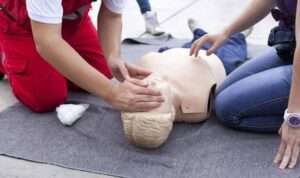
- Practising adult CPR on a manikin.
- Using an automated external defibrillator, or AED.
- The recovery position.
- Helping a choking adult.
- Controlling serious bleeding and recognising shock.
- A chance to ask questions and talk through real situations from your workplace.
- Any updates in guidance since your last course.
Refreshers are usually shorter than a full course. For example, one London provider listed a half day annual refresher for First Aid at Work at £50 per person for individuals, or from £40 per person for a full on site course. That is an example only, and other providers may offer different lengths and prices.
What a Refresher Is Not
It is important not to mix up three different things.
A refresher
- Short update, often a few hours.
- Recommended by HSE each year, but not a legal rule.
- Does not renew your certificate or extend the three year period.
A renewal
- For Emergency First Aid at Work, it means retaking the full one day course.
- Includes at least six hours of training time, not counting breaks, according to HSE guidance.
- Gives you a new certificate valid for three years.
A requalification
- A shorter two day route that exists for First Aid at Work, for people whose certificate is still valid or has only recently expired.
- It does not apply to EFAW.
Some providers state clearly that annual refreshers do not extend your certificate’s validity. You must still complete a full renewal before your three year certificate expires. A refresher may give you a certificate of attendance, but you should check with the provider, because it is not the same as a new qualification.
Why Refreshers Matter
There are good reasons why HSE recommends them.
Skills fade
Skills such as CPR can fade within months if you never use them. You may remember the idea but forget the details, such as hand position or rhythm. A refresher brings them back.
Confidence drops
Even if your skills are fine, you may feel less sure after a year or two. Practising again rebuilds confidence, which matters in a real emergency.
Guidance changes
First aid guidance is reviewed from time to time. A refresher helps you hear about any changes.
Equipment changes
If your workplace has bought a new AED or changed its first aid kit, a refresher is a good time to practise with it.
It protects your workplace
For employers, regular refreshers help keep first aiders ready, which supports the duty to provide adequate and appropriate first aid under the Health and Safety (First Aid) Regulations 1981.
When Should You Book a Refresher?
Here are the best times.
1. About a year after your course
This is the standard recommendation. Nine to twelve months after you passed, book a short refresher. If your course was in October 2026, you might aim for the summer or autumn of 2027.
2. About two years after your course
Book another one in the second year, so your skills are fresh when you approach renewal.
3. Two to three months before renewal
Your renewal course is the full one day course. A refresher a few months before it is not essential, but some people like to practise first, especially if they feel rusty.
4. When your skills feel rusty
If you cannot remember the steps for CPR or the recovery position, do not wait for the calendar. Book a refresher or ask a trainer for a practice session.
5. After a real incident
If you have had to use your skills, you may want to review what you did, ask questions and talk it through. A refresher can help, and many people find it reassuring.
6. When guidance or equipment changes
If your workplace has a new AED, a new kit or you hear about updated guidance, a refresher helps you adapt.
7. When you return from a long break
After maternity leave, long illness or a career break, a refresher can bring you back up to speed.
8. Before a busy season
For businesses with a busy period, such as holidays, events or summer trade, a refresher beforehand helps first aiders feel ready.
9. When new staff join
If you have trained new first aiders, a refresher for existing ones helps the whole team work together.
10. As part of your annual health and safety review
Many employers review health and safety each year. Scheduling the refresher at the same time makes it easy to remember.
A Three Year Plan
The easiest way to think about it is as a three year cycle.
Year one
- Take the full Emergency First Aid at Work course and receive your certificate.
- Review your notes after a few days.
- Aim for a refresher at about nine to twelve months.
Year two
- Take your first refresher.
- Practise now and then, for example the recovery position with a friend.
- Aim for a second refresher at about twenty one to twenty four months.
Year three
- Take your second refresher.
- Book your renewal course a month or two before your certificate expires.
- Retake the full one day course and receive a new certificate.
This pattern keeps your skills fresh across the whole three years, instead of peaking after the course and fading afterwards.
What Does a Refresher Cost?
Refresher prices vary by provider and format. As an example, one London provider listed a half day refresher at £50 per person for individuals, or from £40 per person for a full on site course. Other providers may charge more or less, and some include refreshers as part of a package.
For comparison, the full Emergency First Aid at Work course in London in 2026 commonly costs about £65 to £150 per person. One provider page, linked above, lists £89 per person for classroom training and £75 per person for groups of five or more, at the time of writing in October 2026. Prices change, so always confirm.
So a yearly refresher is cheaper than a full course, and it adds up to a small cost per year. With two refreshers across three years, plus a renewal, the total remains modest compared with the value of confident first aiders.
Who Pays for Refreshers?
If your employer needs you to remain a first aider, it is reasonable to expect them to pay for refreshers and give you paid time, because they support the employer’s duty to provide first aid. The Health and Safety at Work etc. Act 1974 says employers must not charge employees for things provided because of a specific requirement of health and safety law. Since refreshers are recommended rather than required, check your employer’s policy. Self employed people pay for themselves, and training costs related to the business may be allowable, so ask an accountant.
Refresher Formats
You can choose from several formats, depending on your needs.
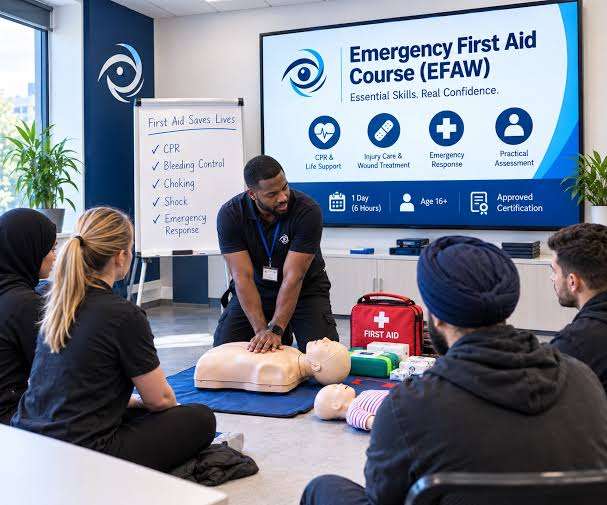
- A half day classroom session. A trainer teaches and you practise with manikins and a training AED.
- On site training. The trainer comes to your workplace, which suits teams.
- A blended session. Some theory online, followed by short practical practice. Check that a qualified trainer leads the practical part.
- An informal practice session. A colleague or trainer helps you practise, for example at a team meeting.
- Self practice. You review notes, watch short videos and practise the recovery position with a friend. This helps, but it does not replace practising with a manikin and getting feedback.
For best value, a half day practical session with a qualified trainer is hard to beat.
What to Look for in a Good Refresher
Whichever provider you choose, check these points.
- Qualified trainers. With teaching and first aid qualifications and real experience.
- Plenty of hands on practice. Time on a manikin and a training AED.
- Small groups. Many awarding organisations set a maximum of around 12 learners per trainer for full courses, and smaller groups give more feedback.
- A clear outline. What will be covered and for how long.
- A clear price. Including VAT, with details of what is included.
- A certificate of attendance, if you want one.
- Honesty about the limits. A good provider tells you that a refresher does not renew your certificate.
HSE stopped approving first aid training providers in 2013, so you need to check for yourself. Be cautious of any claim that a refresher renews a certificate, or that a course is HSE approved.
You can review the Emergency First Aid at Work training page to see how one provider presents its courses, prices and booking options, and ask whether it offers refreshers or renewal reminders.
A Note for Employers
If you manage first aiders, build refreshers into your plan. As a starting point for low hazard workplaces, HSE suggests at least one appointed person for fewer than 25 employees, at least one first aider trained in Emergency First Aid at Work for 25 to 50 employees, and at least one first aider trained in First Aid at Work for every 100 employees above that, or part of 100. Higher hazard workplaces need more. A first aid needs assessment gives the best answer.
Some practical tips for employers:
- Keep a record. Note course dates, refresher dates and expiry dates for each first aider.
- Stagger refreshers. Spread them across the year, so cover is never thin.
- Combine with other training. Hold refreshers alongside annual health and safety updates.
- Use group bookings. Many providers offer lower prices for groups, and training at your premises can save travel time.
- Encourage practice. Short practice sessions, for example at a team meeting, help keep skills alive.
Signs That You Need a Refresher Now
You do not have to wait for the calendar. You may need a refresher if:
- You cannot remember the steps for CPR.
- You are unsure where to place your hands.
- You have never used your workplace AED.
- You feel nervous at the idea of helping.
- More than a year has passed since your course.
- Your workplace has changed, for example a new layout or new equipment.
- You have been away from work for a long time.
If any of these ring true, book a refresher.
Why London Makes Refreshers Easy
London has a very large number of providers, venues and dates, so you can usually find a short session close to home or work. Many providers also deliver training at your workplace, which makes it easy to refresh a whole team in a morning or afternoon. With busy roads and crowded transport, having confident, current first aiders on site matters in an emergency, because they are often the first help available.
Final Thoughts
So, when should you book EFAW refresher training in London? About nine to twelve months after your course, and again a year later, with your full renewal due before the three years end. Book sooner if your skills feel rusty, after an incident, when equipment or guidance changes or when you return from a long break.
Remember that a refresher keeps your skills sharp but does not renew your certificate. Put both dates in your calendar today. When you are ready, take a look at the Emergency First Aid at Work course in London and choose a date that suits you.
Frequently Asked Questions
1. What is EFAW refresher training?
It is a short session for people who already hold an Emergency First Aid at Work certificate. It helps you practise key skills, such as CPR and AED use, and update your knowledge. HSE recommends one each year, although it is not a legal requirement.
2. When should I book an EFAW refresher?
A good time is about nine to twelve months after your course, and again about a year later. Book sooner if your skills feel rusty, after an incident, when equipment or guidance changes or after a long break.
3. Does a refresher renew my EFAW certificate?
No. A refresher does not extend your certificate or renew it. For Emergency First Aid at Work, renewal means retaking the full one day course before your three year certificate expires.
4. How long does a refresher take?
It varies by provider, but refreshers are usually shorter than a full course, often a few hours or a half day. Ask your provider for the exact length and content.
5. How much does a first aid refresher cost in London?
Prices vary. For example, one London provider listed a half day refresher at £50 per person for individuals, or from £40 per person for a full on site course. Other providers may charge more or less, so compare quotes.
6. Is a refresher a legal requirement?
No. HSE recommends annual refresher training for first aiders, but it is not a legal rule. The legal duty on employers is to provide adequate and appropriate first aid.
7. What is the difference between a refresher and a renewal?
A refresher is a short update that keeps your skills sharp. A renewal for EFAW is a full repeat of the one day course, which gives you a new three year certificate.
8. Can my employer pay for my refresher?
Many employers do, because refreshers support their first aid arrangements. Since refreshers are recommended rather than required, check your employer’s policy. Self employed people pay for themselves.
9. How can I keep my skills fresh without a course?
Review your notes, practise the recovery position with a friend, walk through the CPR steps in your head, watch short refresher videos and learn where your first aid kit and AED are. These help, but a practical session with a trainer gives you feedback.
10. Where can I book Emergency First Aid at Work training in London?
You can book through a training provider that offers the regulated qualification, either as a public course or as training at your workplace. Ask whether the provider also offers refreshers, and check the total price, what is included and the awarding organisation before you book.