
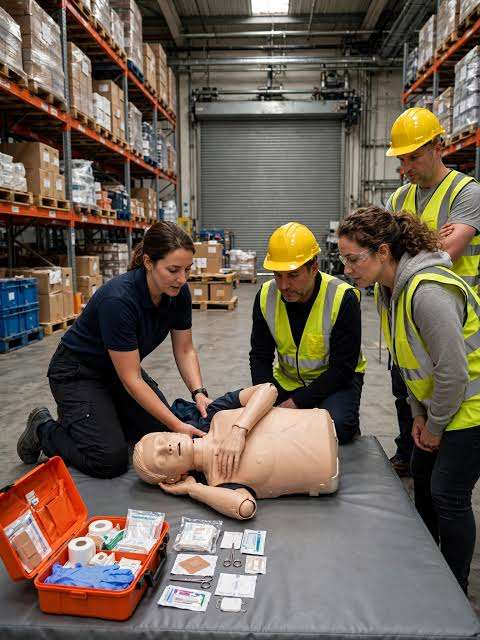
When you plan first aid training for your team, one of the first questions is about timing. Should you book a weekday or a weekend? And does the day you choose change the price?
Many people believe that weekend courses must cost more, because trainers give up their free time. Others think weekends are cheaper because demand is lower. The truth sits somewhere in the middle. The price often depends on the provider, the group size, and how the course is arranged.
In this guide, we explain how weekend and weekday pricing works for an Emergency First Aid at Work Course London. We look at when weekends may cost more, when they may cost the same, and how to choose the best day for your budget and your team.
What Is Emergency First Aid at Work?
Emergency First Aid at Work, often called EFAW, is a one day course that teaches people how to act when someone is hurt or becomes suddenly ill at work. It usually takes about six hours of training. You do not need any medical background to take part.
On the course, learners are taught how to:
- Check a scene for danger before helping
- Call the emergency services at the right time
- Give CPR to an adult who is not breathing
- Use an automated external defibrillator, also called an AED
- Help someone who is choking
- Control serious bleeding
- Place an unconscious person in the recovery position
- Treat shock, burns, cuts, and small injuries
The certificate is normally valid for three years. To see how a trusted provider describes this training, you can visit the Emergency First Aid at Work course page from Betrain.
Does the Day of the Week Change the Price?
The short answer is: sometimes. There is no single rule that applies to every provider in London. Some charge the same price on every day of the week. Others add a small extra fee for weekends. A few even offer special weekend rates to fill empty places.
Here is why prices can differ.
Trainer availability. Many trainers work on weekdays for other employers. When they give up a weekend, a provider may pay them a higher day rate.
Venue costs. Some venues charge more for weekend hire. Others offer lower rates because fewer businesses use them on weekends.
Demand. If many people want weekend places, the price may rise. If demand is low, a provider may offer a discount to attract learners.
Business model. Some providers build their whole offer around flexible dates. They keep the price the same on every day to make things simple.
Because of all this, you cannot assume that weekends cost more or less. The only way to know is to compare quotes for the exact dates you want.
Reasons Weekend Training Can Cost More
Let us look at why some providers charge extra for weekends.
Higher trainer pay
Trainers often earn a higher rate for working on Saturdays or Sundays. This is similar to many other jobs where weekend work is paid at a better rate. The provider may pass this extra cost on to the learner.
Fewer venues open
Some training venues close on weekends, especially office buildings and business centres. Providers may have to use special venues that cost more to hire.
Smaller choice of dates
If only a few weekend courses run each month, they can fill up quickly. When places are limited, providers may keep prices higher.
Extra staff costs
A course needs more than a trainer. Someone has to manage bookings, prepare equipment, and answer questions. Weekend work can raise these costs too.
Reasons Weekend Training Can Cost the Same or Less
Weekend training is not always more expensive. Here are the reasons it can be equal or even cheaper.
Lower venue demand
On weekends, many business venues are quiet. Some offer lower hire fees to fill their rooms. A provider can pass part of that saving on to you.
Filling empty places
A provider wants every class to be as full as possible. If weekend places are not selling, a small discount may attract more learners.
Simple flat pricing
Many providers prefer one clear price for every date. This makes quotes easy to understand and keeps things fair for everyone.
Group and on site offers
If you book a group course at your own workplace, the day of the week may matter less. The price often depends on the group size and the trainer’s day rate, not on whether it is a weekday or a weekend.
The Hidden Savings of Weekend Training
Even if a weekend course costs a little more on paper, it may save your business money in other ways. This is where many managers make a mistake. They compare the course fee only, and forget the cost of lost working time.
Think about this example. A shop has six staff members. If all six attend a weekday course, the shop may have to close, or run with fewer workers. Lost sales and overtime can easily be more than the extra weekend fee.
Now consider a weekend course. Staff attend on their day off, or the shop runs as usual during the week. The business keeps selling, and customers are happy. The small extra fee is easily balanced by the money saved.
Here are some hidden savings to think about:
- No lost production or sales during the working week
- No need to hire temporary cover
- Less disruption for customers and clients
- Easier planning for shift workers
- Fewer missed deadlines
If your team is busy during the week, weekend training can be the smartest choice even when the sticker price is higher.
The Hidden Costs of Weekend Training
To be fair, weekend training also has downsides. You should think about these before you decide.
Staff may need to be paid extra. If employees attend on their day off, you may need to pay them for their time or give them time off in return. Check your contracts and your legal duties.
Staff may be less happy to attend. People value their free time. Some may feel tired or unmotivated, which can affect learning.
Travel on weekends can be slower or more costly. Some public transport services run less often at weekends, and parking rules may be different.
Lower attendance. If staff have family plans, some may not be able to come. This can leave gaps in your first aid cover.
When you count these hidden costs, a weekday course may sometimes be better value, even if it looks more expensive at first.
Weekday vs Weekend: A Simple Comparison
Here is a clear way to think about the choice.
Weekday courses are often best when:
- Your business can easily spare staff for a day
- You want staff to be paid as normal and attend during working hours
- You prefer the usual price with no weekend extra
- You want staff to be fresh and focused
Weekend courses are often best when:
- Your business cannot stop during the week
- You run a shop, restaurant, or other service that is busy on weekdays
- You are an individual who works full time and wants to train on your own time
- You want to avoid the cost of lost production
Neither choice is always right. The best option depends on your own situation.
How Group Size Affects Weekend Pricing
Group size often matters more than the day of the week. When you train a larger group, the cost per person usually goes down. This is true on both weekdays and weekends.
For example, a group of eight may pay much less per head than eight people booking separate places. If you are booking for a team, ask about group rates first. Then ask whether a weekend date changes that rate.
Some providers offer on site training for groups, which means the trainer comes to your workplace. This can be very helpful for weekend training, because your staff do not need to travel across London. They learn together in a familiar place, and you may avoid extra travel costs.
Location Matters in London
London is a huge city, and travel can take a lot of time. A cheap course across the city may cost more once you add transport and lost time. A slightly higher fee near your workplace or home may be better value.
When you search for an Emergency First Aid at Work Course London option, think about:
- How far the venue is from your home or workplace
- How easy it is to reach by public transport
- Whether weekend transport services are good
- Whether parking is available and how much it costs
On weekends, some train and bus routes run less often. Always check the journey before you book, so your staff arrive on time and relaxed.
How to Find the Best Price for Your Preferred Day
You can use these steps to get fair quotes for weekday and weekend training.
- Choose two or three possible dates. Include at least one weekday and one weekend date.
- Ask each provider for a written quote. Ask for the final price, including tax.
- Check what is included. Make sure materials, certificates, and equipment are part of the price.
- Compare class sizes. A weekend class may be smaller or larger than a weekday class.
- Ask about discounts. Some providers give better rates for groups, early bookings, or repeat customers.
- Think about hidden costs. Count staff time, travel, and any extra pay.
- Make your choice. Pick the option that gives the best total value, not just the lowest number.
You can also see how a clear course page explains its details on the Emergency First Aid at Work training page.
Tips to Save Money on Any Day
Whether you choose a weekday or a weekend, these simple ideas can help you lower the cost.
Book early. Early booking gives you more choice of dates and may help you avoid urgent booking fees.
Train in groups. Group rates are one of the easiest ways to reduce the cost per person.
Choose on site training for larger teams. Your staff save travel time and costs.
Plan renewals. Keep a list of when certificates expire and book new courses ahead of time.
Do a first aid needs assessment. This helps you avoid paying for a higher level of training than you need.
Ask about repeat business offers. Providers may give better rates to companies that train staff every year.
Do Not Choose Only on Price
Saving money is good, but it should never be the only reason for your choice. A very cheap course may have large classes, less practice time, or a weaker certificate. In an emergency, your staff need real skills, not just a piece of paper.
Check these points before you book:
- Is the trainer qualified and experienced?
- Is the class size small enough for good practice?
- Does the certificate come from a recognised awarding body?
- Is the course a full day, with enough time to learn properly?
- Does the provider explain everything clearly?
A fair price for a good course is far better than a low price for poor training.
Why First Aid Training Is Worth the Cost
In the UK, employers must provide adequate first aid arrangements under the Health and Safety (First Aid) Regulations 1981. This includes trained people, equipment, and facilities. Training your staff is a key part of meeting this duty.
The benefits go beyond the law. Trained first aiders can help in the first minutes after an accident, when quick action matters most. They can give CPR, control bleeding, and help a choking person while the ambulance is on its way. This can reduce harm, shorten recovery times, and lower the cost of accidents.
Compared with the cost of one serious incident, a one day course is a small price. The certificate lasts three years, so the value is spread across a long period. Whether you train on a weekday or a weekend, the real goal is the same: a safer workplace.
A Short Example
Imagine a small café in London with five staff members. The owner wants everyone to complete first aid training.
A weekday course would mean closing the café or running it with very few people. The owner would lose a full day of sales. A weekend course costs a little more per person, but the café can still run during the week with some staff attending on a quiet Sunday while others cover.
After adding up everything, the owner finds that the weekend option saves more money overall. The small extra fee is much less than the sales that would have been lost. The team also learns together and feels more confident.
Now imagine an office with ten employees. They can all attend on a Tuesday with no loss of income. A weekday course at the standard price is the better choice, with no extra weekend fee and no need for staff to give up free time.
The lesson is simple. The best day depends on your business, not on a general rule.
Final Thoughts
So, is weekend training more expensive in London? Sometimes it is, sometimes it is not. Some providers add a small fee for weekends, while others charge the same price every day. A few even offer lower prices to fill places.
The smartest approach is to compare real quotes for the dates you prefer. Look at the final price, what is included, class size, trainer quality, location, and the hidden costs of lost time or extra pay. When you add everything together, you will see which option gives the best value.
If you are ready to protect your team and meet your legal duties, take the next step today. Look for an Emergency First Aid at Work Course London that fits your schedule and budget. You can explore the details and book through the Emergency First Aid at Work Course London page and choose the date that works best for you.
Frequently Asked Questions (FAQs)
1. Is weekend first aid training more expensive in London?
Not always. Some providers charge extra for weekends because of higher trainer and venue costs, while others charge the same price every day. Compare written quotes for the exact dates you want.
2. Why might a weekend first aid course cost more?
Trainers may earn a higher rate for weekend work, and some venues charge more or have fewer rooms available. Limited weekend dates can also keep prices higher.
3. Can weekend first aid training be cheaper than weekday training?
Yes, in some cases. Providers may offer lower rates to fill weekend places, and some venues give cheaper weekend hire. Pricing depends on the provider.
4. How long does an Emergency First Aid at Work course take?
It is normally a one day course with about six hours of training. Exact timings can differ, so check the course details before booking.
5. How long is an Emergency First Aid at Work certificate valid?
The certificate is usually valid for three years. After that, you need to retake the course to stay qualified.
6. Is weekend training better for small businesses?
It can be, especially for businesses that cannot close during the week, such as shops, cafés, and restaurants. The savings from avoiding lost sales can be larger than any extra weekend fee.
7. Do group bookings lower the price on weekends?
Yes, many providers offer lower rates per person for groups, on both weekdays and weekends. Ask about group pricing and on site training for larger teams.
8. Do I need to pay staff extra for weekend first aid training?
It depends on your employment contracts and legal duties. If staff attend on a day off, you may need to pay them or give time off in return. It is wise to check your policy before booking.
9. How many first aiders does my workplace need?
There is no single number for every business. It depends on your staff numbers, the type of work, and the level of risk. A first aid needs assessment helps you decide.
10. How can I get the best price for first aid training in London?
Book early, train in groups, compare written quotes for weekday and weekend dates, and check what is included. Also think about travel and lost working time, not just the course fee.
Word count: about 2,500 words, with no hyphens or dashes used in the text. I can also prepare this in a Word file if you want.