
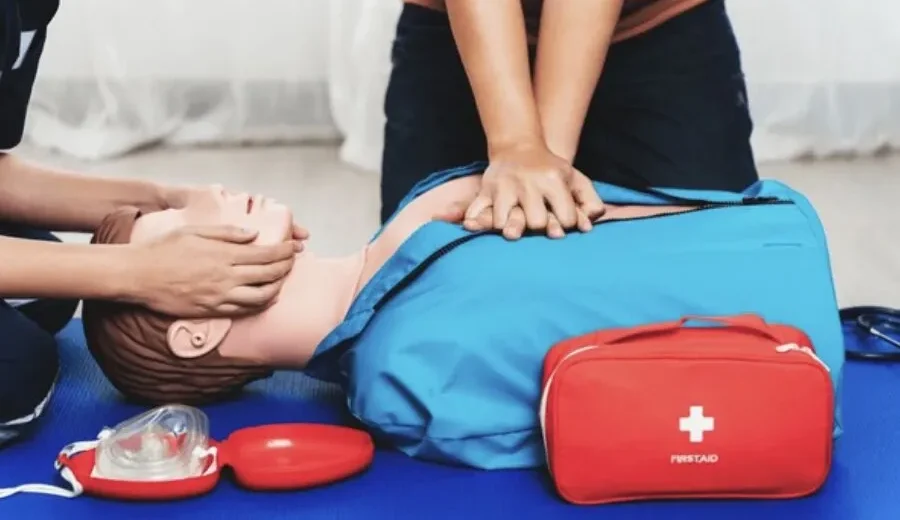
Imagine this: a colleague suddenly collapses in the office, a warehouse worker cuts their hand badly on a machine, or someone starts choking during a lunch break. In these first few minutes, before an ambulance arrives, the person standing next to them can be the difference between a full recovery and a tragedy. That is exactly why Emergency First Aid at Work training London has become one of the most searched, most requested, and most valuable workplace courses across the capital.
For just £89, you can learn the exact skills that emergency responders wish every workplace had. This is not an exaggeration — it is the reality of what a single day of proper training can do. In this guide, we will walk through everything you need to know about Emergency First Aid at Work (EFAW) training in London: what it covers, who needs it, why it matters, how much it costs, and how to choose the right provider. We will also answer the most common questions people ask about this course, the same questions that pop up again and again in Google search results.
Whether you are a business owner trying to meet your legal health and safety duties, an HR manager organising training for your team, or simply someone who wants to be prepared in an emergency, this article will give you a clear, honest, and complete picture.
What Is Emergency First Aid at Work (EFAW) Training?
Emergency First Aid at Work, often shortened to EFAW, is a recognised first aid qualification designed for people who may need to act as a workplace first aider in a low-risk environment. It is one of the most common first aid courses taken in the UK, and for good reason — it is practical, focused, and delivered in a single day.
Unlike longer first aid courses that cover a huge range of medical situations, EFAW is built around the essentials: the things most likely to happen in an average office, shop, warehouse, or small business. The course teaches you how to:
- Assess an emergency situation safely
- Manage an unresponsive casualty, including performing CPR
- Use an Automated External Defibrillator (AED)
- Help someone who is choking
- Control bleeding and treat wounds
- Recognise and manage shock
- Deal with minor injuries such as burns, sprains, and cuts
- Understand when and how to call for professional medical help
The course is designed to be accessible, meaning you do not need any medical background to take it. Trainers break down each topic into simple, memorable steps, and there is plenty of hands-on practice so that the skills actually stick.
Why Emergency First Aid at Work Training Matters in London
London is one of the busiest, most densely populated cities in the world. With millions of people commuting, working, and moving through offices, shops, construction sites, and public spaces every day, the chances of a medical emergency happening somewhere in a workplace are far from remote.
Here is why this training carries extra weight in a city like London:
1. Higher population density means faster response is critical. Even though London has excellent emergency services, ambulance response times can vary depending on traffic, time of day, and the severity of other ongoing incidents. In those crucial early minutes, having a trained first aider on-site can keep a situation stable until paramedics arrive.
2. A huge range of industries and risks. From office blocks in Canary Wharf to retail stores on Oxford Street, restaurants in Soho, and construction sites across the city, London’s workforce spans almost every industry imaginable. Each of these environments carries its own risks, and having staff who know basic emergency first aid response reduces the impact of accidents across the board.
3. Legal responsibility. Under UK health and safety law, employers must ensure adequate first aid provision is available in the workplace. In lower-risk environments, an Emergency First Aid at Work certificate is often the minimum standard employers are expected to meet.
4. Employee confidence and wellbeing. Knowing that your colleagues are trained to respond to emergencies builds a sense of safety and trust within a team. Employees feel more valued when their employer invests in training that could one day save their life.
Who Needs This Training?
While anyone can benefit from learning emergency first aid, some groups benefit the most from taking a structured EFAW course:
Employers and Business Owners
If you run a small to medium-sized business in a relatively low-risk setting — an office, a shop, a salon, a small warehouse — EFAW training is often exactly what health and safety guidance recommends. It satisfies your duty of care to staff and customers without requiring the more extensive (and more expensive) three-day First Aid at Work qualification that is typically reserved for higher-risk workplaces.
HR and Office Managers
If you are responsible for staff welfare, scheduling training days, or maintaining compliance records, this course is one of the easiest and most cost-effective ways to tick an important box while genuinely improving workplace safety.
Retail and Hospitality Staff
Cafes, restaurants, shops, and hotels deal with the public all day, every day. Choking incidents, allergic reactions, slips, and falls are common in these environments, and a trained staff member on shift can respond immediately rather than waiting for help.
Construction and Site Workers
Even where a full First Aid at Work qualification is required for certain roles, having additional staff trained in EFAW increases the number of people on-site who can respond quickly to an incident.
Nannies, Childminders, and Carers
Many people working with children or vulnerable adults choose to take this course independently, both for their professional requirements and personal peace of mind.
Anyone Who Wants to Be Prepared
You do not need a professional reason to take this course. Parents, volunteers, coaches, and everyday members of the public often sign up simply because they want to know what to do if a loved one, a stranger, or a colleague needs urgent help.
What Does the Course Actually Cover?
A good Emergency First Aid at Work course is built around real scenarios, not just theory. Here is a breakdown of what you can expect to learn during the day.
1. The Role and Responsibilities of a First Aider
Before diving into practical skills, the course explains what is expected of a workplace first aider, including how to assess a scene for danger, how to protect yourself and others, and when to call 999 or 112 for emergency services.
2. Primary Survey and Managing an Unresponsive Casualty
You will learn the standard approach used by first aiders across the UK — checking for danger, response, airway, breathing, and circulation. This section also covers how to place someone in the recovery position safely.
3. Cardiopulmonary Resuscitation (CPR)
This is one of the most important parts of the course. You will practise chest compressions and rescue breaths on training manikins until the technique feels natural. Trainers will also explain the correct rhythm and depth needed to give someone the best possible chance of survival before paramedics arrive.
4. Using an Automated External Defibrillator (AED)
Many public buildings and workplaces now have defibrillators installed. The course teaches you how to use one safely and confidently, even if you have never seen one in person before.
5. Choking
You will learn the back blows and abdominal thrust technique used to help someone who is choking, along with how to recognise the difference between mild and severe choking.
6. Bleeding and Wound Care
From minor cuts to more serious wounds, you will learn how to control bleeding effectively, when to apply pressure, and how to reduce the risk of shock.
7. Shock
Shock can develop quickly after an injury and is often overlooked. The course explains the signs to watch for and the steps to take to keep a casualty stable.
8. Minor Injuries
Burns, small wounds, sprains, and strains are common in almost every workplace. You will learn simple, effective ways to treat these injuries.
9. Record Keeping and Reporting
First aiders are often responsible for logging incidents. The course covers what information needs to be recorded and why accurate reporting matters.
Course Format and Duration
Emergency First Aid at Work training is typically delivered as a one-day course, usually lasting around six hours including breaks. This makes it easy to fit into a working week without pulling staff away from their jobs for multiple days.
Depending on the provider, you may be able to choose between:
- Classroom-based training, where you attend in person at a training centre in London and practise hands-on with instructors and equipment
- Blended learning, where some theory is completed online beforehand, followed by a shorter practical session in person
- On-site training, where an instructor comes directly to your workplace, which can be convenient for teams of five or more
Group bookings are often available too, which can work out even better value if you are training multiple staff members at once.
Certification and How Long It Lasts
Once you complete the course and pass the practical assessment, you will receive an Emergency First Aid at Work certificate. This certificate is typically valid for three years, after which a refresher course is recommended to keep your skills and knowledge up to date.
It is worth noting that first aid guidelines occasionally change as medical understanding improves, so refresher training is not just a formality — it genuinely helps first aiders stay current with best practice.
When choosing a course, always check that the training provider follows recognised first aid education standards and that the course structure aligns with current UK health and safety expectations for emergency first aid provision in the workplace.
Why the £89 Price Point Matters
First aid training can vary a lot in price depending on the provider, the format, and the location. Courses in London, in particular, can sometimes carry a premium simply because of higher venue and staffing costs in the capital.
At £89, Emergency First Aid at Work training London sits at a genuinely accessible price point for individuals and small businesses alike. Here is why that matters:
- Affordable for individuals. Not everyone has an employer covering the cost of training. A lower price point means more people can access potentially lifesaving education without it becoming a financial burden.
- Cost-effective for small businesses. Many small businesses operate on tight margins. Being able to train staff in emergency first aid without a large outlay makes it far easier to stay compliant with health and safety expectations.
- No compromise on quality. A reasonable price does not have to mean a lower standard of training. A well-run EFAW course still covers the full syllabus, includes hands-on practice, and results in a proper certificate — regardless of the price tag.
- Encourages more people to get trained. The more affordable first aid training is, the more people across London will have these skills. That benefits everyone, not just the person who took the course.
Choosing the Right Emergency First Aid at Work Course in London
Not all first aid courses are created equal. When comparing your options, keep these factors in mind:
Check the Course Content
Make sure the course explicitly covers all the core EFAW topics: CPR, choking, bleeding, shock, AED use, and minor injuries. If a provider is vague about what is included, that is a red flag.
Look at Class Sizes
Smaller class sizes usually mean more hands-on time with the instructor and more opportunities to practise skills properly rather than just watching a demonstration.
Ask About the Trainer’s Experience
A good instructor does more than read from a slideshow. Look for trainers with real-world first aid or medical backgrounds who can answer questions confidently and bring practical experience into the room.
Confirm the Certificate Details
Make sure you understand exactly what certificate you will receive, how long it is valid for, and whether it is suitable for your workplace’s specific requirements.
Consider Location and Convenience
London is a big city, and travel time matters. Look for training venues that are easy to reach by public transport, or consider on-site training if you are booking for a group.
Compare Value, Not Just Price
The cheapest course is not always the best value if it cuts corners on practical training time. Look for a course that balances a fair price with thorough, hands-on teaching — which is exactly the balance that a well-structured £89 Emergency First Aid at Work course aims to strike.
Booking Your Emergency First Aid at Work Training in London
Booking a course is usually a straightforward process. Most providers allow you to:
- Browse available dates and London locations online
- Select whether you are booking as an individual or for a group
- Complete a simple registration form
- Receive confirmation along with any pre-course information
- Attend the training on the scheduled day
- Complete a short practical assessment
- Receive your certificate, either on the day or shortly afterwards
If you are booking on behalf of a company, it is worth checking whether the provider offers flexible scheduling, since coordinating multiple staff members’ availability can sometimes be the trickiest part of the process.
Benefits for Employers Beyond Compliance
While meeting legal first aid obligations is often the starting point, the benefits of training staff in Emergency First Aid at Work go well beyond ticking a compliance box.
Reduced impact of workplace accidents. When an incident happens, a trained response can prevent a minor injury from becoming a serious one, and can stabilise a serious injury until professional help arrives.
Improved staff morale. Employees notice when a company invests in their safety and wellbeing. This kind of training sends a clear message that people matter, not just productivity.
Better emergency preparedness culture. Once a few staff members are trained, it often encourages a wider culture of safety awareness across the whole team — from noticing hazards early to knowing exactly what to do if something goes wrong.
Positive impact outside of work too. The skills learned in an EFAW course do not stay in the office. Many people who take this training end up using it at home, in public, or while helping a family member — extending the value of the course far beyond the workplace itself.
Common Situations Where This Training Makes a Real Difference
To bring the value of this course to life, here are a few everyday scenarios where Emergency First Aid at Work training could make a critical difference:
- A colleague chokes on food during a work lunch and needs immediate back blows and abdominal thrusts before they can breathe again.
- An employee suffers a deep cut from office equipment or tools, and quick, correct wound care prevents excessive blood loss before paramedics arrive.
- Someone collapses suddenly in a meeting room, and a trained colleague recognises the signs, starts CPR, and uses the nearest defibrillator while calling for emergency help.
- A customer in a shop has an allergic reaction, and staff are able to recognise the signs of shock and respond calmly while waiting for an ambulance.
- A worker on a site sustains a burn, and immediate, correct first aid reduces the severity of the injury and speeds up recovery.
None of these situations require a doctor on-site. They require someone calm, capable, and trained — exactly what Emergency First Aid at Work training prepares you to be.
Final Thoughts
Emergency First Aid at Work training is one of those rare investments where the cost is small, but the potential impact is enormous. For £89, you are not just meeting a workplace requirement — you are gaining the confidence and skills to genuinely help someone in one of the most frightening moments of their life.
Whether you are an employer looking to keep your team safe and compliant, or an individual who simply wants to be prepared, taking a recognised Emergency First Aid at Work training London course is a decision that pays off far beyond the price of the ticket.
If you are ready to get trained, you can find upcoming course dates and booking details for Emergency First Aid at Work training London and take the first step toward becoming a confident, capable first aider.
Frequently Asked Questions About Emergency First Aid at Work Training London
1. What is Emergency First Aid at Work (EFAW) training?
Emergency First Aid at Work training is a one-day course that teaches the essential skills needed to respond to common workplace emergencies. It covers topics such as CPR, choking, bleeding control, shock, and the use of an automated external defibrillator (AED), giving learners the confidence to act quickly and correctly in an emergency.
2. How long does an Emergency First Aid at Work course take?
The course is typically completed in a single day, usually around six hours including breaks. This makes it easy for both individuals and businesses to schedule without disrupting an entire working week.
3. Who needs Emergency First Aid at Work training?
This training is suitable for almost anyone, but it is especially recommended for employees in lower-risk workplaces such as offices, shops, and small businesses. It is also popular among carers, childminders, hospitality staff, and members of the public who want to be prepared for everyday emergencies.
4. Is the £89 Emergency First Aid at Work course a recognised qualification?
Yes, a properly structured Emergency First Aid at Work course results in a certificate that reflects the recognised EFAW syllabus. Learners should always confirm the specific certification details with their chosen provider before booking to ensure it matches their workplace requirements.
5. How long is an Emergency First Aid at Work certificate valid for?
An Emergency First Aid at Work certificate is generally valid for three years. After this period, a refresher course is recommended to keep skills and knowledge current with best practice.
6. What topics are covered in the course?
The course covers assessing an emergency scene, managing an unresponsive casualty, performing CPR, using a defibrillator, helping someone who is choking, controlling bleeding, managing shock, and treating minor injuries such as burns and sprains.
7. Do I need any prior experience to take this course?
No prior medical knowledge or experience is required. The course is designed for complete beginners and is taught in a clear, practical, step-by-step way, with plenty of hands-on practice throughout the day.
8. Where in London can I take this training?
Emergency First Aid at Work training is offered at various venues across London, and on-site training can often be arranged for groups. Checking a provider’s website for current available dates and locations is the best way to find a session that suits you.
9. How much does Emergency First Aid at Work training cost in London?
Prices vary between providers, but £89 represents an accessible and competitive price point for a full, hands-on Emergency First Aid at Work course in London, without compromising on the quality of training or certification.
10. Why is this training important for employers?
Under UK health and safety expectations, employers have a duty to provide adequate first aid arrangements in the workplace. For many lower-risk businesses, Emergency First Aid at Work training helps meet this responsibility while also improving staff confidence, workplace safety culture, and the ability to respond effectively if an emergency does occur.