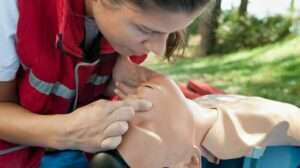

A fair side by side comparison, so you can pick the format that fits your time, your learning style and your workplace.
When you search for an Emergency First Aid at Work course in London, you may notice two formats. One is the traditional classroom course, where everything happens in one day with a trainer. The other is blended learning, where you do part of the learning online and then attend a shorter practical session.
Both can lead to a valid qualification when they are run properly. So which one is better? The honest answer is that it depends on you, your team and your workplace. In this guide, we compare them in plain English, covering time, cost, learning style, assessment and employer acceptance. If you want to see a real course page as you read, here is the Emergency First Aid at Work course in London.
The Short Answer
- Classroom EFAW is the standard, one day, face to face course. It is simple, familiar and widely accepted. It suits most people, especially beginners and those who like learning with others.
- Blended EFAW splits the course into online theory and an in person practical session. It can save time and suit busy people, as long as it is a regulated qualification and the practical part is led and assessed by a qualified trainer.
- Neither is better for everyone. The best choice is the one that is regulated, properly assessed and accepted by your employer.
One thing is not up for debate: both formats must include real, hands-on practical training and assessment. A course with no practical element is not suitable for a workplace first aider.
A Quick Reminder of the EFAW Course
Emergency First Aid at Work (EFAW) is a regulated Level 3 qualification for low-risk workplaces. HSE guidance says it should include at least six hours of training time, not counting breaks. It teaches you how to:
- Assess an incident and a casualty safely.
- Give adult CPR and use an AED.
- Place an unresponsive, breathing person in the recovery position.
- Help a choking adult.
- Control serious bleeding.
- Spot and manage shock.
- Treat minor injuries.
The certificate is valid for three years. HSE recommends a short yearly refresher, although it is not a legal rule.
What Is a Classroom EFAW Course?
A classroom course takes place in one sitting, usually over a single day. You attend a venue in London, or your trainer comes to your workplace. The trainer teaches, demonstrates and watches you practise. Theory and practice are mixed together, so you move naturally from listening to doing.
A typical day runs from morning to late afternoon, with breaks and lunch. You meet other learners, practise in pairs and groups, and ask questions as they come up.
What Is a Blended EFAW Course?
A blended course splits the learning into two parts.
- Online part. You study the theory in your own time, using videos, reading and quizzes. This might cover the role of a first aider, assessing an incident and the basics of each emergency.
- Practical part. You attend a face-to-face session with a qualified trainer. Here you practise CPR, use an AED, try the recovery position, work on choking and bleeding and are assessed in person.
The overall learning is meant to be equal, but the time you spend in a room is shorter. Rules differ between awarding organisations, so a provider should be able to explain exactly how their blended course meets the standard.
Side-by-Side Comparison
Time in the room
- Classroom: a full day.
- Blended: a shorter practical session, plus online study at your own pace.
Flexibility
- Classroom: fixed date and time.
- Blended: flexible online part, fixed practical date.
Learning style
- Classroom: trainer-led, social, steady pace.
- Blended: self paced theory, then hands-on practice.
Hands on practice
- Classroom: spread across the day.
- Blended: concentrated in the practical session.
Assessment
- Classroom: observed by the trainer through the day.
- Blended: practical assessment in person, plus online checks.
Good for
- Classroom: beginners, people who like group learning, teams training together.
- Blended: busy people, confident self learners, those wanting less time off work.
The Benefits of Classroom Learning
Here is why many people still prefer the classic format.
Everything in one place
You finish the whole qualification in a single day. There are no logins, no deadlines and no online work to forget.
Easy to ask questions
If something is unclear, you can ask the trainer straight away. Many people learn well from hearing other learners’ questions too.
Theory and practice flow together
The trainer can explain a point and then immediately let you try it. This helps the skills stick.
Great for beginners
If you have never done first aid before, having a person guide you through each step can feel reassuring.
Team bonding
When colleagues train together, they build trust and know who the first aiders are. This helps in a real emergency.
Simple to check
Employers and insurers know the classroom format well, so there are fewer questions about acceptance.
The Drawbacks of Classroom Learning
Classroom courses also have downsides.
- A whole day away from work. This can be tough for small businesses.
- Fixed dates. You may need to wait for the next suitable date.
- Pace is set by the group. Fast learners may feel held back, and slower learners may feel rushed.
- Travel time. If the venue is across London, you may spend extra time getting there.
The Benefits of Blended Learning
Blended courses have real advantages for the right person.
Less time in the classroom
You spend a shorter time at the venue, because part of the learning is already done. This can be handy for busy people and small teams.
Study at your own pace
You can pause, replay and repeat sections of the online theory. If you learn best by reading or watching, this is a plus.
Fit learning around your life
You can study in the evening, at weekends or between shifts. This reduces disruption to your work.
More focus on practice
Because theory is covered online, the practical session can focus on hands-on skills, such as CPR and the AED.
Good for refreshing
If you already have some knowledge, a blended course can feel quicker and less repetitive.
The Drawbacks of Blended Learning
It is not perfect for everyone.
- It needs self-discipline. If you leave the online work to the last minute, you may arrive unprepared.
- Less group discussion. You miss some of the questions and stories that come up in a full classroom day.
- Technology needs. You need a device and a reliable internet connection.
- Not all providers do it well. A weak online section or a rushed practical session can leave gaps.
- Acceptance varies. Some employers or insurers may prefer a classroom format. Always ask.
- Not always cheaper. Prices vary, so compare the total cost.
What Must Be True for Either Format
Whichever format you choose, these essentials do not change.
- It must be a regulated qualification. Look for the Level 3 Award in Emergency First Aid at Work (RQF) from an awarding organisation recognised by Ofqual.
- It must include practical training. You need to practise CPR, AED use and other skills with real equipment.
- It must include in-person assessment. A qualified trainer should watch you perform the key skills.
- Trainers must be qualified. They should hold teaching and first aid qualifications and be approved by the awarding organisation.
- The certificate must be genuine. It should show the qualification title, the awarding organisation and your details.
An online-only course with no practical session does not meet these needs for a workplace first aider.
What Do Employers Think?
Under the Health and Safety (First Aid) Regulations 1981, employers must provide adequate and appropriate first aid. HSE stopped approving training providers in 2013, so employers need to check for themselves that training is competent. Many safety managers are happy with blended learning when it is regulated and includes a proper practical assessment. Others prefer the classroom format. If you are booking for work, ask your employer or insurer which they accept.
As a starting point for low risk workplaces, HSE suggests at least one appointed person for fewer than 25 employees, at least one trained first aider for 25 to 50 employees, and at least one first aider for every 50 employees above that. Higher-risk workplaces usually need the three-day First Aid at Work course. A first aid needs assessment gives the best answer for your workplace.
Which One Suits You? A Simple Guide
Choose classroom if:
- You are new to first aid and want a trainer beside you all day.
- You like learning with others and asking questions as you go.
- You are training a whole team together.
- You want the simplest option, with no online work.
- Your employer or insurer prefers it.
Choose blended if:
- You are comfortable studying online on your own.
- You want to spend less time away from work.
- You have some previous first aid knowledge.
- You can fit online study into your schedule.
- Your employer accepts the format.
Ask for advice if:
- You have access needs, for example a visual, hearing or mobility need.
- You are unsure whether your workplace needs EFAW or First Aid at Work.
- You work with young children and may need paediatric first aid.
Questions to Ask Before You Book Either Format
- Is the course a regulated Level 3 Award in Emergency First Aid at Work (RQF)?
- Who is the awarding organisation?
- How is the practical part taught and assessed?
- How long is the practical session, and how many people are in the class?
- How much online study is required, and how long does it take?
- Do I need my own device and internet connection?
- Will the total learning time meet the standard?
- Will my employer and insurer accept the certificate?
- What is included in the price?
- What support is available if I need help?
A good provider answers clearly and does not rush you.
After the Course: Keeping Your Skills Fresh
Whichever format you choose, practice after the course matters. Skills like CPR can fade within months if you do not use them. Review your notes, practise the recovery position with a friend, find your workplace first aid kit and AED, and plan a yearly refresher. Put your three-year expiry date in your diary and book your renewal early.
Why Train in London?
London is full of workplaces of all sizes, and it can be busy and crowded. In an emergency, the people nearby are often the first help available. There is a wide choice of providers and venues, so you can find a classroom course close to home or work. Many providers also offer on-site training for teams, which keeps the hands-on practice while saving travel time. You can review the Emergency First Aid at Work training page to see how a course is described and compare it with the points in this guide.
Final Thoughts
So, which is better: blended learning or a classroom EFAW course? Neither wins every time. Classroom learning is simple, social and widely accepted, which suits beginners and teams. Blended learning is flexible and can save time, which suits confident self-learners who are short of days. What matters most is that the course is regulated, includes real hands on practice and is assessed in person by a qualified trainer.
Check what your employer accepts, ask the provider the right questions, and choose the format that fits your life. When you are ready, take a look at the Emergency First Aid at Work course in London and choose a date that suits you.
Frequently Asked Questions
1. What is the difference between blended and classroom first aid training?
Classroom training takes place in one day with a trainer. Blended training splits the course into online theory and a shorter face to face practical session. Both must include hands on practice and in-person assessment for a workplace qualification.
2. Is blended learning valid for Emergency First Aid at Work?
It can be, if the course is a regulated Level 3 Award in Emergency First Aid at Work, the awarding organisation allows blended delivery and the practical part is taught and assessed in person by a qualified trainer. Check that your employer accepts it.
3. Is a classroom EFAW course better than blended?
Not always. Classroom courses suit beginners and teams who like group learning. Blended courses suit busy people who are comfortable studying online. The best choice depends on you and your workplace.
4. Is blended first aid training cheaper than classroom training?
Not necessarily. Prices vary by provider, venue, group size and what is included. Compare the full price, including the certificate and any online access.
5. How long is the practical session in a blended course?
This varies between providers and awarding organisations. Ask for the exact length and how much time you will spend practising each skill.
6. Do I get the same certificate with blended and classroom courses?
If both lead to the same regulated Level 3 Award in Emergency First Aid at Work, the qualification is the same. Check the title, the awarding organisation and the details on the certificate.
7. Which format is better for complete beginners?
Many beginners prefer the classroom format, because a trainer guides them through every step. But some beginners do well with blended learning if they are comfortable studying online and attend a good practical session.
8. Will my employer accept a blended first aid certificate?
Many will, when it is a regulated qualification with in person assessment. Some prefer classroom courses, so ask your employer and insurer before you book.
9. How long does the EFAW certificate last?
It is valid for three years, whichever format you choose. HSE recommends a short yearly refresher, but it is not a legal requirement. After three years, you need to retake the course.
10. Where can I book an Emergency First Aid at Work course in London?
You can book through a training provider that offers the regulated qualification, either as a public course or as on site training for your team. Check the format, the awarding organisation, how you will be assessed and what the price includes before you book