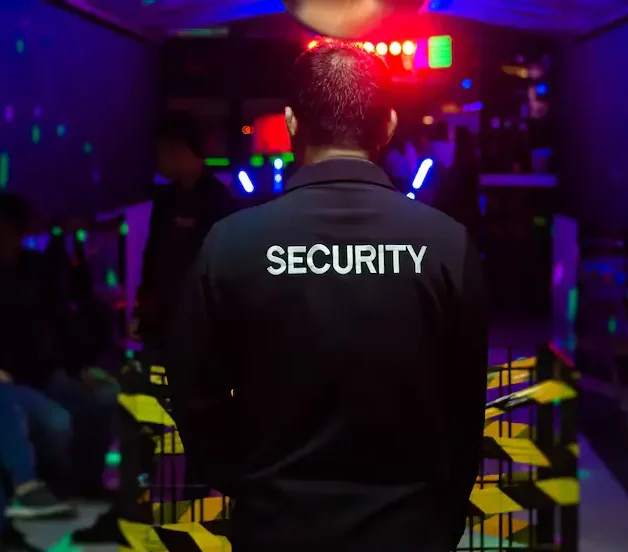
London is one of the UK’s largest and busiest cities, with a diverse economy, a major hospitality sector and a constant calendar of entertainment, sporting and cultural events. These characteristics create a wide range of environments where professional security personnel are required.
Among the different roles within the UK’s private security industry, door supervision has remained particularly prominent. The role is commonly associated with pubs, clubs and other licensed premises, but qualified door supervisors can also work in event environments and undertake certain security guarding activities where their licence permits it.
The demand should not be understood simply as a result of London’s large population. It is connected to the city’s concentration of licensed venues, busy nightlife, major events, commercial activity and the need for trained personnel who can help venues manage access, disorder and public safety.
For anyone considering a career in this sector, understanding why demand exists can help provide a more realistic picture of the profession and the skills employers are looking for.
London’s Large Night-Time Economy
One of the most obvious reasons for demand is London’s night-time economy.
The capital has a large number of pubs, bars, nightclubs, restaurants, entertainment venues and other establishments that operate during evenings and late-night hours. Many of these environments involve significant numbers of customers entering and leaving over relatively short periods.
Security can therefore become an important part of venue management.
Door supervisors may help control entry, check identification where required, monitor behaviour, deal with prohibited items and respond to incidents within the boundaries of their role. Their presence can also provide a visible deterrent against behaviour that could put customers, staff or property at risk.
The SIA’s licensing guidance explains that door supervision can be a licensable activity at licensed premises when the work involves providing a physical presence to guard against damage, theft, unauthorised access or disorder while the premises are open to the public during relevant licensed activities.
This makes door supervisors particularly relevant to London’s hospitality and entertainment sector.
A City That Operates Around the Clock
London does not simply become quiet after traditional working hours. Different parts of the city continue operating throughout the evening and night.
Transport hubs, hospitality businesses, entertainment venues, hotels, restaurants and other businesses may continue serving customers well into the night. This creates working patterns that are different from conventional daytime employment.
For security professionals, these operating hours can create opportunities for evening, overnight and weekend shifts.
The SIA has previously identified unsociable working hours as one of the factors affecting recruitment and retention within the wider security industry.
For some workers, however, those same working patterns can be attractive. People with daytime commitments may prefer evening or weekend work, while others may use security employment as a route into a longer-term career.
Major Events Increase Security Requirements
London regularly hosts concerts, festivals, sporting events, exhibitions, conferences and cultural activities.
Large gatherings create different security considerations from ordinary day-to-day venue operations. Organisers may need personnel to help manage entrances, monitor crowds, protect restricted areas and respond appropriately when problems arise.
Not every event worker requires an SIA licence. The licensing requirement depends on the duties being performed. The SIA provides specific guidance explaining when event staff require licensing and when they may fall outside the regulated activities.
Where regulated security duties are involved, appropriately licensed personnel become an important part of an event’s wider security arrangements.
London’s extensive event calendar therefore contributes to the need for security professionals with relevant qualifications and experience.
A Large Concentration of Security Professionals
The scale of London’s security market can also be seen in SIA licensing data.
The SIA’s 2026 strategic plan reports more than 458,000 individuals holding SIA licences across the UK, with more than 517,000 licences held in total because some people hold multiple licences. As of February 2026, there were 368,546 active Door Supervision licences, making it by far the largest individual licensing category listed by the regulator.
The same SIA data shows that approximately 40% of licence holders are based in London and the South-East. The regulator also reports that most approved security contractors are based in London and the South-East.
These figures do not mean that every licence holder is currently looking for work. They do, however, demonstrate the scale of the private security industry surrounding the capital.
Door Supervisors Do More Than Control Doors
The job title can sometimes create the impression that door supervisors simply stand at an entrance. In practice, the role can involve considerably more responsibility.
Depending on the venue and assignment, responsibilities can include controlling access, monitoring customers, observing potential risks, communicating with venue management, recording incidents and helping maintain an orderly environment.
A professional door supervisor needs to understand how to communicate with different types of people. They may need to give clear instructions, de-escalate disagreements and recognise when a situation is becoming potentially dangerous.
This means employers are not simply looking for physical presence.
Professionalism, patience, observation, communication and sound judgement can all be valuable qualities in the role.
Public Safety Is a Major Consideration
Security personnel can be among the first people dealing with an incident at a venue.
The SIA notes that security operatives may be dealing with an incident before police and other emergency services arrive. Its current strategy also highlights the importance of security and venue staff being prepared to respond effectively when something goes wrong.
This does not mean that door supervisors replace the police or emergency services. Their role is different.
Instead, trained security personnel can form part of a venue’s overall safety arrangements by identifying problems early, following procedures, communicating with management and contacting emergency services when appropriate.
This preventative function is one reason professional security remains relevant even as venues introduce other technologies and security measures.
The Importance of Access Control
Access control is another reason door supervision is important.
A busy venue may need to manage who enters, who leaves and whether particular conditions for entry are being met. Depending on the venue’s policies and legal requirements, this can involve checking identification, monitoring capacity or preventing unauthorised access.
Poorly managed entrances can create problems for both customers and businesses.
A trained security professional can help establish a controlled entry process and communicate venue policies clearly. This can reduce confusion and help staff manage busy periods more effectively.
In a city where venues can experience significant customer numbers, efficient access management can be an important operational consideration.
London Offers Different Types of Security Work
Another reason people consider this profession is the variety of environments available.
A person entering the security industry may eventually encounter opportunities involving licensed premises, events, hospitality, retail environments or other forms of private security.
The exact duties and licensing requirements depend on the assignment.
The SIA’s current figures show that Door Supervision is considerably larger than several other licensing categories. In February 2026, there were 368,546 active Door Supervision licences compared with 56,775 Security Guarding licences and 11,587 Close Protection licences.
The size of the category reflects both the widespread use of door supervision and the fact that the licence can provide broader employment flexibility than some people initially realise.
Why the Door Supervisor Licence Can Be Attractive
One important feature of the Door Supervisor licence is that it can provide coverage for security guarding activities.
The SIA has explained that a Door Supervisor licence also covers security guarding activities, whereas a Security Guard licence does not cover door supervision.
This can make the qualification attractive to people who do not want to restrict themselves to one type of security environment.
Someone may initially be interested in working in London’s nightlife sector but later decide to explore other security assignments. Having the appropriate licence can provide greater flexibility, subject to the requirements of the particular job.
It is still important to understand that having a licence does not guarantee employment. Employers may have their own requirements relating to experience, availability, communication skills and suitability for a particular assignment.
Demand Does Not Mean Every Applicant Gets a Job
It is important to avoid presenting London’s security market as an automatic route to employment.
A large industry can have many applicants as well as many vacancies. Competition may vary depending on location, employer, shift pattern and experience.
The SIA’s research into the door supervision sector found that companies had experienced difficulties recruiting and retaining staff, while the wider security industry has also reported challenges involving recruitment and retention.
For someone entering the industry, this means training should be viewed as the beginning of a professional pathway rather than a guarantee of a job.
Building a strong professional reputation, gaining relevant experience and maintaining the required licence can all contribute to longer-term opportunities.
Training Matters
Door supervision involves dealing with members of the public, managing potentially difficult situations and understanding legal and professional responsibilities.
For this reason, training is an important part of entering the regulated sector.
Anyone considering a Door Supervisor Course London should first understand the current SIA requirements and make sure the course they choose is appropriate for the licence they intend to apply for.
The SIA maintains guidance on the training and qualifications required for different types of licence. Requirements can change, so prospective applicants should check the regulator’s latest information before enrolling.
Training should not be viewed purely as a box to tick. The knowledge gained during training can help new security professionals understand the responsibilities associated with the role.
Communication Is One of the Most Important Skills
A common misconception is that security work is primarily physical.
In reality, effective communication can prevent many situations from escalating.
A door supervisor may have to explain why someone cannot enter, ask a customer to change their behaviour or communicate with colleagues during a developing incident. The way these conversations are handled can influence what happens next.
Professional communication can help establish authority without unnecessarily creating confrontation.
This is particularly important in busy London venues where staff may interact with customers from many different backgrounds.
Dealing With Conflict Professionally
Conflict management is another important part of door supervision.
Not every disagreement requires physical intervention. In many situations, early communication and appropriate de-escalation can help prevent a minor disagreement from becoming a serious incident.
Door supervisors need to understand their legal and professional responsibilities and act within the boundaries of their role.
Training can provide an understanding of appropriate procedures, while real-world experience can help professionals develop confidence in applying that knowledge.
The objective should always be to maintain safety and manage situations proportionately rather than looking for confrontation.
Technology Has Not Eliminated the Need for People
Modern venues increasingly use CCTV, access-control systems, alarms and other technologies.
These tools can improve security, but they do not completely replace human judgement.
A camera can record an incident, but a trained person may still be needed to interpret what is happening, communicate with others and respond according to established procedures.
Similarly, an electronic access system can restrict entry, but human staff may still be required to deal with identification issues, customer questions, emergencies or unexpected situations.
Technology and trained personnel therefore often work together rather than existing as alternatives.
Changing Expectations Within the Industry
The private security sector continues to evolve.
The SIA has introduced refresher training requirements for renewing certain licences, reflecting the regulator’s focus on keeping licence holders’ knowledge current. Its current strategic plans also place emphasis on public safety, professional standards, compliance and improved confidence in private security.
The regulator’s recent inspections of the night-time economy also demonstrate the importance placed on correct licensing. In June 2026, SIA teams and policing partners conducted coordinated inspections at 224 licensed premises and carried out 450 licence checks.
This reinforces an important point for anyone entering the profession: being properly trained and licensed is not merely an administrative requirement. It is part of working legitimately and professionally within the sector.
What Makes London Different?
London’s demand for door supervisors is ultimately the result of several factors working together.
The city has a large night-time economy, a substantial hospitality sector, major events, high visitor numbers and a large concentration of businesses. These environments create situations where access control, crowd management, public safety and incident response can become important.
The concentration of security businesses and licence holders in London and the South-East further demonstrates the scale of the market.
However, demand should not be interpreted as a promise of employment. The security industry is competitive, and employers expect people to meet licensing requirements and demonstrate professional behaviour.
For someone interested in entering the profession, the sensible approach is to research the role carefully, understand the relevant SIA requirements, choose appropriate training and develop the communication and professional skills expected in the workplace.
Final Thoughts
London’s demand for door supervisors is closely connected to the city’s unique combination of nightlife, hospitality, entertainment, events and large public gatherings. Security professionals help venues manage risks, control access and maintain a safe environment for customers and staff.
The role can offer variety and, with the appropriate licence, flexibility across certain areas of private security. However, successful security work requires more than simply obtaining a qualification. Professionalism, communication, awareness, reliability and responsible decision-making are equally important.
For people considering this career path, a recognised Door Supervisor Course London can be one step toward entering the regulated industry. Before enrolling, prospective candidates should always confirm the latest requirements directly with the SIA and ensure that their chosen training route matches the licence they intend to obtain.
London’s security industry is large, but its long-term value depends on trained professionals who understand that their role is not simply about controlling a doorway. It is about contributing responsibly to the safety and smooth operation of the environments in which they work.