
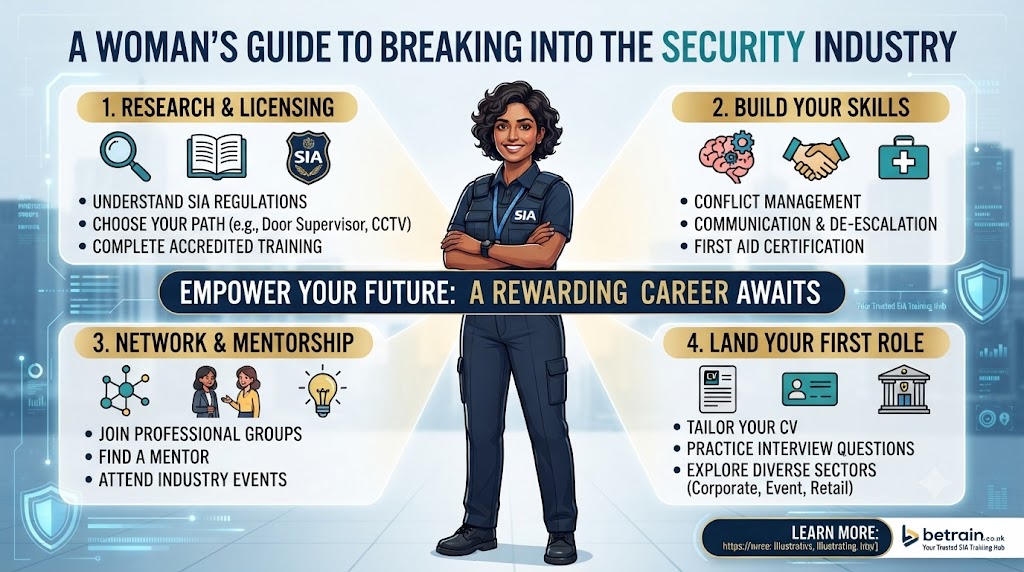
A Woman’s Guide to Breaking into the Security Industry
The security industry has traditionally been viewed as a male-dominated field, but that is changing. Today, more women than ever are building successful careers as security officers, door supervisors, CCTV operators, corporate security professionals, and security managers across the UK.
Employers increasingly recognise the value that women bring to security teams. Strong communication skills, professionalism, attention to detail, problem-solving abilities, and excellent customer service are qualities that make many women highly successful in security roles.
If you are considering a career in security, this guide will explain what the job involves, how to get started, the opportunities available, and practical tips for building a rewarding career in the industry.
Is Security a Good Career for Women?
Absolutely. Security is open to anyone who meets the required licensing and training standards. Many employers actively encourage applications from women because diverse teams often improve communication, customer service, and workplace culture.
Women now work in many areas of the industry, including:
- Door Supervision
- Corporate Security
- CCTV Operations
- Event Security
- Retail Security
- Hospital Security
- Airport Security
- Concierge Security
- Mobile Patrol Services
- Security Management
As the industry continues to grow, more organisations are creating supportive working environments that welcome professionals from different backgrounds.
Why More Women Are Choosing Security Careers
There are many reasons why women are entering the security industry.
Some of the biggest benefits include:
- Stable employment
- Career progression
- Flexible working hours
- Competitive salaries
- Opportunities to specialise
- Variety of workplaces
- Professional development
- Leadership opportunities
Many women also enjoy working in roles where they can help people, solve problems, and contribute to public safety.
Skills That Help Women Succeed
Success in security depends on much more than physical strength.
Employers value professionals who demonstrate:
- Good communication
- Confidence
- Customer service skills
- Professionalism
- Observation
- Teamwork
- Problem-solving
- Emotional intelligence
- Conflict management
- Reliability
These skills are important in almost every security role and can often have a greater impact than physical ability.
How to Get Started
Beginning a security career follows the same process for everyone.
Complete the Required Training
Most people start by completing an approved security qualification, such as the Door Supervisor course.
Training usually covers:
- Working in the private security industry
- Conflict management
- Customer service
- Physical intervention
- Health and safety
- Emergency procedures
Choose a reputable training provider with experienced instructors and positive student reviews.
Apply for Your SIA Licence
After successfully completing your qualification, you can apply for your Security Industry Authority (SIA) licence.
Your licence demonstrates that you meet the legal requirements to work in licensed security roles across the UK.
Begin Applying for Jobs
Once licensed, you can apply for entry-level positions and begin gaining practical experience.
Many employers provide additional on-the-job training to help new staff succeed.
Choosing the Right Security Role
There are many different career paths available.
Corporate Security
Corporate offices often require professional security staff to:
- Welcome visitors
- Monitor CCTV
- Patrol buildings
- Manage access control
- Respond to incidents
These positions usually involve a combination of customer service and security responsibilities.
Retail Security
Retail security officers help reduce theft while creating a safe shopping environment.
Responsibilities include:
- Store patrols
- CCTV monitoring
- Assisting customers
- Incident reporting
- Working with store management
Event Security
Concerts, sporting events, festivals, and conferences require trained security teams.
Women often play an important role in:
- Crowd management
- Ticket checks
- Customer assistance
- Searching female attendees where required
- Emergency response
CCTV Operations
If you prefer a role based in a control room, CCTV monitoring may be a suitable option.
Responsibilities include:
- Monitoring surveillance systems
- Recording incidents
- Communicating with security teams
- Reporting suspicious activity
Hospital Security
Healthcare environments require security professionals who remain calm and communicate effectively with patients, visitors, and staff.
Strong interpersonal skills are especially valuable in these roles.
Building Confidence
Starting any new career can feel challenging.
You can build confidence by:
- Asking questions during training.
- Learning from experienced colleagues.
- Continuing professional development.
- Practising communication skills.
- Remaining calm in difficult situations.
- Gaining experience gradually.
Confidence usually grows with experience.
Handling Challenges
Like any profession, security has challenges.
These may include:
- Night shifts
- Weekend work
- Standing for long periods
- Managing difficult situations
- Working under pressure
Professional training prepares security officers to respond safely and appropriately.
Remember that successful security work focuses on observation, communication, teamwork, and following procedures—not unnecessary confrontation.
Supportive Workplaces
Many employers now recognise the importance of creating inclusive workplaces.
Support may include:
- Equal career opportunities
- Professional development programmes
- Leadership training
- Flexible scheduling
- Respectful working environments
- Clear reporting procedures
When researching employers, look for organisations that value diversity, training, and employee wellbeing.
Career Progression
Security offers excellent opportunities for advancement.
With experience, women can progress into roles such as:
- Security Supervisor
- Site Manager
- Operations Manager
- Security Consultant
- Control Room Manager
- Corporate Security Manager
- Training Instructor
- Regional Security Manager
Many successful managers began their careers in entry-level security positions.
Networking Matters
Building professional relationships can support career growth.
Consider:
- Connecting with colleagues.
- Attending industry events.
- Speaking with trainers.
- Joining professional groups.
- Using LinkedIn to connect with recruiters.
Networking can lead to new job opportunities and valuable career advice.
Continue Learning
The security industry continues to evolve.
Additional qualifications can improve your career prospects.
Popular courses include:
- CCTV Operations
- Emergency First Aid
- Fire Marshal Training
- Customer Service
- Mental Health Awareness
- Leadership Development
- Health and Safety
- Risk Assessment
Continuing education demonstrates commitment and professionalism.
What Employers Look For
Employers often value the following qualities:
- Professional appearance
- Positive attitude
- Reliability
- Good communication
- Honesty
- Teamwork
- Customer service
- Attention to detail
- Willingness to learn
Showing these qualities during interviews and throughout your career can help you progress more quickly.
Common Myths
There are still some misconceptions about women working in security.
Myth 1: Security Is Only for Men
False. Women work successfully across every area of the security industry.
Myth 2: Physical Strength Is the Most Important Skill
Not true. Observation, communication, professionalism, and sound judgement are often more important than physical strength.
Myth 3: Career Progression Is Limited
Many women have progressed into supervisory, management, and specialist security roles through experience and continued learning.
Tips for Long-Term Success
To build a successful career:
- Keep your SIA licence up to date.
- Continue developing your skills.
- Be punctual and reliable.
- Treat everyone with professionalism and respect.
- Learn from experienced colleagues.
- Stay calm during difficult situations.
- Build a strong professional reputation.
- Take opportunities for promotion and further training.
Consistency and professionalism are key to long-term success.
Final Thoughts
The security industry offers women a wide range of rewarding career opportunities across the UK. Whether you are interested in corporate security, retail, healthcare, CCTV operations, events, or management, there is growing demand for skilled professionals from diverse backgrounds.
Success in security is built on communication, confidence, professionalism, teamwork, and a willingness to keep learning. By completing the right training, obtaining your SIA licence, and gaining practical experience, you can build a stable and fulfilling career with excellent opportunities for growth.
If you are ready to take the first step, choose a trusted training provider, develop your skills, and approach every opportunity with confidence. The security industry continues to evolve, and there has never been a better time for women to build successful careers in this important profession.