
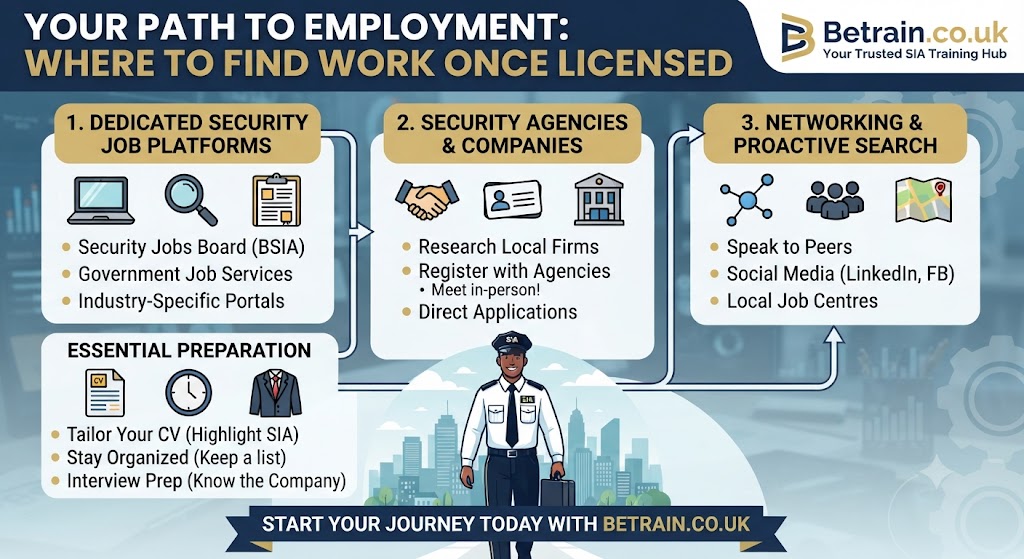
Where to Find Work Once You’re Fully Licensed
Earning your SIA licence is a major achievement, but it is only the beginning of your career in the UK security industry. Once you are fully licensed, the next step is finding the right job. Fortunately, the demand for trained security professionals remains strong across the UK, with opportunities available in retail, hospitality, corporate offices, healthcare, construction, transportation, and many other sectors.
Whether you are looking for your first security position or planning to change careers, knowing where to search and how to present yourself can significantly improve your chances of getting hired.
This guide explains the best places to find security jobs, how to stand out from other applicants, and what employers look for when recruiting licensed security staff.
Why Qualified Security Professionals Are in Demand
Security plays an important role in protecting people, property, and businesses. As organisations continue to invest in safety and risk management, the need for licensed security staff remains steady.
Many employers regularly recruit for roles such as:
- Door Supervisor
- Security Guard
- CCTV Operator
- Corporate Security Officer
- Retail Security Officer
- Event Security Officer
- Mobile Patrol Officer
- Concierge Security Officer
- Reception Security Officer
- Loss Prevention Officer
Because security services are needed in many industries, qualified professionals have access to a wide range of career opportunities.
Start With Online Job Websites
Most security vacancies are advertised online.
Popular UK job websites include:
- Indeed
- Reed
- Totaljobs
- CV-Library
- Jobsite
- LinkedIn Jobs
- Glassdoor
Use search terms like:
- SIA Door Supervisor
- Security Officer
- Licensed Security Guard
- CCTV Operator
- Corporate Security
- Retail Security
You can also create job alerts so new vacancies are emailed directly to you.
Apply Directly to Security Companies
Many security companies advertise vacancies on their own websites.
Large employers often recruit throughout the year because they provide security services for multiple clients.
Working directly for a security company may offer:
- Regular shifts
- Career progression
- Ongoing training
- Opportunities to work at different sites
- Long-term employment
Visit company websites regularly to check their careers pages for new vacancies.
Look at Retail Security Opportunities
Retail stores remain one of the largest employers of licensed security officers.
Common workplaces include:
- Supermarkets
- Shopping centres
- Department stores
- Retail parks
- Luxury stores
Retail security officers help prevent theft, assist customers, monitor CCTV, and respond to incidents while maintaining a professional presence.
Explore Corporate Security Roles
Many office buildings require security staff to manage access and maintain a safe working environment.
Corporate security officers often:
- Welcome visitors
- Check identification
- Monitor CCTV
- Patrol buildings
- Respond to emergencies
- Complete incident reports
These roles often involve customer service as well as security responsibilities.
Consider Event Security
Sporting events, concerts, festivals, exhibitions, and conferences require trained security teams.
Event security work offers:
- Flexible shifts
- Weekend work
- Seasonal opportunities
- Experience in busy environments
Although some event roles are temporary, they can help new professionals build valuable experience.
Construction Site Security
Construction companies regularly employ security officers to protect expensive equipment and materials.
Responsibilities may include:
- Site patrols
- Vehicle checks
- Access control
- CCTV monitoring
- Incident reporting
Many construction sites require 24-hour security, creating opportunities for both day and night shifts.
Hospitals and Healthcare Facilities
Hospitals, medical centres, and healthcare facilities employ security professionals to maintain safety for patients, staff, and visitors.
Healthcare security officers often assist with:
- Visitor management
- Emergency response
- Conflict resolution
- Access control
- Patrol duties
Strong communication and customer service skills are especially important in these environments.
Hotels and Hospitality
Hotels, conference centres, and entertainment venues also hire licensed security staff.
Responsibilities may include:
- Monitoring entrances
- Assisting guests
- Preventing disturbances
- Working with hotel management
- Responding to emergencies
Hospitality security combines customer service with professional security duties.
Airports and Transport Services
Transport providers require security professionals to help protect passengers, staff, and facilities.
Possible workplaces include:
- Airports
- Railway stations
- Bus terminals
- Underground stations
- Transport depots
Some transport roles may require additional checks or specialised training depending on the employer.
Use Recruitment Agencies
Many recruitment agencies specialise in security jobs.
They can help you:
- Find suitable vacancies
- Improve your CV
- Arrange interviews
- Match your experience with employers
Registering with more than one agency may increase your chances of finding work quickly.
Build a Professional CV
Your CV is often the first impression employers receive.
Include:
- Contact information
- SIA licence details
- Relevant qualifications
- Employment history
- Customer service experience
- First Aid certification
- Skills and achievements
Keep your CV clear, accurate, and easy to read.
Create a LinkedIn Profile
Many employers now recruit through LinkedIn.
A professional profile should include:
- Recent photo
- Career summary
- Qualifications
- Work experience
- Skills
- Professional achievements
Connecting with recruiters and security companies can help you discover new opportunities.
Network Within the Industry
Networking can lead to job opportunities that are not publicly advertised.
Ways to build your professional network include:
- Speaking with trainers
- Connecting with classmates
- Attending industry events
- Joining professional groups
- Following security companies online
Building relationships within the industry can open doors throughout your career.
Prepare for Interviews
Employers often ask questions about:
- Customer service
- Conflict management
- Teamwork
- Communication
- Emergency situations
- Professional conduct
Prepare examples that demonstrate your ability to remain calm, responsible, and professional.
Dress smartly and arrive on time for every interview.
Continue Improving Your Skills
Finding your first job is easier when you continue developing your qualifications.
Additional training may include:
- CCTV Operations
- Emergency First Aid
- Fire Marshal Training
- Customer Service
- Conflict Management
- Mental Health Awareness
Extra qualifications can make your application stand out.
Gain Experience
If your first role is temporary or part-time, do not overlook the opportunity.
Every shift helps you:
- Build confidence
- Learn new procedures
- Improve communication
- Gain references
- Strengthen your CV
Many experienced security professionals began with entry-level positions before progressing into supervisory or management roles.
What Employers Look For
Employers value candidates who demonstrate:
- Professional appearance
- Reliability
- Honesty
- Good communication
- Strong observation skills
- Customer service ability
- Teamwork
- Problem-solving skills
- Positive attitude
- Willingness to learn
Having the right attitude often matters just as much as having the right qualifications.
Common Mistakes to Avoid
When searching for work, avoid these mistakes:
- Sending the same CV to every employer without tailoring it.
- Applying for roles without reading the job description.
- Forgetting to include your SIA licence details.
- Arriving late for interviews.
- Ignoring follow-up emails from employers.
- Failing to prepare for interview questions.
Small mistakes can reduce your chances of getting hired.
Building a Long-Term Career
Your first security job is only the beginning.
With experience, additional training, and a strong work ethic, you can progress into roles such as:
- Security Supervisor
- Site Manager
- Operations Manager
- CCTV Control Room Manager
- Security Consultant
- Training Instructor
Many professionals build long and rewarding careers within the security industry.
Final Thoughts
Once you are fully licensed, a wide range of employment opportunities becomes available across the UK. From retail stores and corporate offices to hospitals, hotels, construction sites, and major events, licensed security professionals are needed in many different environments.
The key to finding work is to use multiple job-search methods, prepare a professional CV, continue improving your skills, and maintain a positive attitude throughout the application process. Every interview and every role provides valuable experience that can help you build a successful long-term career.
By staying proactive, developing your qualifications, and demonstrating professionalism, you can turn your SIA licence into the first step towards a stable and rewarding future in the UK’s security industry.