The Real Cost of Getting Licensed as a Security Officer
Starting a career as a security officer can be an excellent choice for people looking for stable employment, career growth, and the opportunity to work in different environments. Security officers are employed in shopping centres, office buildings, hospitals, hotels, warehouses, construction sites, residential developments, and event venues. As demand for trained security professionals continues to grow, more people are considering this career path.
Before you can begin working in most security roles, you must become licensed. Many first-time applicants believe the only expense is the training course, but the reality is different. The total cost includes several smaller expenses that are easy to overlook. Understanding these costs before you begin will help you prepare financially and avoid unexpected surprises.
Although becoming licensed requires an investment of both time and money, it is an investment that can create long-term career opportunities. With the right training and preparation, you can build a rewarding future in the private security industry.
Why a Security Licence Is Important
A security licence is more than just a legal requirement. It demonstrates that you have completed recognised training and understand the responsibilities that come with protecting people, property, and businesses.
Employers prefer licensed security officers because they know these candidates have received professional training and understand industry standards. Holding a valid licence can also improve your chances of finding work more quickly and give you access to a wider range of job opportunities.
Whether you want to work in retail security, corporate security, event security, or another area of the industry, becoming licensed is one of the first and most important steps.
Understanding the Total Cost
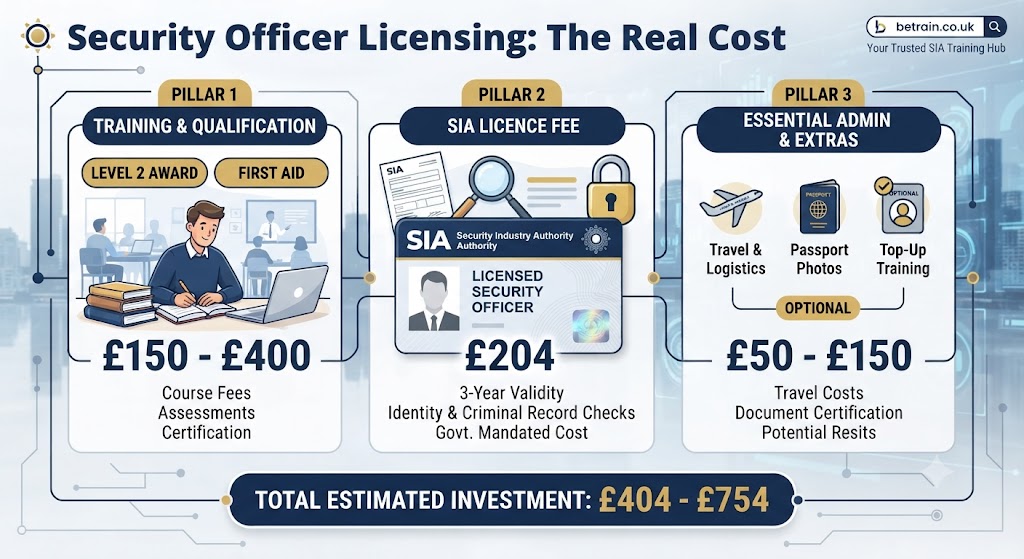
Many people focus only on the course fee, but the overall cost of becoming licensed includes several different expenses.
These may include:
- Training course fees
- Licence application fees
- Identity verification
- Travel expenses
- Study materials
- Work clothing or equipment
- Future licence renewal costs
Some of these costs are fixed, while others depend on your personal circumstances. Planning for each expense makes the process much easier.
Training Course Fees
The training course is usually the largest expense when starting your security career. Prices can vary depending on the training provider, location, course schedule, and what is included.
A good training course prepares you for real-life situations as well as the final assessments. During your training, you may learn about:
- The role of a security officer
- Customer service
- Communication skills
- Conflict management
- Health and safety
- Emergency procedures
- Professional standards
- Legal responsibilities
Some providers include course materials, examinations, and certificates in the price, while others charge additional fees. Before booking, always ask exactly what is included so you can compare providers fairly.
Choosing a provider based only on the cheapest price is not always the best decision. A slightly more expensive course that includes everything may save you money in the long run.
Licence Application Fee
After successfully completing your training, the next step is applying for your security licence. The application fee is normally separate from the course fee, so it should be included in your overall budget.
During the application process, you may need to:
- Complete an application form
- Verify your identity
- Submit supporting documents
- Undergo background checks
Because application processing can take time, many learners apply as soon as they receive their training results.
Identity Documents
Most applicants need valid identification before applying for a licence. If your documents are already up to date, this may not cost anything. However, if they have expired or need replacing, you should include this in your budget.
Documents commonly required include:
- Passport
- Driving licence
- Proof of address
- Other accepted identification
Checking your documents before starting the application can prevent unnecessary delays.
Travel Expenses
Travel is one of the most commonly forgotten expenses.
If your training centre is some distance from your home, you may need to pay for:
- Bus fares
- Train tickets
- Fuel
- Parking
These costs can add up over several training days. In some cases, choosing a provider closer to home may reduce your total spending, even if the course itself costs slightly more.
Time Away From Work
If you already have a job, attending training could mean taking unpaid leave. This is another hidden cost that many people forget to consider.
Fortunately, many training providers now offer evening or weekend courses. Flexible schedules allow learners to complete their training while continuing to work, reducing the financial impact.
Study Materials
Some training providers include books, revision guides, and online learning resources as part of the course fee. Others may ask students to purchase additional materials separately.
Before enrolling, ask what learning resources are provided. Having access to quality study materials can make preparation easier and improve your confidence before the assessments.
Clothing and Equipment
Although you normally do not need a uniform during training, you may need suitable clothing once you begin working.
Depending on your employer, you may need items such as:
- Black trousers
- White shirt
- Black shoes
- Tie
- Weather-appropriate outerwear
Some employers provide uniforms free of charge, while others expect staff to purchase basic work clothing themselves.
Licence Renewal
A security licence is not permanent. It must be renewed after a set period to remain valid.
Renewal may involve:
- Paying a renewal fee
- Completing refresher training if required
- Updating personal information
- Meeting current licensing requirements
Planning ahead for renewal helps you continue working without interruption.
Hidden Costs You Should Not Ignore
There are several smaller expenses that many first-time applicants overlook.
These may include:
- Printing documents
- Passport photographs
- Meals during training days
- Internet access for online applications
- Childcare arrangements
- Extra travel due to delays
While these costs may seem small individually, together they can affect your overall budget.
How to Reduce Your Costs
Becoming licensed is an investment, but there are sensible ways to keep your costs under control.
One of the best strategies is to compare several training providers before making a decision. Instead of looking only at the course price, consider everything included in the package.
Ask questions such as:
- Are assessment fees included?
- Will I receive study materials?
- Is the certificate included?
- Are there any additional charges later?
- Does the provider offer flexible class times?
You should also consider the training centre’s location. A nearby provider may help you save money on transport and reduce travel time.
Creating a simple budget before booking your course can also help you prepare for every expected expense and avoid financial surprises.Building Skills That Increase Your Value
After completing your training and receiving your licence, your learning should not stop. The most successful security officers continue improving their knowledge and professional skills throughout their careers. Employers value people who are dependable, confident, and able to respond calmly in different situations.
Developing strong workplace skills can help you stand out from other applicants and increase your chances of promotion.
Communication Skills
Security officers interact with customers, visitors, staff members, emergency services, and members of the public every day. Clear and respectful communication helps prevent misunderstandings and allows situations to be resolved quickly.
Good communication also creates a positive image of both the security officer and the organisation they represent.
Observation Skills
Being observant is one of the most important qualities in the security industry. Security officers should be able to recognise unusual behaviour, identify potential risks, and notice small details that others may overlook.
Strong observation skills can help prevent theft, accidents, and other security incidents before they become serious.
Customer Service
Many people think security work is only about protecting buildings and people, but customer service is also an important part of the job. Security officers often provide directions, answer questions, and assist visitors.
A friendly and professional attitude helps create a safe and welcoming environment.
Problem-Solving Ability
Every working day can be different. Security officers may deal with lost property, emergencies, equipment failures, or unexpected incidents. Remaining calm and making sensible decisions under pressure is a valuable skill that improves with experience.
Choosing the Right Training Provider
Selecting a reputable training provider is one of the best ways to ensure you receive high-quality education and support.
Before booking your course, consider the following:
- Qualified and experienced instructors
- Positive reviews from previous learners
- Clear information about course fees
- Modern training facilities
- Flexible weekday or weekend classes
- Support during the licence application process
A trustworthy provider should answer your questions honestly and explain exactly what is included in the course price.
Financial Support and Payment Options
Some training providers understand that paying the full course fee at once may not be possible for everyone. As a result, they may offer payment plans that allow learners to spread the cost over several weeks or months.
Depending on your circumstances, you may also qualify for financial support through employment programmes or other organisations. It is always worth asking the training provider about any available funding or payment options before making your booking.
What Happens After You Receive Your Licence?
Receiving your security licence is an exciting achievement because it means you can begin applying for licensed security positions.
Many new security officers start in entry-level roles where they gain practical experience and learn from experienced colleagues. As your confidence grows, you can apply for more specialised or senior positions.
Career opportunities may include:
- Retail security
- Corporate security
- Event security
- Hospital security
- Warehouse security
- Construction site security
- Mobile patrols
- CCTV operations
- Security supervision
Every role provides valuable experience that can help you progress further within the industry.
Long-Term Career Growth
A security licence is often the beginning of a long and rewarding career rather than the final goal.
With experience, additional qualifications, and a strong work ethic, many security officers move into higher-level positions such as:
- Security Team Leader
- Security Supervisor
- Control Room Operator
- Security Manager
- Operations Manager
- Specialist Security Consultant
Continuing your professional development can increase your earning potential and open the door to new career opportunities.
Tips for Building a Successful Career
If you want to succeed in the security industry, focus on developing good professional habits from your first day at work.
Remember to:
- Arrive on time for every shift.
- Dress professionally.
- Follow company procedures carefully.
- Treat everyone with respect.
- Continue learning new skills.
- Stay alert throughout your shift.
- Communicate clearly with colleagues and customers.
- Maintain a positive attitude.
Small habits like these can make a big difference to your reputation and future career progression.
Frequently Asked Questions
1. What is the biggest expense when getting licensed?
The training course is usually the largest upfront cost.
2. Is the licence application fee included in the course price?
Not always. Always ask the training provider what is included before booking.
3. Can I work before receiving my licence?
Most licensed security roles require you to hold a valid licence before starting work.
4. Are there hidden costs?
Yes. Travel, identification documents, meals, and work clothing are common additional expenses.
5. How long does the licensing process take?
The timeline depends on completing your training and how long the licence application takes to process.
6. Can I complete training while working full-time?
Yes. Many providers offer evening and weekend courses to suit working learners.
7. Will I need to renew my licence?
Yes. Security licences must be renewed to remain valid.
8. Is becoming a security officer worth the investment?
For many people, the cost is worthwhile because it provides access to stable employment and long-term career opportunities.
9. Can I progress into higher-paying roles?
Yes. Many experienced security officers become supervisors, managers, or specialists after gaining additional experience and qualifications.
10. What should I look for when choosing a training provider?
Choose a provider with experienced instructors, transparent pricing, flexible schedules, and positive reviews from previous learners.
Conclusion
The real cost of getting licensed as a security officer is about more than paying for a training course. You should also consider licence application fees, travel expenses, identification documents, work clothing, and future renewal costs. Understanding every part of the process allows you to budget effectively and begin your journey with confidence.
Although there are upfront expenses, becoming licensed is an investment that can lead to stable employment, valuable experience, and long-term career growth. By choosing a reputable training provider, preparing your finances, and continuing to develop your skills, you will be well placed to build a successful career in the private security industry.