Exam Day Nerves? Here’s How to Walk In Prepared
Preparing for your SIA security training exam can feel stressful, especially if it has been a long time since you last sat in a classroom or took a test. Many people worry about remembering the course material, answering questions correctly, or simply feeling nervous on the day. The good news is that these feelings are completely normal.
The best way to deal with exam nerves is through preparation. Understanding what to expect, revising regularly, getting enough rest, and arriving with confidence can make a big difference. Remember, your training provider wants you to succeed, and the course is designed to prepare you for the assessment.
This guide shares practical tips to help you feel confident before, during, and after your SIA security training exam.
Why People Feel Nervous
Exam nerves affect many learners, regardless of their age or experience.
You might feel anxious because:
- You have not taken an exam for many years.
- You are changing careers.
- English is not your first language.
- You are worried about failing.
- You want to start working quickly.
- You feel pressure to succeed.
These concerns are common and can usually be managed with good preparation.
Understand the Course Material
One of the best ways to reduce stress is to understand the topics covered during your training.
Depending on your qualification, you may study subjects such as:
- Working in the private security industry
- Health and safety
- Conflict management
- Customer service
- Emergency procedures
- Communication skills
- Physical intervention (where applicable)
- Terror threat awareness
- Incident reporting
- Professional responsibilities
Pay attention during lessons and ask questions if anything is unclear.
Revise a Little Each Day
Avoid leaving all your revision until the night before the exam.
Instead:
- Read your notes daily.
- Review one topic at a time.
- Practise answering sample questions.
- Discuss key points with classmates.
- Focus on understanding rather than memorising.
Short, regular revision sessions are usually more effective than long periods of last-minute studying.
Attend Every Training Session
Each lesson builds on the previous one.
Missing classes may leave gaps in your understanding.
During training:
- Listen carefully.
- Participate in discussions.
- Complete practical activities.
- Ask for clarification whenever needed.
Your instructors are there to help you succeed.
Practise with Mock Questions
Many training providers offer practice questions before the final assessment.
Mock exams help you:
- Understand question styles.
- Improve confidence.
- Identify weak areas.
- Manage your time.
- Reduce surprises on exam day.
The more familiar you are with the exam format, the more comfortable you are likely to feel.
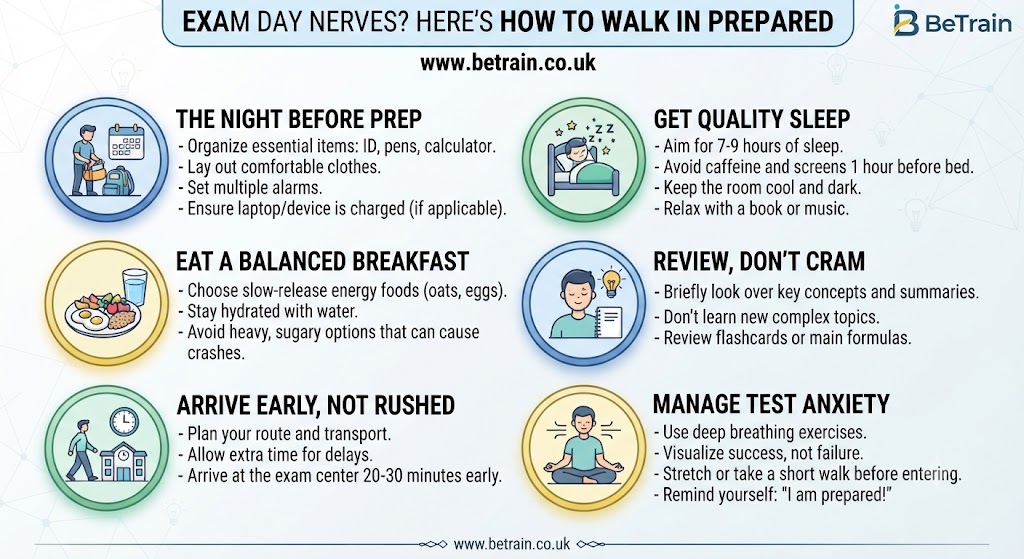
Get Organised the Night Before
Preparing everything in advance helps reduce stress.
Check that you have:
- Required identification
- Any documents requested by your training provider
- Comfortable clothing
- Pens if needed
- Directions to the training centre
Planning ahead means you are less likely to forget something important.
Get Enough Sleep
A good night’s sleep helps improve:
- Concentration
- Memory
- Decision-making
- Confidence
Avoid staying up late trying to memorise large amounts of information.
Rest is an important part of exam preparation.
Eat Before the Exam
Having a balanced meal before your assessment helps maintain your energy and concentration.
Avoid skipping breakfast or arriving hungry.
Drink enough water to stay hydrated throughout the day.
Arrive Early
Plan to arrive before the scheduled start time.
Arriving early allows you to:
- Settle in.
- Find your classroom.
- Complete any registration.
- Relax before the exam begins.
Rushing at the last minute can increase anxiety.
Stay Calm During the Exam
When the assessment begins:
- Read each question carefully.
- Take your time.
- Think before answering.
- Avoid rushing.
- Stay focused on one question at a time.
If you feel nervous, pause for a moment and continue calmly.
Read Every Question Properly
Many mistakes happen because candidates answer too quickly.
Before selecting an answer:
- Read the full question.
- Read every answer option.
- Look for important keywords.
- Think carefully before choosing.
Taking a few extra seconds can improve accuracy.
Do Not Panic Over Difficult Questions
You may come across a question you find difficult.
If this happens:
- Stay calm.
- Read it again.
- Eliminate obviously incorrect answers.
- Return to it later if allowed.
One difficult question does not determine your overall result.
Trust Your Preparation
If you attended your course, revised regularly, and completed practice questions, you have already done a great deal of preparation.
Believe in the work you have completed.
Confidence often comes from preparation rather than luck.
Avoid Comparing Yourself to Others
Some people finish quickly, while others take more time.
This does not mean they have performed better.
Focus on your own paper and work at a comfortable pace.
Learn from the Training
Your instructors have experience preparing students for these assessments.
Take advantage of:
- Classroom discussions
- Practice activities
- Revision sessions
- Feedback
- Study materials
Asking questions is always better than remaining uncertain.
Common Mistakes to Avoid
Many candidates lose marks because of simple mistakes.
Avoid:
- Arriving late.
- Forgetting identification.
- Rushing through questions.
- Ignoring instructions.
- Panicking after one difficult question.
- Staying up too late the night before.
Good preparation prevents many of these problems.
If English Is Not Your First Language
Many learners successfully complete SIA qualifications even if English is not their first language.
Helpful tips include:
- Read questions slowly.
- Ask your trainer to explain course content during lessons if necessary.
- Practise key security vocabulary.
- Revise regularly.
- Focus on understanding the meaning of questions.
Do not be afraid to ask for help during your training.
After the Exam
Once your assessment is complete:
- Stay positive.
- Avoid worrying about individual questions.
- Wait for your results.
- Follow your training provider’s guidance regarding the next steps.
If you are successful, you will be one step closer to applying for your SIA licence.
Building Confidence for the Future
Passing your first security qualification is only the beginning.
Throughout your career you will continue learning through:
- Refresher training
- Additional qualifications
- Workplace experience
- Leadership development
- Specialist courses
Every course you complete builds your confidence further.
Frequently Asked Questions
Is the SIA training exam difficult?
Most learners who attend all training sessions, participate in class, and revise properly pass successfully. Good preparation is the most important factor.
What should I bring on exam day?
Your training provider will tell you exactly what is required. This often includes valid identification and any documents requested before the assessment.
Can I ask questions during the course?
Yes. Trainers encourage students to ask questions during lessons to improve understanding before the exam.
What if I feel nervous during the assessment?
Take a slow breath, read each question carefully, and focus on one question at a time. Staying calm can help you think more clearly.
Is practical training included?
Depending on your qualification, practical assessments may form part of your course, particularly for Door Supervisor training.
Final Thoughts
Feeling nervous before your SIA security training exam is perfectly normal, but it does not have to stop you from succeeding. The best way to build confidence is through steady preparation, regular revision, and a positive attitude. By attending every training session, asking questions, practising with mock exams, getting enough rest, and arriving organised, you will give yourself the best possible chance of success.
Remember that the exam is designed to assess the knowledge and skills you have already learned during your course. Trust your preparation, stay calm, and take your time. Passing your assessment is an important milestone on your journey towards gaining your SIA licence and starting a rewarding career in the UK private security industry.