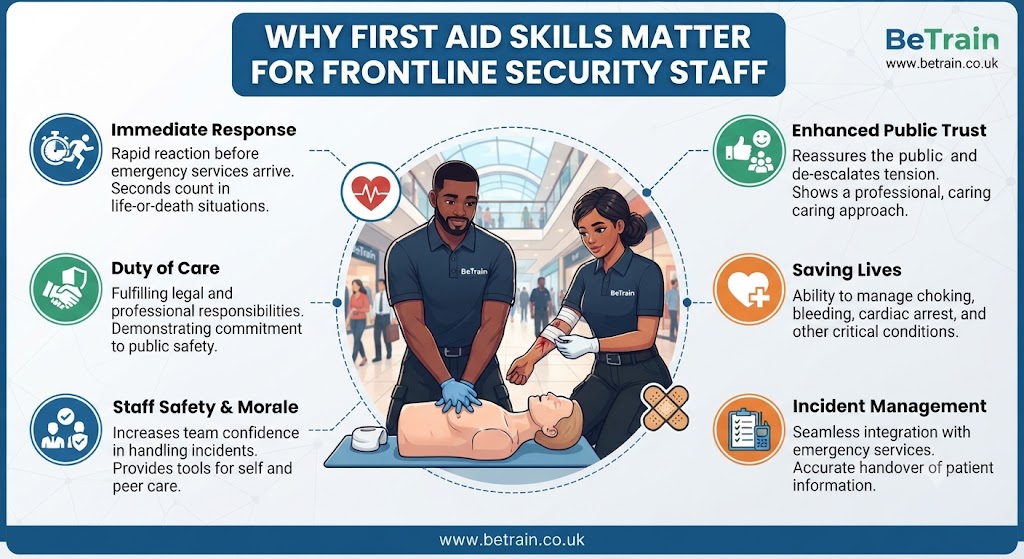
Why First Aid Skills Matter for Frontline Security Staff
Frontline security professionals are often the first people to respond when an emergency happens. Whether working at a shopping centre, office building, hospital, hotel, construction site, or entertainment venue, security staff are responsible for helping protect people and maintaining a safe environment. Because they are usually on-site before emergency services arrive, basic first aid skills can make a real difference.
While the main role of a security officer is to prevent crime and respond to security incidents, medical emergencies can happen at any time. A visitor may faint, someone could suffer a fall, or a customer might experience a medical condition that requires immediate attention. Knowing how to respond calmly and safely until professional medical help arrives is an important part of being a well-prepared security professional.
This guide explains why first aid matters in the security industry, what you may learn during training, and how these skills can benefit both your career and the people you protect.
Why First Aid Is Important in Security
Security officers are often among the first people to arrive at an emergency.
They may be first on the scene when someone:
- Slips or falls
- Becomes unconscious
- Suffers a minor injury
- Experiences breathing difficulties
- Has a seizure
- Complains of chest pain
- Is injured during an accident
- Needs urgent assistance
Having basic first aid knowledge helps security professionals respond appropriately while waiting for qualified healthcare providers or emergency services.
Security Staff Are Often First Responders
Many workplaces have security officers on duty around the clock.
Because of this, they may reach an incident before:
- Ambulance crews
- Building managers
- Supervisors
- Health and safety personnel
Although security professionals are not a replacement for medical professionals, their actions during the first few minutes of an emergency can help keep the area safe, provide reassurance, and support the injured person until expert help arrives.
Supporting Public Safety
One of the main responsibilities of a security officer is protecting people.
First aid knowledge supports this responsibility by helping staff:
- Stay calm during emergencies
- Assess the situation safely
- Protect themselves and others
- Contact emergency services quickly
- Offer appropriate assistance within their level of training
- Reassure injured or distressed individuals
These actions can help reduce panic and improve the overall management of an incident.
Building Confidence
Medical emergencies can be stressful.
Without training, it is easy to feel uncertain about what to do.
First aid education helps security professionals develop confidence by teaching them how to:
- Stay calm
- Think clearly
- Follow emergency procedures
- Communicate effectively
- Work with emergency services
Confidence is especially important when large numbers of people are present.
Common Situations Where First Aid May Be Needed
Security professionals work in many different environments, and emergencies vary depending on the location.
Examples include:
- A customer fainting in a shopping centre
- A visitor falling on stairs
- Heat exhaustion during outdoor events
- Minor workplace injuries
- Slips and trips in public areas
- Sports-related incidents
- Construction site accidents
- Illness during concerts or festivals
Every workplace presents different risks.
What Is Covered in First Aid Training?
The exact content depends on the course, but basic first aid training often includes:
- Assessing an emergency
- Contacting emergency services
- Managing an unconscious casualty
- Responding to choking
- Basic wound care
- Managing bleeding
- Recognising signs of serious illness
- Understanding shock
- Keeping yourself safe
- Recording incidents
Training focuses on providing immediate support until professional medical assistance arrives.
Communication During Medical Emergencies
Clear communication is essential.
Security officers may need to:
- Call emergency services
- Guide ambulance crews to the correct location
- Communicate with colleagues
- Reassure members of the public
- Report the incident to management
Good communication helps emergency situations run more smoothly.
Staying Calm Under Pressure
One of the biggest benefits of first aid training is learning how to remain calm.
A calm security officer is more likely to:
- Think clearly
- Make sensible decisions
- Follow procedures
- Reassure others
- Reduce panic
Remaining composed also helps colleagues work together effectively.
Working as Part of a Team
Medical incidents often require teamwork.
Security officers may work alongside:
- First aiders
- Managers
- Emergency services
- Fire marshals
- Health and safety staff
- Event organisers
Good teamwork helps everyone respond more effectively.
Understanding Your Role
It is important to understand the limits of your training.
Security professionals should:
- Work within their level of competence
- Follow company procedures
- Contact emergency services when required
- Avoid attempting procedures they are not trained to perform
Knowing your responsibilities is just as important as knowing your skills.
Benefits for Employers
Employers value security staff who have first aid knowledge because it can:
- Improve workplace safety
- Strengthen emergency preparedness
- Increase public confidence
- Support legal health and safety responsibilities
- Reduce confusion during emergencies
A well-trained security team contributes to a safer working environment.
Career Benefits
Adding first aid training to your qualifications may strengthen your CV.
Many employers appreciate candidates who have additional skills, including:
- Emergency First Aid at Work
- Fire Safety Awareness
- Health and Safety
- Customer Service
- Conflict Management
Continuous professional development can improve future career opportunities.
Practical Confidence
Training often includes practical exercises that help learners prepare for real-life situations.
These activities may involve:
- Emergency scenarios
- Team communication
- Safe casualty assessment
- Responding to simulated incidents
Practical learning builds confidence and reinforces important skills.
Common Misunderstandings
Myth 1: Security Officers Replace Medical Professionals
False.
Security staff provide immediate assistance within their training while waiting for qualified medical professionals.
Myth 2: First Aid Is Only Needed at Large Events
Incorrect.
Medical emergencies can happen in offices, shops, hotels, warehouses, schools, hospitals, and many other workplaces.
Myth 3: Only Experienced Security Officers Need First Aid
False.
First aid knowledge is valuable for both new and experienced professionals.
Improving Emergency Preparedness
Employers often encourage ongoing learning.
Useful additional courses include:
- Emergency First Aid at Work
- Fire Marshal Training
- Health and Safety
- Manual Handling
- Conflict Management
- Mental Health Awareness
Combining these qualifications helps security professionals respond confidently to different workplace situations.
Tips for Security Professionals
To improve your emergency response skills:
- Complete recognised first aid training.
- Keep your knowledge up to date.
- Learn your workplace emergency procedures.
- Know where first aid equipment is located.
- Practise good communication.
- Stay calm during emergencies.
- Work closely with your colleagues.
Preparation makes a significant difference.
Frequently Asked Questions
Is first aid training compulsory for every security role?
Not every security position legally requires a separate first aid qualification. However, some security training programmes include first aid requirements, and many employers strongly prefer or require candidates to hold a recognised first aid certificate.
Can first aid improve my job opportunities?
Yes. Additional qualifications often make candidates more attractive to employers and may increase the range of roles available.
Do first aid skills expire?
Many first aid qualifications require renewal after a set period to help ensure your knowledge remains current. Check the requirements of your specific qualification.
Should I always call emergency services?
If someone has a serious illness or injury, or you believe urgent medical attention is needed, follow your workplace procedures and contact emergency services without unnecessary delay.
Why do security officers need communication skills during emergencies?
Clear communication helps emergency responders, colleagues, and members of the public understand what is happening and supports a safer, more organised response.
Final Thoughts
First aid skills are an important part of modern frontline security work. While the primary responsibility of a security professional is to protect people and property, medical emergencies can happen without warning. Having the knowledge to respond calmly, safely, and appropriately until professional help arrives can make a significant difference in protecting the wellbeing of others.
Whether you are just beginning your security career or already have years of experience, first aid training is a valuable investment in your professional development. Combined with strong communication, observation, and conflict management skills, it helps you become a more confident, capable, and trusted member of any security team. As the security industry continues to evolve, employers increasingly value professionals who are prepared to respond effectively to a wide range of real-world situations.