Learning to Defuse Tense Situations on the Job
Working in the private security industry is about much more than protecting buildings or monitoring entrances. One of the most valuable skills a security professional can develop is the ability to defuse tense situations before they become serious incidents. Whether you work as a Door Supervisor, Security Officer, or Event Security professional, staying calm and communicating effectively can prevent conflict, protect the public, and create a safer environment for everyone.
Many people think security work is mainly about physical intervention. In reality, experienced security professionals spend much more time using communication, observation, and problem-solving skills to resolve situations peacefully. Learning how to reduce tension is one of the most important parts of modern security training and an essential skill for long-term career success.
This guide explains why conflict de-escalation matters, the techniques used by security professionals, and how you can improve your confidence when dealing with challenging situations.
What Does Defusing a Situation Mean?
Defusing a situation means reducing tension before it develops into aggression or violence. Instead of reacting emotionally, security professionals aim to calm people down, understand the problem, and encourage a peaceful outcome.
This often involves:
- Listening carefully
- Speaking calmly
- Showing respect
- Remaining professional
- Looking for practical solutions
- Keeping everyone safe
The goal is to solve problems with as little disruption as possible.
Why Is De-Escalation So Important?
Many incidents can be resolved without physical intervention if they are managed early.
Good de-escalation helps to:
- Protect customers
- Improve public safety
- Prevent injuries
- Reduce stress
- Protect property
- Maintain a professional environment
- Build trust with the public
- Support colleagues
In many situations, calm communication is the most effective security tool.
Recognising Early Warning Signs
Experienced security professionals pay close attention to behaviour before problems become serious.
Warning signs may include:
- Raised voices
- Aggressive body language
- Signs of frustration
- Arguments between customers
- Refusal to follow instructions
- Intoxication
- Emotional distress
- Unusual behaviour
Recognising these signs early gives you more time to respond calmly.
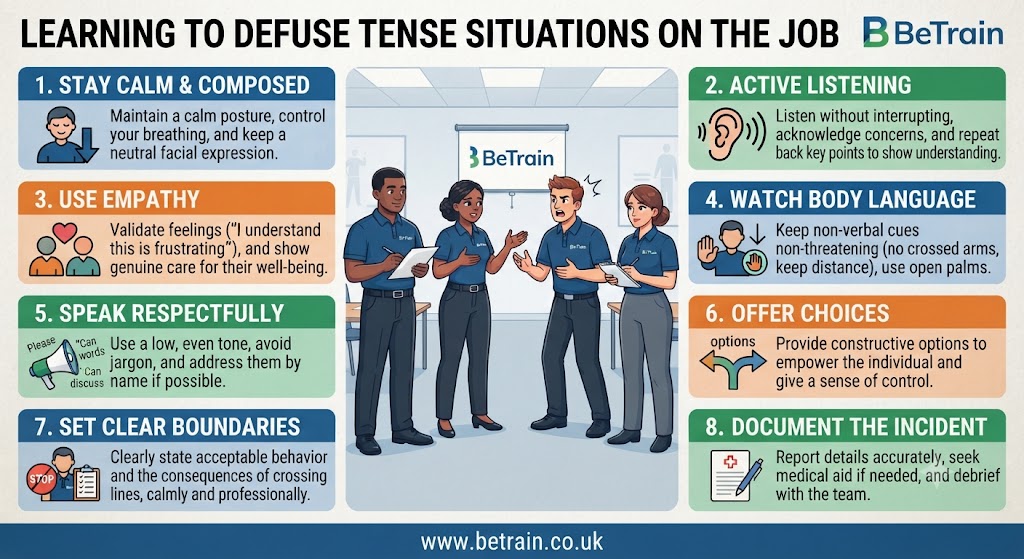
Stay Calm Yourself
One of the first rules of conflict management is controlling your own emotions.
If a security professional becomes angry or frustrated, the situation can quickly become worse.
Helpful habits include:
- Speaking slowly
- Maintaining steady body language
- Remaining patient
- Avoiding arguments
- Thinking before responding
Your behaviour often influences the behaviour of others.
Listen Before Speaking
People often become less aggressive when they feel heard.
Active listening involves:
- Paying full attention
- Allowing the person to speak
- Avoiding interruptions
- Asking simple questions
- Showing understanding
Listening does not necessarily mean agreeing, but it helps people feel respected.
Use Clear and Respectful Communication
The way you speak is just as important as what you say.
Professional communication includes:
- Using calm language
- Giving clear instructions
- Speaking respectfully
- Avoiding insults
- Avoiding threats
- Remaining polite
Simple, respectful communication often prevents misunderstandings.
Watch Your Body Language
Body language can either calm or increase tension.
Positive body language includes:
- Standing confidently
- Maintaining appropriate distance
- Keeping your hands visible
- Avoiding aggressive gestures
- Maintaining appropriate eye contact
Your body language should communicate confidence without appearing threatening.
Show Empathy
People are more likely to cooperate when they believe someone understands their concerns.
Simple statements such as:
- “I understand this is frustrating.”
- “Let’s see how we can resolve this.”
- “I’m here to help.”
can often reduce tension.
Empathy does not mean accepting unacceptable behaviour, but it helps build communication.
Focus on Solving the Problem
Rather than arguing about who is right, professional security staff focus on practical solutions.
For example:
- Providing information
- Offering alternatives
- Explaining venue policies
- Helping someone find assistance
- Directing people to the appropriate person
Problem-solving keeps conversations productive.
Know When to Ask for Help
Security professionals are part of a team.
If a situation becomes too difficult, ask for assistance from:
- Colleagues
- Supervisors
- Venue management
- Emergency services when appropriate
Requesting support is a sign of professionalism, not weakness.
Maintain Personal Safety
While helping others, always consider your own safety.
Good practice includes:
- Keeping a safe distance
- Staying aware of exits
- Watching surrounding activity
- Avoiding becoming isolated
- Following company procedures
Protecting yourself allows you to protect others more effectively.
Dealing with Difficult Behaviour
Security professionals meet people from many different backgrounds.
You may encounter individuals who are:
- Angry
- Upset
- Intoxicated
- Confused
- Frightened
- Emotional
Treat every person with respect while remaining focused on safety and professional standards.
Team Communication
Working closely with colleagues improves safety during difficult situations.
Good teamwork includes:
- Sharing information
- Giving clear updates
- Supporting each other
- Following agreed procedures
- Remaining calm together
Strong communication often prevents incidents from escalating.
Recording Incidents
After a situation has been resolved, accurate reporting is important.
Good incident reports should include:
- Time and date
- Location
- People involved
- Actions taken
- Outcome
- Any witnesses
Clear reports help employers review incidents and improve future procedures.
Common Mistakes to Avoid
Even experienced professionals can make mistakes.
Avoid:
- Raising your voice.
- Arguing unnecessarily.
- Interrupting constantly.
- Making personal comments.
- Standing too close.
- Ignoring warning signs.
- Acting emotionally.
Professional behaviour usually produces better outcomes.
Practising Your Skills
Conflict management improves with experience.
Useful ways to develop your abilities include:
- Attending refresher training.
- Practising communication.
- Learning from experienced colleagues.
- Reviewing previous incidents.
- Asking for feedback.
- Staying informed about best practices.
Continuous improvement benefits both you and your employer.
Where These Skills Are Used
De-escalation techniques are valuable in many security settings, including:
- Shopping centres
- Nightclubs
- Hotels
- Hospitals
- Corporate offices
- Sporting events
- Concerts
- Construction sites
- Residential developments
- Universities
Every workplace benefits from professional communication.
Benefits for Your Career
Employers highly value security professionals who can resolve problems calmly.
Strong de-escalation skills may help you:
- Build a positive reputation
- Improve customer satisfaction
- Increase promotion opportunities
- Strengthen leadership abilities
- Reduce workplace incidents
- Develop greater confidence
These skills remain valuable throughout your career.
Frequently Asked Questions
Is physical intervention always necessary?
No. Most situations can be resolved through communication, observation, and professional conflict management.
Can de-escalation be learned?
Yes. Like any professional skill, effective communication improves through training and experience.
Why is listening important?
People are often more willing to cooperate when they feel they have been listened to respectfully.
Should I argue with an aggressive person?
Generally, no. Remaining calm and focusing on solutions is usually more effective than arguing.
What if communication does not work?
If the situation continues to present a risk, follow your employer’s procedures and seek assistance from colleagues, supervisors, or emergency services when appropriate.
Building Confidence Over Time
Confidence does not develop overnight.
Each shift provides opportunities to improve your:
- Communication
- Observation
- Decision-making
- Teamwork
- Professional judgement
The more experience you gain, the more comfortable you become handling difficult situations calmly.
Final Thoughts
Learning to defuse tense situations is one of the most valuable skills a security professional can develop. Modern security work focuses on preventing conflict rather than reacting to it. By staying calm, listening carefully, communicating respectfully, recognising early warning signs, and following professional procedures, many difficult situations can be resolved without the need for physical intervention.
Whether you are new to the industry or have years of experience, improving your de-escalation skills will make you a more confident, effective, and respected security professional. Combined with ongoing training and practical experience, these communication skills can help you protect people, support your colleagues, and build a successful long-term career in the UK’s private security industry.