What Physical Intervention Training Actually Involves
If you are planning to become a Door Supervisor in the UK, you have probably heard about physical intervention training. Many people feel unsure about this part of the course because they imagine it involves fighting or learning advanced self-defence techniques. In reality, physical intervention training is designed to teach safe, lawful, and professional methods of protecting people while reducing the risk of injury.
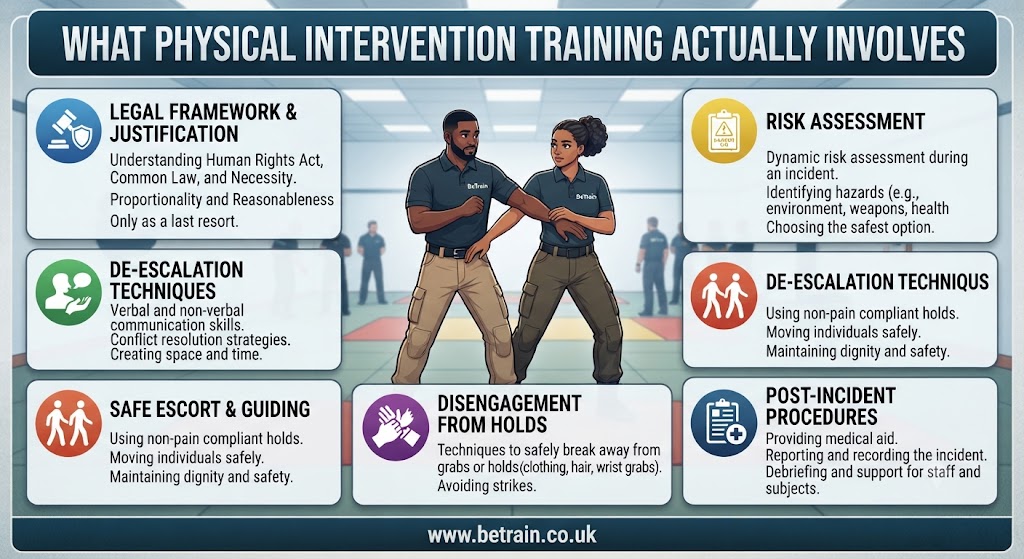
The main goal of physical intervention training is to avoid physical force whenever possible. Security professionals are first taught how to prevent conflict through communication, observation, and de-escalation. Physical intervention is only considered when it is necessary, reasonable, and legally justified.
This guide explains what physical intervention training includes, why it is important, who needs it, what you can expect during the course, and how these skills are used in real security work.
What Is Physical Intervention Training?
Physical intervention training is a mandatory part of the Door Supervisor qualification in the UK. It teaches learners how to safely manage situations where communication alone is no longer enough to protect people or prevent harm.
The training focuses on:
- Personal safety
- Risk awareness
- Conflict prevention
- Safe physical techniques
- Teamwork
- Legal responsibilities
- Professional decision-making
- Protecting the public
The emphasis is always on using the minimum reasonable force necessary and only when there is no safer alternative.
Why Is Physical Intervention Training Required?
Door Supervisors regularly work in environments where disagreements or disruptive behaviour may occur.
Examples include:
- Nightclubs
- Bars
- Pubs
- Concert venues
- Sporting events
- Hotels
- Festivals
- Licensed entertainment venues
Training helps security professionals respond safely, legally, and confidently if a situation becomes physical.
Physical Intervention Is the Last Option
One of the biggest misconceptions is that security staff are expected to use force frequently.
In reality, professional Door Supervisors are trained to:
- Stay calm
- Observe behaviour
- Communicate clearly
- Resolve problems peacefully
- Reduce tension
- Protect vulnerable people
Physical intervention should only be used when other reasonable options have failed or when immediate action is needed to prevent harm.
What Will You Learn?
Although exact course content may vary slightly between providers, physical intervention training usually covers several important topics.
Legal Responsibilities
Students learn about:
- When physical intervention may be lawful
- Duty of care
- Human rights considerations
- Health and safety responsibilities
- Reporting incidents
- Professional accountability
Understanding the legal framework is just as important as learning practical skills.
Conflict Management
Before learning physical techniques, students spend time developing communication skills.
Topics include:
- Active listening
- Verbal de-escalation
- Body language
- Recognising warning signs
- Staying calm under pressure
- Defusing conflict
Many incidents can be resolved without any physical contact.
Personal Safety
Training also focuses on protecting yourself.
Students learn how to:
- Maintain safe distances
- Stay aware of surroundings
- Position themselves safely
- Recognise potential risks
- Work effectively with colleagues
Personal safety is essential for all security professionals.
Safe Physical Skills
Practical sessions introduce controlled techniques designed to reduce the risk of injury.
These exercises may involve:
- Safe guiding techniques
- Escorting methods
- Teamwork during incidents
- Safe positioning
- Protecting yourself and others
All techniques are demonstrated and practised under the supervision of qualified instructors.
What Physical Intervention Training Does Not Teach
Many people are surprised to learn what is not included.
The course is not designed to teach:
- Martial arts
- Street fighting
- Aggressive combat
- Offensive self-defence
- Punishment techniques
Instead, every practical activity focuses on safety, control, and reducing harm.
Practical Exercises
Students usually participate in supervised practical exercises that reflect real workplace situations.
Examples may include:
- Managing an uncooperative person
- Working as part of a team
- Escorting someone safely
- Responding to escalating behaviour
- Communicating during an incident
These activities help build confidence while encouraging safe and professional behaviour.
Teamwork Is Essential
Door Supervisors rarely work alone.
Training encourages learners to:
- Communicate clearly
- Support colleagues
- Share information
- Work together during incidents
- Protect each other
- Prioritise public safety
Good teamwork often prevents situations from becoming more serious.
Health and Safety
Health and safety are central to physical intervention training.
Students are taught to:
- Assess risks before acting
- Consider safer alternatives
- Avoid unnecessary force
- Protect vulnerable individuals
- Reduce the chance of injury
- Report incidents accurately
Protecting everyone involved is always the priority.
Who Needs Physical Intervention Training?
Physical intervention training is generally required for people completing the Door Supervisor qualification because they may work in licensed environments where managing conflict is part of the role.
It is an important requirement before applying for an SIA Door Supervisor licence.
Is the Training Physically Difficult?
Most learners can complete the course successfully.
The practical activities are designed for ordinary adults rather than athletes.
Qualified instructors demonstrate each technique carefully and provide guidance throughout the training.
If you have concerns about a medical condition or physical limitation, speak with the training provider before attending.
What Should You Wear?
Training providers usually recommend comfortable clothing that allows you to move easily.
Suitable clothing often includes:
- Comfortable trousers
- Flat shoes or trainers
- A suitable top for practical activities
Avoid restrictive clothing or footwear that may limit movement.
How to Prepare
Before attending your course:
- Get enough rest.
- Arrive on time.
- Bring any required identification.
- Wear appropriate clothing.
- Stay hydrated.
- Listen carefully to your instructors.
Being well prepared helps you get the most from the training.
Common Myths
Myth 1: The Course Is Like Martial Arts
False.
The training focuses on safe, controlled techniques rather than fighting.
Myth 2: Physical Strength Is the Most Important Skill
Incorrect.
Communication, observation, teamwork, and decision-making are often much more valuable.
Myth 3: Door Supervisors Use Force Every Day
Not true.
Most experienced professionals rely on communication and conflict management far more often than physical intervention.
Myth 4: The Practical Sessions Are Dangerous
Approved training providers use structured exercises with qualified instructors to create a safe learning environment.
Skills You Will Develop
During the course, you can expect to improve:
- Communication
- Observation
- Teamwork
- Confidence
- Decision-making
- Risk assessment
- Personal safety awareness
- Professional behaviour
These skills are valuable throughout your security career.
After Completing the Course
Once you successfully complete your Door Supervisor qualification and meet the Security Industry Authority (SIA) licensing requirements, you can apply for your SIA licence.
Many newly licensed professionals begin working in:
- Nightclubs
- Hotels
- Events
- Sports venues
- Entertainment venues
- Corporate sites
- Retail security
- Hospitality settings
The knowledge gained during physical intervention training supports safer working practices in all of these environments.
Frequently Asked Questions
Do I have to participate in practical exercises?
Yes. Practical assessment is an important part of the Door Supervisor qualification.
Will I learn self-defence?
The course focuses on lawful physical intervention and personal safety rather than traditional self-defence or martial arts.
Is physical intervention always required during security work?
No. Most situations are resolved through communication, observation, and conflict management.
Can anyone complete the course?
Most adults can complete the training successfully. If you have health concerns, speak with the training provider before attending.
Why is communication taught before physical skills?
Because preventing conflict is always safer than using physical intervention. Good communication often resolves problems without the need for physical contact.
Final Thoughts
Physical intervention training is one of the most misunderstood parts of the Door Supervisor qualification. It is not about fighting or using force whenever problems arise. Instead, it teaches security professionals how to prevent conflict, make safe decisions, understand their legal responsibilities, and use carefully controlled physical techniques only when absolutely necessary.
The course places a strong emphasis on communication, teamwork, personal safety, and protecting the public. By completing your training with an approved provider and practising the skills responsibly, you will be better prepared to handle challenging situations professionally and confidently throughout your career in the UK’s private security industry.