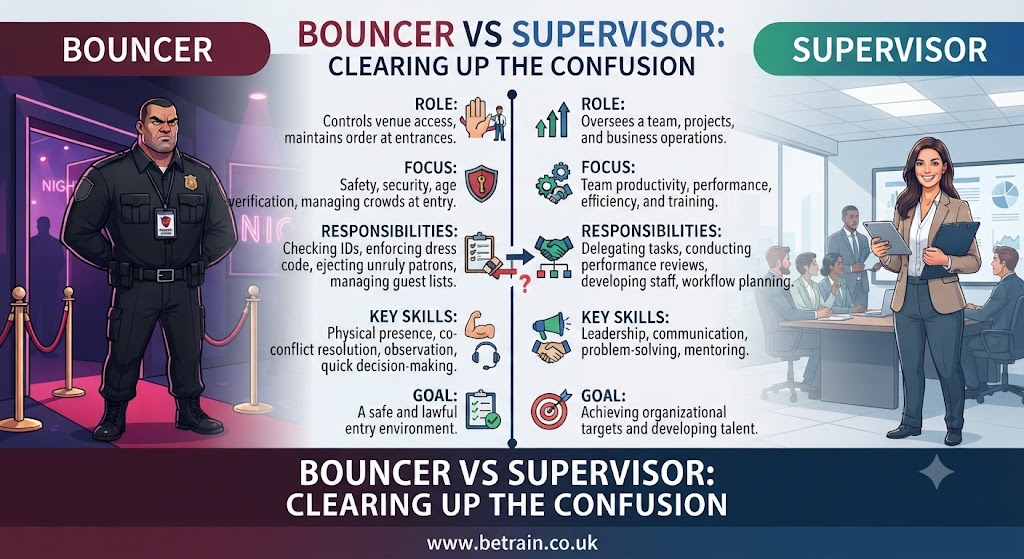
Bouncer vs Supervisor: Clearing Up the Confusion
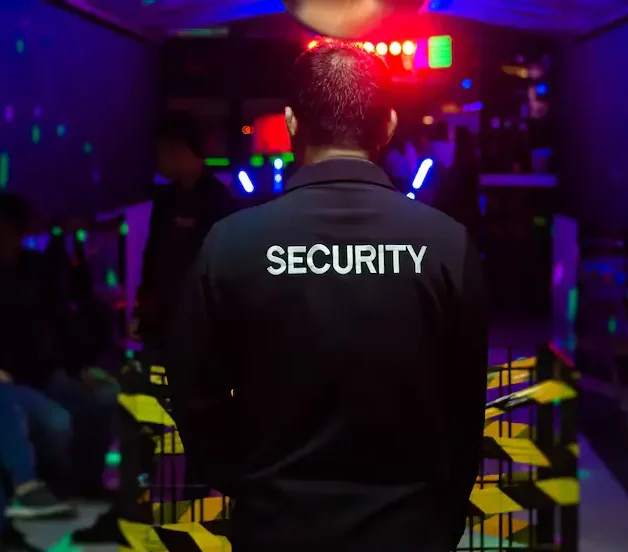
Many people use the terms “bouncer” and “door supervisor” as if they mean exactly the same thing. While both roles involve maintaining safety at licensed venues, there are important differences in responsibilities, training, professionalism, and legal requirements.
Today, the modern UK security industry has moved far beyond the traditional image of a bouncer standing outside a nightclub. Door Supervisors are licensed security professionals who receive recognised training and perform a wide range of duties that include customer service, conflict management, emergency response, and public safety.
If you are considering a career in security or want to understand these roles better, this guide explains the key differences between a bouncer and a Door Supervisor, the qualifications required, typical duties, and the career opportunities available.
What Is a Bouncer?
The word “bouncer” is an informal term that has been used for many years to describe people who control entry at pubs, bars, clubs, and entertainment venues.
Traditionally, a bouncer’s main responsibilities included:
- Checking who enters a venue
- Refusing entry when necessary
- Removing disruptive individuals
- Preventing fights
- Helping maintain order
Although the term is still commonly used by the public, it is no longer the official job title used by most employers.
What Is a Door Supervisor?
A Door Supervisor is a trained and licensed security professional who works at licensed premises such as:
- Nightclubs
- Bars
- Pubs
- Hotels
- Concert venues
- Sports stadiums
- Casinos
- Entertainment venues
- Private events
- Festivals
Door Supervisors complete approved training and hold a valid Security Industry Authority (SIA) licence before carrying out licensed security work.
Their responsibilities go far beyond simply controlling entry.
Why the Job Title Changed
The security industry has become much more professional over the years.
The title Door Supervisor reflects a wider range of responsibilities, including:
- Customer service
- Conflict management
- Public safety
- Emergency response
- Professional communication
- Incident reporting
- Venue security
- Teamwork
The role now focuses on preventing problems before they happen rather than simply responding to them.
Legal Requirements
One of the biggest differences is licensing.
To work legally as a Door Supervisor in the UK, you normally need:
- An approved Door Supervisor qualification
- A valid SIA Door Supervisor licence
- The legal right to work in the UK
- Successful completion of any required licensing checks
Working in a licensed role without the appropriate SIA licence is unlawful.
Main Responsibilities of a Door Supervisor
Modern Door Supervisors perform many important tasks.
These include:
- Checking identification
- Monitoring entrances and exits
- Managing queues
- Welcoming customers
- Responding to incidents
- Recording incidents
- Communicating with emergency services
- Assisting vulnerable individuals
- Preventing anti-social behaviour
- Supporting venue staff
Professional communication is often one of the most important parts of the job.
Customer Service Is a Key Part of the Role
Many people are surprised to learn that Door Supervisors spend a large part of their shift helping customers.
This may involve:
- Giving directions
- Answering questions
- Assisting visitors
- Helping people safely leave the venue
- Supporting customers who need assistance
A friendly and professional attitude helps create a safer environment for everyone.
Conflict Management
A common misconception is that Door Supervisors spend most of their time dealing with physical confrontations.
In reality, experienced professionals focus on preventing problems through:
- Calm communication
- Active listening
- Observation
- Early intervention
- Professional behaviour
Physical intervention is only used when it is lawful, necessary, and appropriate.
Training Requirements
Before applying for an SIA licence, students complete approved training.
Typical topics include:
- Working in the private security industry
- Conflict management
- Customer service
- Physical intervention
- Health and safety
- Emergency procedures
- Terror threat awareness
- Communication skills
- Incident reporting
- Professional standards
This training prepares learners for real workplace situations.
Skills Needed
Successful Door Supervisors usually possess:
- Good communication
- Patience
- Observation skills
- Professionalism
- Confidence
- Teamwork
- Problem-solving
- Emotional control
- Customer service
- Reliability
These skills are often more valuable than physical strength alone.
Working Environment
Door Supervisors work in many different locations.
Examples include:
- Nightclubs
- Hotels
- Music venues
- Festivals
- Sporting events
- Restaurants
- Conference centres
- Casinos
- Private functions
- Entertainment venues
Every venue presents different challenges and opportunities.
Career Opportunities
Many people start as Door Supervisors before progressing into higher positions.
Career options include:
- Security Supervisor
- CCTV Operator
- Corporate Security Officer
- Event Security Supervisor
- Security Manager
- Operations Manager
- Training Instructor
- Security Consultant
The security industry offers excellent long-term career opportunities.
Salary Expectations
Door Supervisors are generally paid according to:
- Experience
- Employer
- Location
- Shift patterns
- Event work
- Overtime
Those who gain additional qualifications and leadership experience often earn higher salaries.
Common Myths
Myth 1: Every Door Supervisor Is a Bouncer
Not exactly.
Although people still use the word “bouncer,” today’s Door Supervisors perform many professional responsibilities beyond controlling entry.
Myth 2: Physical Strength Is the Most Important Skill
False.
Communication, observation, and conflict management are usually far more important.
Myth 3: The Job Is Only About Nightclubs
False.
Door Supervisors also work in hotels, casinos, event venues, conference centres, sporting events, and many other locations.
Myth 4: There Is No Career Progression
Incorrect.
Many experienced Door Supervisors move into supervisory, management, training, and consultancy roles.
A Typical Shift
A Door Supervisor may spend a shift:
- Checking identification
- Greeting customers
- Monitoring entrances
- Watching for suspicious behaviour
- Managing queues
- Supporting venue staff
- Recording incidents
- Assisting emergency services if needed
- Helping vulnerable individuals
- Closing the venue safely
Most shifts involve far more communication than confrontation.
Tips for Success
If you want to build a successful career as a Door Supervisor:
- Complete approved training.
- Obtain your SIA licence.
- Develop excellent communication skills.
- Stay calm under pressure.
- Maintain professionalism.
- Continue learning.
- Build a strong work reputation.
- Treat everyone with respect.
These qualities help professionals succeed in the modern security industry.
Frequently Asked Questions
Is “bouncer” an official job title?
No. It is an informal term commonly used by the public. Most employers use the title Door Supervisor.
Do Door Supervisors only work at night?
No. Depending on the venue, shifts may take place during the day, evening, weekends, or public holidays.
Can women become Door Supervisors?
Yes. Many women work successfully as Door Supervisors and are highly valued within the industry.
Do Door Supervisors always wear uniforms?
Many do, although uniform requirements vary depending on the employer and workplace.
Can Door Supervisors progress into management?
Yes. With experience and continued professional development, many move into supervisory and management positions.
Professionalism Matters
The role of a Door Supervisor continues to evolve.
Today’s employers expect professionals who can:
- Protect the public
- Communicate effectively
- Provide excellent customer service
- Follow legal procedures
- Handle incidents professionally
- Represent the venue positively
Maintaining high professional standards benefits both employees and customers.
Final Thoughts
Although the terms bouncer and Door Supervisor are often used interchangeably, they are not exactly the same. “Bouncer” is an informal expression, while Door Supervisor is the recognised professional role within the UK’s licensed security industry. Modern Door Supervisors do much more than control entry to venues. They protect customers, support businesses, prevent conflict, respond to emergencies, and provide excellent customer service.
If you are considering this career, obtaining an approved qualification and an SIA Door Supervisor licence is the first step. With the right training, professionalism, and commitment to continuous learning, you can build a rewarding career with opportunities to progress into supervisory and management positions across the UK’s growing security industry.