
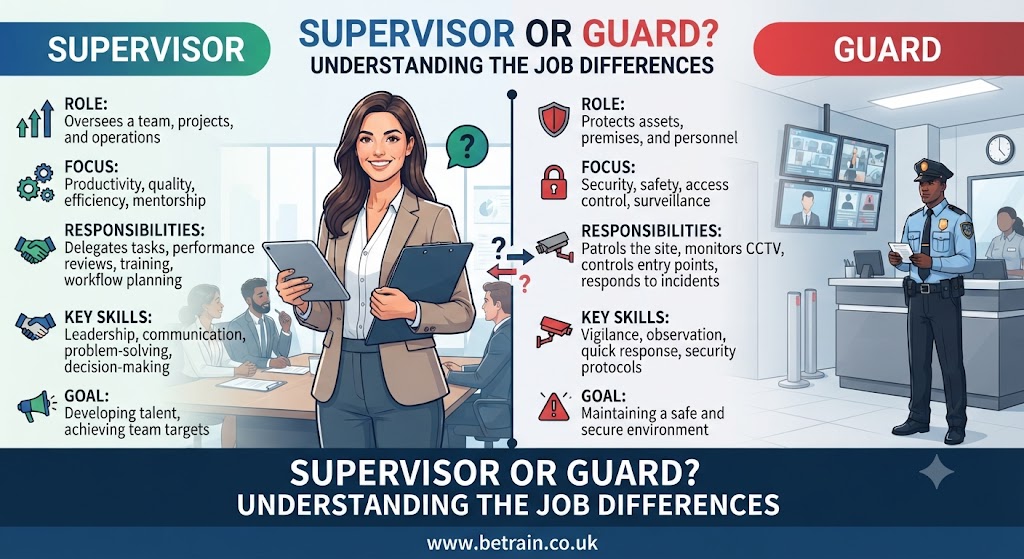
Supervisor or Guard? Understanding the Job Differences
If you are thinking about starting a career in the UK private security industry, you may come across two common job titles: Security Guard and Security Supervisor. At first glance, they may seem very similar because both roles focus on keeping people, property, and businesses safe. However, there are important differences in responsibilities, experience, leadership, and career progression.
Many people begin their careers as Security Guards and later move into supervisory positions after gaining experience. Understanding the differences between these roles can help you choose the right career path and plan for future advancement.
This guide explains what Security Guards and Security Supervisors do, how their responsibilities differ, the skills needed for each role, salary expectations, and how to progress from one position to the other.
What Is a Security Guard?
A Security Guard is responsible for protecting people, property, and assets. They are usually the first point of contact for visitors, employees, and customers and play an important role in maintaining a safe and secure environment.
Typical duties include:
- Patrolling buildings and premises
- Monitoring CCTV systems
- Checking identification
- Controlling access to buildings
- Reporting incidents
- Responding to alarms
- Assisting visitors
- Completing daily reports
- Monitoring entrances and exits
- Following company procedures
Security Guards work in many different environments, including offices, shopping centres, hospitals, hotels, warehouses, schools, and construction sites.
What Is a Security Supervisor?
A Security Supervisor has many of the same responsibilities as a Security Guard but also manages a team of security officers.
Supervisors ensure that security operations run efficiently and that staff follow company policies and procedures.
Typical responsibilities include:
- Supervising security staff
- Creating work schedules
- Monitoring team performance
- Handling serious incidents
- Supporting security officers
- Communicating with management
- Conducting site inspections
- Preparing reports
- Training new employees
- Managing daily operations
A Security Supervisor is responsible not only for security but also for leadership and organisation.
Main Differences Between the Roles
Although both jobs focus on safety and security, there are several key differences.
Level of Responsibility
Security Guards mainly focus on carrying out their assigned duties.
Security Supervisors are responsible for both their own work and the performance of the team they manage.
Leadership
Security Guards usually work under the guidance of a supervisor or manager.
Security Supervisors provide leadership, assign duties, solve problems, and support other security staff.
Decision-Making
Supervisors often make important operational decisions during incidents or emergencies.
Guards usually follow established procedures and report issues to supervisors when necessary.
Administrative Duties
Security Guards complete routine reports.
Supervisors often prepare:
- Staff schedules
- Incident summaries
- Performance reports
- Client updates
- Daily operational records
Administrative work forms a larger part of a supervisor’s role.
Skills Needed for a Security Guard
Successful Security Guards often possess:
- Good observation skills
- Professional communication
- Customer service
- Reliability
- Honesty
- Attention to detail
- Time management
- Teamwork
- Patience
- Problem-solving
These skills help maintain a safe and welcoming environment.
Skills Needed for a Security Supervisor
Supervisors require all the skills of a Security Guard, plus additional leadership abilities.
Important qualities include:
- Leadership
- Team management
- Decision-making
- Organisation
- Conflict resolution
- Staff motivation
- Planning
- Report writing
- Communication
- Responsibility
Strong leadership is one of the biggest differences between the two positions.
Training Requirements
Both roles usually require an appropriate SIA licence before carrying out licensed security work.
Many people begin by completing an approved Door Supervisor or Security Guard qualification.
Supervisory positions often require:
- Practical experience
- Leadership skills
- A strong employment record
- Good communication abilities
- Additional professional development
Experience is usually just as important as formal qualifications.
Career Progression
A common career path looks like this:
- Complete an approved security qualification.
- Obtain an SIA licence.
- Start work as a Security Guard or Door Supervisor.
- Gain practical experience.
- Develop leadership skills.
- Apply for Security Supervisor positions.
- Progress into management roles.
Many successful supervisors started in entry-level security positions.
Working Environment
Both roles may work in similar locations.
Examples include:
- Shopping centres
- Corporate offices
- Hospitals
- Hotels
- Construction sites
- Warehouses
- Universities
- Airports
- Residential developments
- Event venues
The difference lies more in responsibilities than in the workplace itself.
Salary Expectations
Security Supervisors generally earn more than Security Guards because they manage staff and take on additional responsibilities.
Pay varies depending on:
- Experience
- Employer
- Industry
- Location
- Shift patterns
- Overtime opportunities
As you gain experience and move into leadership positions, your earning potential usually increases.
Daily Responsibilities Compared
A Typical Security Guard May:
- Patrol the site
- Monitor CCTV
- Check visitor identification
- Complete incident reports
- Respond to alarms
- Assist customers
A Typical Security Supervisor May:
- Assign staff duties
- Conduct team briefings
- Handle complex incidents
- Communicate with clients
- Review reports
- Monitor staff performance
- Organise shift schedules
- Ensure company policies are followed
Supervisors spend more time managing people and coordinating operations.
Challenges of Each Role
Security Guard Challenges
- Long periods of standing
- Night shifts
- Monitoring large areas
- Responding to incidents
- Maintaining concentration
Security Supervisor Challenges
- Managing staff
- Handling complaints
- Solving operational problems
- Completing administrative work
- Meeting client expectations
- Making important decisions
Both roles require professionalism and responsibility.
Which Role Is Best for Beginners?
For most people, becoming a Security Guard or Door Supervisor is the best starting point.
These roles allow you to:
- Gain practical experience
- Learn company procedures
- Build confidence
- Develop communication skills
- Understand different security environments
After gaining experience, moving into supervision becomes much easier.
Tips for Becoming a Security Supervisor
If your goal is to become a supervisor, focus on developing both technical and leadership skills.
Helpful steps include:
- Arrive on time every day.
- Build a strong professional reputation.
- Continue learning.
- Improve communication skills.
- Volunteer for additional responsibilities.
- Support your colleagues.
- Complete extra qualifications.
- Learn modern security technology.
Employers often promote reliable employees who demonstrate leadership potential.
Common Myths
Myth 1: Supervisors Only Watch Other People Work
False.
Supervisors often remain actively involved in daily security operations while also managing their teams.
Myth 2: You Need Many Years of Experience
Not always.
Although experience is valuable, motivated professionals who demonstrate leadership may progress more quickly.
Myth 3: Security Guards Cannot Build Long-Term Careers
False.
Many senior managers began as Security Guards before progressing through supervisory positions.
Frequently Asked Questions
Can I become a Security Supervisor immediately after qualifying?
Most employers prefer candidates with practical security experience before moving into supervisory roles.
Do supervisors still patrol sites?
Yes. Depending on the workplace, supervisors may continue carrying out patrols while also managing staff.
Is leadership more important than physical strength?
Yes. Communication, organisation, and decision-making are often far more important for supervisors than physical ability.
Can a Security Guard become a manager?
Absolutely. Many professionals progress from Security Guard to Supervisor and later into management positions.
Which role offers better career progression?
Security Supervisor roles generally provide greater opportunities for promotion into senior management positions.
Final Thoughts
Both Security Guards and Security Supervisors play essential roles in protecting people, property, and businesses across the UK. While Security Guards focus primarily on frontline security duties, Security Supervisors take on additional leadership responsibilities, manage teams, coordinate daily operations, and support both staff and clients.
For most people, beginning as a Security Guard is the best way to gain valuable experience and build confidence. With dedication, ongoing training, and strong leadership skills, progressing into a supervisory role is a realistic goal. Whether you are just starting your journey or planning your next career move, understanding the differences between these two roles will help you make informed decisions and build a successful future in the private security industry.