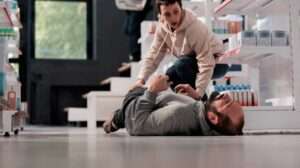
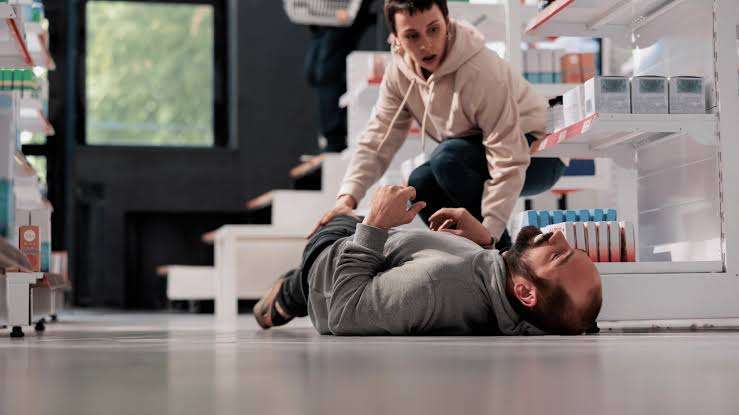
It can happen without warning. A colleague stiffens, falls, and their body begins to jerk. Or someone in a meeting suddenly stares blankly and seems far away. Everyone around them freezes. What should you do?
Seeing a seizure can be frightening, but the first aid is simpler than most people expect, and the most important rules are about what not to do. In this guide, we explain in plain English how to help someone having a seizure at work, based on advice from UK epilepsy charities and the NHS, and how it links to what you learn on an Emergency First Aid at Work (EFAW) course in London. If you want to see a real course page as you read, here is the Emergency First Aid at Work course in London.
Important Notes First
- This guide is general information, not medical advice or training. A trainer can show you the recovery position and check your technique.
- A first aider does not diagnose. Seizures have many possible causes, and epilepsy is only one of them.
- If you are unsure, call 999.
- Follow any personal plan. Some people with epilepsy have a care plan or an identity card that tells you what to do. Follow it if you find it.
- This guide is for adults. Seizures in babies and young children, including those caused by fever, need extra care, so learn about them on a paediatric first aid course.
The Short Answer
If someone has a convulsive seizure, stay calm, note the time, clear the area of anything dangerous, cushion their head and loosen tight clothing around the neck. Do not restrain them, and do not put anything in their mouth. When the jerking stops, gently place them in the recovery position, check their breathing, stay with them and reassure them as they come round. Call 999 if it is their first seizure, if it lasts more than five minutes, if one seizure follows another without recovery, if they are injured or if they have trouble breathing afterwards.
What Is a Seizure?
A seizure is a sudden burst of abnormal electrical activity in the brain. It can briefly change how a person moves, feels, behaves or is aware of their surroundings. Seizures can look very different from person to person.
Epilepsy is a condition in which a person has a tendency to have repeated seizures. But not every seizure means epilepsy. Seizures can also happen for other reasons, such as very low blood sugar, a head injury, heatstroke, a stroke, infection, a drug or alcohol reaction or sometimes a faint. Because the cause is often unclear to bystanders, first aid focuses on keeping the person safe.
Types of Seizure You Might See at Work
Tonic clonic seizures
These are the ones most people picture. The person may cry out, then become stiff and fall to the ground. The body then jerks rhythmically. They are unresponsive, and may have blue tinged lips from irregular breathing, may bite their tongue or cheek and may lose control of their bladder or bowels. Most last between one and three minutes. Afterwards, they are often confused, very tired and sore. Tonic clonic seizures used to be called grand mal seizures.
Focal seizures
These start in one part of the brain. The person may stare blankly, seem confused, make repeated movements such as lip smacking, plucking at clothes or wandering, or have unusual feelings or sensations. They may not respond properly. Some focal seizures can spread and become tonic clonic.
Absence seizures
These are brief. The person suddenly stops what they are doing, stares blankly and does not respond for a few seconds, then carries on as if nothing happened. They can be mistaken for daydreaming.
Other seizure types
There are many others, such as sudden jerks or drops. Some people have non epileptic seizures, which can look similar but have different causes.
This guide focuses on tonic clonic seizures, because they need the most active first aid, and then covers other types more briefly.
Step by Step: First Aid for a Tonic Clonic Seizure
Step 1: Stay calm and note the time
Look at a clock or your phone and note when the seizure started. Timing matters because it tells you whether the seizure is lasting longer than five minutes. Stay calm, and speak calmly to people around you.
Step 2: Protect the person from injury
Remove or move anything that could hurt them, such as hot drinks, sharp objects, chairs, equipment or other hard objects. If you can, make a bit of space by asking onlookers to step back. If they are on a chair, gently help them to the floor if you can do so safely. If they are near machinery, switch it off if you can do so without risk.
Step 3: Cushion their head
Place something soft under their head, such as a folded jumper or jacket. This protects them from head injury while the body is moving.
Step 4: Loosen anything tight around the neck
Loosen a tie, a collar or a scarf if you can do it easily. Remove glasses if they are in danger of breaking.
Step 5: Do not restrain them
Never hold the person down or try to stop the movements. Restraint can cause injury to them and to you, and it does not stop the seizure.
Step 6: Do not put anything in their mouth
Never put anything in the mouth of someone having a seizure, including your fingers, a spoon or a wallet. They could choke, or damage their teeth. The idea that people swallow their tongue is a myth.
Step 7: Do not give food or drink
Wait until they are fully recovered and alert before offering any water. Do not try to bring them round by shaking or shouting.
Step 8: Look for an identity card or medical jewellery
Some people carry an epilepsy card, bracelet or other identification, which may give information about their condition and what to do. Check, if you can do it without disturbing them too much.
Step 9: When the jerking stops, check breathing
Once the jerking has stopped and the muscles have relaxed, check that the person is breathing. Their breathing may be noisy or irregular for a short time, and may return to normal within a minute or two.
- If they are breathing normally, place them in the recovery position.
- If they are not breathing normally, or you are unsure, call 999, send for an AED and start CPR, as in cardiac arrest.
Step 10: Place them in the recovery position
Gently roll the person onto their side, with their head tilted back slightly so the airway stays open, and their top leg bent so they cannot roll over. This helps breathing and lets any saliva or fluid drain from the mouth. If their breathing sounds noisy or difficult, gently check inside the mouth for anything blocking the airway, such as food or a dental plate, and wipe away any saliva. For a step by step method, see our guide on what to do if someone is unresponsive but breathing.
Step 11: Stay with them and reassure them
Stay until they have fully recovered. They may be confused, drowsy, upset, embarrassed, sore or unable to remember what happened. Speak calmly, tell them where they are and what happened, and let them recover at their own pace. Do not crowd them.
Step 12: Protect their dignity
Seizures can be embarrassing, especially at work. If they have lost control of their bladder, cover them with a coat or blanket, and ask onlookers to give them privacy. Treat the incident with confidentiality afterwards.
When to Call 999
Most seizures do not need an ambulance, but you should always call 999 if:
- It is the person’s first seizure, or you do not know that they have epilepsy.
- The seizure lasts for more than five minutes.
- One seizure follows another without the person regaining consciousness in between.
- The person is injured, for example after a fall, a head injury or a burn.
- They have difficulty breathing after the seizure, or their breathing does not return to normal.
- They do not regain consciousness within a reasonable time after the seizure stops.
- They are pregnant, or have another condition that puts them at risk, or have a seizure in water.
- You are not sure.
Epilepsy charities note that advice on when to call an ambulance can differ between sources. If in doubt, call 999, and follow the call handler’s advice. Always tell them when the seizure started, what you have seen and what you have done.
When a Person Has Epilepsy and a Care Plan
Someone who knows they have epilepsy may have a personal care plan or an emergency plan, perhaps shared with their employer. It may say how long their usual seizures last, what to do afterwards, when to call an ambulance and whether they take emergency medication. If you are a colleague or first aider:
- Follow the plan. It reflects the person’s own experience.
- Do not give medication unless you have been specifically trained, and the plan says so. Some people have emergency medication that trained staff can give for prolonged seizures. A workplace first aider should not give medicines otherwise.
- Still call 999 if the plan says to, or if the seizure is not following the usual pattern.
Other Seizure Types: What to Do
Focal or absence seizures, with confusion or staring
- Stay calm, and stay with the person.
- Guide them gently away from danger, such as stairs, roads, hot equipment or machinery.
- Do not restrain them, unless they are in immediate danger.
- Speak calmly and reassuringly, and tell them what is happening.
- Do not give food or drink until they are fully alert.
- Time the seizure, and stay until they have fully recovered.
- Call 999 if it is their first seizure, if it lasts longer than expected or longer than five minutes, if they are injured or if you are worried.
Someone in a wheelchair
Leave them in the chair if they are safely strapped in, and support their head. If they are not strapped in, or there is a risk of falling, make them safe, and call for help.
Someone in water
Support their head above water, and call 999 straight away. A seizure in water is an emergency, because of the risk of drowning.
Someone with a dental injury
If teeth are broken or knocked out, take care not to let the person choke on them. Seek dental or medical advice.
Someone who has fallen from height or hit their head
Treat any injury from the fall as an emergency. Call 999. Take care with the head and neck, but protect the airway if they are unresponsive.
Someone with a seizure in a confined space
If the person is in a toilet cubicle or tight space, call for help and ask others to make space, so you can reach them safely.
Common Myths About Seizures
- Myth: You should put something in their mouth. Fact: Never. It can cause choking and injury.
- Myth: A person can swallow their tongue. Fact: This is not possible.
- Myth: You should hold them down. Fact: Do not restrain them.
- Myth: You should always call an ambulance. Fact: Not always, but you should in the situations listed above, and if you are unsure.
- Myth: Epilepsy is contagious or rare. Fact: It is neither. Epilepsy is a common long term condition.
- Myth: People with epilepsy cannot work. Fact: Many work successfully in a wide range of jobs, with understanding and reasonable adjustments.
- Myth: A seizure means a person is always in danger. Fact: Most seizures end by themselves within a few minutes, and the person recovers.
After the Seizure
Once the person has recovered, there is more to do.
- Let them rest. They may be very tired, with a headache, sore muscles or a bitten tongue. Some people feel unwell for hours or even days.
- Offer water when fully alert. Not before.
- Ask how they want to proceed. Some people want to go home, some want to sit quietly, some want to go back to work, though it is wise to rest.
- Check for injuries. Look for bumps, cuts or burns.
- Seek medical advice if needed. If it is their first seizure, they should see a doctor. If they have epilepsy, they may want to inform their care team, depending on their plan.
- Do not let them drive or use dangerous equipment until they feel fully recovered and it is safe.
- Record what happened. Date, time, where, how long, what you saw, what you did and what help was arranged.
- Respect confidentiality. Do not share the person’s health information without their permission, other than with those who need to know, such as emergency services.
- Support the team. Colleagues who witnessed it may be shaken. Offer them a chance to talk.
What Employers Can Do
The Health and Safety (First Aid) Regulations 1981 require employers to provide adequate and appropriate first aid for their employees. Employers can go further, and make their workplace ready to support someone with epilepsy.
- Train first aiders. As a starting point for low hazard workplaces, HSE suggests at least one appointed person for fewer than 25 employees, at least one first aider trained in Emergency First Aid at Work for 25 to 50 employees, and at least one first aider trained in First Aid at Work for every 100 employees above that, or part of 100. Higher hazard workplaces need more. A first aid needs assessment gives the best answer.
- Raise awareness. A short briefing for staff on what to do reduces fear and delay.
- Support personal plans. If an employee chooses to share an epilepsy plan, make sure the right people know where it is and what it says, with confidentiality.
- Make reasonable adjustments. Epilepsy may count as a disability under the Equality Act 2010, depending on its effects, and employers may need to consider reasonable adjustments. This is general information, not legal advice. If you are unsure, check with Acas or a legal adviser.
- Carry out risk assessments. Consider hazards such as heights, machinery, hot surfaces and working alone, in discussion with the employee, and avoid assumptions.
- Keep first aid information visible. A simple card with the steps, such as the epilepsy charities’ first aid cards, can help.
- Have a clear procedure. Who calls 999, who stays with the person, who meets the ambulance.
- Offer support afterwards. For the employee and the team.
Where an EFAW Course Fits
An Emergency First Aid at Work course teaches the core skills that apply when someone is having or has had a seizure: assessing an incident safely, managing an unresponsive casualty, using the recovery position, calling for help, giving CPR and using an AED if needed, and handing over to the ambulance crew. You practise the recovery position and the decision between the recovery position and CPR, and work through scenarios with a trainer.
The longer First Aid at Work course covers a wider range of medical conditions, including seizures, in more detail. Exact content varies by awarding organisation, so check the course outline if you want to know what is included.
EFAW is a one day, regulated Level 3 qualification, and HSE guidance says it should include at least six hours of training time, not counting breaks. The certificate is valid for three years. HSE strongly recommends a short refresher each year, although it is not a legal requirement.
Choosing a Good Course in London
Look for:
- A regulated Level 3 Award in Emergency First Aid at Work (RQF) from a recognised awarding organisation.
- At least six hours of training time, not counting breaks.
- Hands on practice, including the recovery position with a partner.
- Practical assessment in person. HSE guidance expects this for a workplace first aider, so online only courses are generally not suitable.
- Qualified, experienced trainers.
- Small classes. Many awarding organisations set a maximum of around 12 learners per trainer.
- A clear course outline, so you can see what is covered about medical conditions.
- A clear certificate and a clear total price.
HSE stopped approving first aid training providers in 2013, so be cautious of any claim that a course is HSE approved. In London in 2026, public prices for a one day course commonly range from about £65 to £150 per person. One provider page, linked above, lists £89 per person for classroom training and £75 per person for groups of five or more, at the time of writing in October 2026. Prices change, so always confirm. You can review the Emergency First Aid at Work training page to see how one provider presents its course, price and booking options.
Why London Workplaces Should Be Ready
London workplaces are busy, often spread over several floors, and full of staff, visitors and contractors. Roads and public transport can be crowded, so ambulances may take time to arrive, and the actions of colleagues in those first minutes matter. There is also a very large number of training providers and dates in London, and many deliver training at your workplace, which is a practical way to prepare a whole team to respond calmly and kindly.
Final Thoughts
So, how do you help someone having a seizure at work? Stay calm, note the time, protect them from injury, cushion their head and loosen tight clothing. Never restrain them, never put anything in their mouth and never give food or drink. When the jerking stops, place them in the recovery position, check their breathing, stay with them and reassure them. Call 999 if it is their first seizure, if it lasts more than five minutes, if one follows another, if they are injured or if they have trouble breathing.
Knowing what to do, and what not to do, turns a frightening moment into one you can handle. When you are ready to practise with a trainer, take a look at the Emergency First Aid at Work course in London and choose a date that suits you.
Frequently Asked Questions
1. What should you do if someone has a seizure at work?
Stay calm, note the time, protect them from injury, cushion their head and loosen tight clothing. Do not restrain them or put anything in their mouth. When the jerking stops, place them in the recovery position, check their breathing, stay with them and reassure them.
2. When should I call 999 for a seizure?
Call 999 if it is the person’s first seizure, if it lasts more than five minutes, if one seizure follows another without recovery in between, if they are injured, if they have difficulty breathing or if you are unsure. Follow the call handler’s advice.
3. Should I put something in their mouth during a seizure?
No. Never put anything in the mouth of someone having a seizure, including your fingers. It can cause choking and injury. The idea that a person can swallow their tongue is a myth.
4. Should I hold someone down during a seizure?
No. Never restrain a person having a seizure. It can cause injury to them and to you, and it does not stop the seizure. Protect them from injury and cushion their head instead.
5. What is the recovery position, and when do I use it?
It is a way of laying a person on their side, with the head tilted back and the upper leg bent, to keep the airway open. Use it once the jerking has stopped and the person is breathing normally but is not yet fully awake.
6. How long do seizures usually last?
Most tonic clonic seizures last between one and three minutes. If a seizure lasts more than five minutes, call 999. Timing the seizure helps you know when to call.
7. What do I do if someone has a seizure in a wheelchair or in water?
In a wheelchair, leave them in the chair if they are safely strapped in, and support their head. In water, support their head above the water and call 999 straight away, because of the risk of drowning.
8. Can I give food, drink or medication after a seizure?
Do not give food or drink until the person is fully alert. A workplace first aider should not give medicines. Some people have emergency medication in a care plan, which should only be given by people specifically trained and following that plan.
9. Does an EFAW course cover seizures?
An Emergency First Aid at Work course covers managing an unresponsive casualty, the recovery position, calling for help, CPR and using an AED. The longer First Aid at Work course covers medical conditions, including seizures, in more detail. Check the course outline for exact content.
10. Where can I learn first aid in London?
You can book an Emergency First Aid at Work course through a training provider that offers the regulated qualification, either as a public course or as training at your workplace. Check the practical content, the awarding organisation, the class size and the total price before you book.