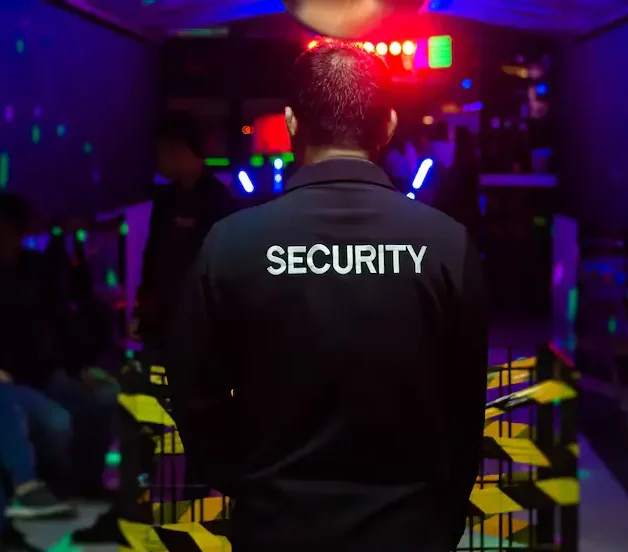
The UK private security industry is a broad and regulated sector that covers much more than traditional security guarding. From protecting licensed premises and commercial buildings to monitoring CCTV, transporting valuable goods and providing close protection, security professionals work across a wide range of environments.
The industry is regulated by the Security Industry Authority (SIA), which was established under the Private Security Industry Act 2001. Its role includes licensing individuals who carry out regulated security activities and overseeing standards within the private security sector. The regulatory framework applies across England, Wales, Scotland and Northern Ireland, although some activities have specific regional rules.
For anyone considering a career in private security, understanding how the industry is organised can make it easier to identify suitable training, licensing requirements and potential career paths. This is particularly relevant in London, where a significant proportion of the UK’s licensed security workforce is based.
The Role of the Security Industry Authority
The SIA sits at the centre of the UK’s regulatory structure for private security.
Its responsibilities include licensing individuals for specific regulated activities, setting standards for licence-linked training and operating the Approved Contractor Scheme (ACS) for security businesses. The purpose of regulation is to establish consistent standards and provide greater public protection.
According to the SIA’s 2026–2029 strategic plan, more than 458,000 individuals across the UK currently hold SIA licences that allow them to carry out security roles. As of February 2026, there were more than 517,000 active licences across different categories, including front-line and non-front-line licences.
The figures demonstrate the size and diversity of the industry. Security work is not one occupation; it is a collection of different professional activities that require different levels of knowledge, training and responsibility.
The Main Parts of the Private Security Industry
The regulated industry includes several main categories:
- Door supervision
- Security guarding
- Close protection
- Public Space Surveillance (CCTV)
- Cash and valuables in transit
- Key holding
- Vehicle immobilisation in Northern Ireland
- Non-front-line security activities
Each category exists because the nature of the work and the risks involved can be different.
For example, a door supervisor working at an entertainment venue may have significant interaction with members of the public, while a CCTV operator may spend most of their working time monitoring screens and communicating information to other security personnel.
Similarly, a close protection operative works around an individual who may require protection, whereas a security guard may be primarily responsible for protecting a building or site.
Door Supervision
Door supervision is one of the largest sections of the UK private security industry.
The role is commonly associated with pubs, clubs, bars, licensed premises, entertainment venues and events. However, the responsibilities can extend beyond simply controlling a doorway.
Door supervisors may monitor entrances, manage access, observe behaviour, communicate with customers, identify potential problems and respond appropriately to incidents. They can also have responsibilities relating to searching, preventing unauthorised entry and maintaining safety within a venue, depending on the circumstances and the employer’s procedures.
The role requires a combination of communication, observation, conflict management and knowledge of relevant legal responsibilities.
In February 2026, the SIA recorded 368,546 active Door Supervision licences, making it the largest individual front-line licence category in its published figures. The same data showed that 40% of licence holders were based in London and the South-East.
For people interested in working in this area, researching a suitable Door Supervisor Course London can be an early step in understanding the training route. However, prospective learners should always check current SIA requirements before enrolling because qualification and licensing requirements can change.
Security Guarding
Security guarding is another major part of the industry.
Security guards can work in offices, warehouses, construction sites, retail premises, commercial buildings and other locations where property, people or premises require protection.
Their responsibilities may include:
- Monitoring access points
- Conducting patrols
- Checking visitors and contractors
- Monitoring security systems
- Identifying suspicious activity
- Protecting property
- Recording incidents
- Following emergency procedures
- Reporting problems to supervisors or relevant authorities
The working environment can be significantly different from door supervision. A security guard at a commercial building might spend much of a shift monitoring a site and carrying out scheduled checks, while a door supervisor may have continuous interaction with customers and visitors.
The SIA recorded 56,775 active Security Guarding licences in February 2026.
Understanding this distinction is important because a Security Guard licence and a Door Supervisor licence are not automatically interchangeable. The licence required depends on the actual activity being undertaken.
Close Protection
Close protection is a specialised area of private security focused on protecting individuals.
Close protection operatives, sometimes called bodyguards, may protect clients who face particular security risks. Their work can involve planning, risk assessment, route planning, maintaining awareness of the surrounding environment and responding to changing circumstances.
The work may take place in vehicles, hotels, offices, public locations, private residences or during travel.
Close protection requires a different approach from conventional site security. The operative needs to understand the client’s movements, identify potential risks and maintain an appropriate level of protection without unnecessarily disrupting the client’s activities.
The SIA recorded 11,587 active Close Protection licences in February 2026.
Although this is a smaller part of the industry than door supervision or security guarding, it represents a specialised career path for people who want to develop skills in protective security.
CCTV and Public Space Surveillance
Technology has become an important part of modern security, and CCTV operators form another distinct section of the regulated industry.
Public Space Surveillance (CCTV) work can involve monitoring people and locations through surveillance systems, identifying incidents and communicating relevant information to security teams or other organisations.
The role requires concentration and attention to detail. Operators may need to monitor several screens, recognise unusual behaviour, record information accurately and maintain communication with colleagues.
Unlike some front-line security positions, CCTV work may involve limited physical interaction with the public. Its value often comes from observation, information gathering and supporting a wider security operation.
The SIA reported 65,644 active Public Space Surveillance (CCTV) licences in February 2026.
Cash and Valuables in Transit
Cash and valuables in transit is a specialist area involving the secure movement of money and valuable items.
Personnel working in this sector may be involved in transporting valuable goods between locations while following strict security procedures.
Because the work involves valuable assets and potentially significant security risks, operational procedures are generally structured and closely controlled. Teamwork, communication, situational awareness and adherence to established procedures are important.
This area demonstrates why private security cannot be treated as one general occupation. The skills required for protecting valuables during transportation can differ considerably from those required at a licensed venue or commercial building.
The SIA recorded 4,748 active Cash and Valuables in Transit licences in February 2026.
Key Holding
Key holding is another regulated activity, although it operates differently from many traditional front-line security positions.
A key holder may be responsible for holding keys on behalf of a business or organisation and responding to alarm activations or other call-outs.
The SIA explains that key holding itself does not have specific training and qualification requirements for a key holding licence. However, if an individual also performs other regulated security activities, additional licensing requirements may apply.
This distinction illustrates an important principle within the industry: licensing requirements are based on the activities being performed rather than simply the job title given to an employee.
Vehicle Immobilisation
Vehicle immobilisation is another regulated security activity, but it has a specific geographical limitation.
The SIA identifies vehicle immobilisation as a regulated activity in Northern Ireland. It is therefore different from the other major licence categories that operate across England, Wales, Scotland and Northern Ireland.
This is an example of why anyone researching security licensing should consider the location in which they intend to work. Rules and licensing arrangements are not necessarily identical for every activity across the UK.
Front-Line and Non-Front-Line Roles
The industry can also be understood through the distinction between front-line and non-front-line activities.
Front-line security personnel generally carry out regulated duties directly and require the relevant licence. These include areas such as door supervision, security guarding, close protection and CCTV.
Non-front-line roles can involve management or other responsibilities where the individual does not personally perform licensable front-line activities.
The distinction is important for employers as well as employees. A person’s job title does not automatically determine whether an SIA licence is required. The actual duties being performed must be considered.
How Training Fits Into the Structure
Training is an important part of the licensing system.
Before applying for many front-line SIA licences, applicants need to complete a relevant licence-linked qualification. The SIA explains that this training is intended to provide the knowledge and skills required to perform the relevant role safely and professionally.
Different activities have different qualifications.
For example, the training route for door supervision is not identical to the route for CCTV operations or close protection. This reflects the different responsibilities associated with each role.
Training providers themselves are not directly approved by the SIA. According to the regulator, training providers are approved by the relevant awarding organisations, which issue the qualifications and quality-assure the assessment process.
Anyone choosing a course should therefore verify that the qualification and training provider meet the current requirements.
Changes to Licence-Linked Training
The UK security industry does not remain static. Training requirements can be updated when new risks, operational needs or regulatory standards emerge.
The SIA made further changes to licence-linked training in 2026. The regulator has explained that new qualifications were introduced and that some courses, including door supervision and security guarding, became longer because of changes to the training requirements.
This means information found online from several years ago may no longer accurately describe the current training route.
Prospective security professionals should check official SIA guidance before booking a course, particularly when information relates to course length, qualifications, first aid requirements or licence renewal.
The Importance of First Aid Training
First aid is an important component of modern security training.
The SIA requires relevant first aid qualifications before learners take certain licence-linked courses. For door supervision and security guarding, training providers must confirm that learners hold a valid first aid qualification before they undertake the licence-linked training.
This requirement reflects the practical nature of security work. Security personnel may be present when someone becomes injured or requires assistance before emergency services arrive.
First aid knowledge does not replace professional medical care, but it can help security personnel respond appropriately while waiting for qualified medical assistance.
Licensing and Employers
The structure of the industry also places responsibilities on employers.
Businesses hiring private security personnel need to ensure that individuals have the correct licence for the duties they are expected to perform. The government provides a public system for checking whether security personnel hold an appropriate SIA licence.
This helps employers avoid assigning workers to activities for which they are not properly licensed.
For employees, understanding their licence is equally important. A person should know what their licence allows them to do and should not assume that every security-related task is covered simply because they work for a security company.
Approved Contractors and Security Companies
The private security industry also includes businesses that provide security services to clients.
The SIA operates the Approved Contractor Scheme (ACS), which is designed to set standards for security businesses that choose to participate.
According to the SIA’s 2026 strategic plan, there were 719 businesses registered with the Approved Contractor Scheme. A large majority supplied security guarding services, while many also provided key holding and door supervision services.
Security companies can vary considerably in size. Some operate locally with a relatively small workforce, while larger contractors may provide services across multiple regions.
For people entering the industry, this creates different employment environments. Some security professionals may work for one employer at a fixed site, while others may work across multiple locations or assignments.
London and the Security Industry
London occupies an important position within the UK’s private security sector.
The capital has a wide range of commercial, hospitality, retail, entertainment and residential environments that can require different forms of security.
The SIA’s February 2026 data shows that 40% of licence holders were based in London and the South-East.
This concentration means prospective security professionals in London may encounter a particularly diverse employment market. However, the availability of work can vary according to experience, licence category, employer requirements, location and the type of assignment.
A licence should therefore be viewed as an entry point rather than a guarantee of employment.
Keeping a Licence Current
Obtaining a licence is not necessarily the end of professional development.
The SIA has introduced refresher training requirements for certain licence renewals. For example, door supervisors renewing their licence must hold the relevant refresher qualification alongside their existing licence-linked qualification. They also need an appropriate Emergency First Aid at Work qualification or equivalent before taking the refresher training.
These requirements demonstrate that security professionals need to keep their knowledge current.
The industry can change in response to legislation, technology, public safety concerns and emerging threats. Continuing development can therefore be useful even when it is not specifically required for every role.
Choosing a Security Career Path
There is no single route through the private security industry.
Someone interested in working at entertainment venues may consider door supervision. Another person may prefer commercial site security, making security guarding more relevant. Someone interested in technology and surveillance may explore CCTV, while an individual seeking a specialist protective role could investigate close protection.
The best choice depends on the type of work, environment and responsibilities that suit the individual.
Before enrolling on training, prospective learners should research the relevant SIA licence category, understand the qualification requirements and check the latest official guidance.
The SIA’s official training guidance provides information about the qualifications required for different licence categories and how to identify suitable training providers.
Conclusion
The UK private security industry is a structured and regulated sector made up of several distinct professional areas. Door supervision, security guarding, close protection, CCTV, cash and valuables in transit and key holding all serve different purposes and involve different responsibilities.
The SIA provides the regulatory framework for many of these activities, while awarding organisations and training providers play important roles in delivering and assessing licence-linked qualifications.
For people considering security work in London, understanding this structure is more useful than simply looking for a generic “security job”. Identifying the type of work you want to perform first can help you determine which licence, qualification and skills are relevant.
As regulations and training requirements can change, official SIA guidance should always be checked before making decisions about training or licensing. With the right information, prospective security professionals can choose a career path that matches their interests, abilities and long-term goals.