You are the first on the scene. A colleague is bleeding heavily, and you want to help straight away. Then a worry flashes through your mind: what about infection? Could you catch something from their blood? Should you hold back?
It is a natural worry, and one that puts some people off learning first aid. The reassuring truth is that the risk of catching an infection while giving first aid is low, and with a few simple precautions it is lower still. Official guidance says first aiders should not withhold treatment because of fear of infection. In this guide, we explain in plain English how to protect yourself, what to do if you are exposed to blood or body fluids and how this fits with what you learn on an Emergency First Aid at Work (EFAW) course in London. If you want to see a real course page as you read, here is the Emergency First Aid at Work course in London.
Important Notes First
- This guide is general information, not medical advice or training. A trainer can show you how to put on and remove gloves safely and deal with spills.
- Do not delay life saving help. If someone is not breathing, or is bleeding heavily, start first aid straight away, using whatever protection you have, and call 999.
- If you are exposed to blood or body fluids, act at once. The steps are in this guide, and urgent medical advice matters.
- Follow your employer’s procedures. They should cover waste, spills and exposure incidents.
The Short Answer
Before giving first aid, if you can, put on disposable gloves, cover any cuts on your own hands with a waterproof dressing and avoid touching your face. Use a face shield or pocket mask if you give rescue breaths. Wash your hands with soap and water before and after. Dispose of used items safely. If you are cut, stabbed with a sharp or splashed in the eyes or mouth, wash the area straight away with soap and running water, or rinse eyes and mouth with plenty of water, and get urgent medical advice, because treatment is most effective when started quickly.
How Big Is the Risk?
The risk of catching a serious infection from giving first aid is low. Most people you help will not have a blood borne infection, and even when blood contact occurs, infection needs a route into your body. Blood borne viruses such as hepatitis B, hepatitis C and HIV can only spread when infected blood or body fluids get into your body through:
- Broken skin. Cuts, grazes, sores or eczema that expose the skin.
- A puncture wound. From a needle or other sharp object.
- The eyes, nose or mouth. Through splashes.
Intact, healthy skin is a good barrier. Healthy Working Lives guidance for first aiders states that with appropriate controls in place, there is no need to withhold treatment because of fear of blood borne virus infection.
Other infections, such as colds, flu and stomach bugs, spread in different ways, mostly through droplets, close contact and contaminated hands and surfaces, and good hygiene helps with those too.
Standard Precautions: The Core Rules
What first aiders are taught is often called standard precautions. They are a set of simple habits that protect you and the casualty, and you should use them with every casualty, because you cannot tell who is infected.
1. Clean your hands
- Wash before and after giving first aid. Use soap and warm running water for at least 20 seconds, and dry thoroughly with a clean towel or paper towel.
- Clean hands before putting on gloves and after taking them off. Gloves can have tiny holes, or become contaminated when removed.
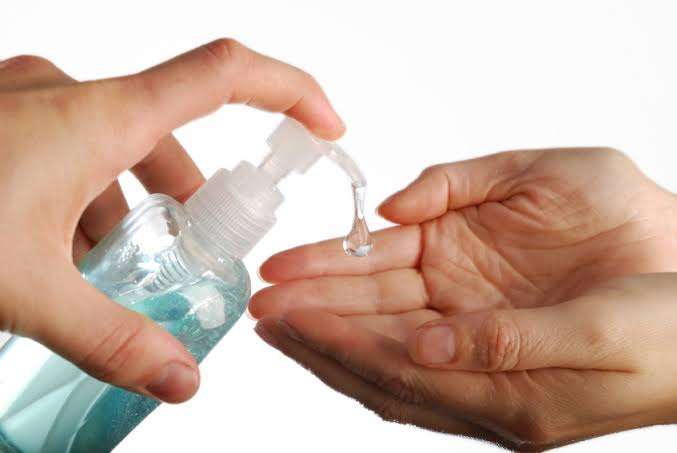
- If there is no water, use alcohol based hand rub as a temporary measure, and wash properly as soon as you can.
2. Wear disposable gloves
Gloves are your first line of defence.
- Put them on before you touch blood or body fluids, if you can do so without delay.
- Choose the right type. Nitrile gloves are a good choice, and are suitable for people with latex allergy. Some UK guidance does not recommend vinyl gloves for contact with blood. Check which gloves are in your first aid kit and whether they suit your risks.
- Check them for damage. Do not use torn or damaged gloves.
- Change them between casualties. Never use the same pair on two people.
- Do not touch your face, or other surfaces, with gloved hands that are contaminated.
- Take them off safely. Peel the first glove off from the wrist, turning it inside out, hold it in the other gloved hand, then slide a finger under the second glove and peel it off over the first, so that both are enclosed. Put them in a waste bag, and wash your hands.
- Latex allergy. If you or the casualty are allergic to latex, use non latex gloves.
If gloves are not available and someone is in immediate danger, you may need to help without them. Use a clean cloth, or a plastic bag over your hand, as a barrier, if you can, and wash thoroughly afterwards.
3. Cover your own cuts
Cover any cuts, grazes, sores or broken skin on your hands and arms with a waterproof dressing before you start. If you cannot cover it, wear gloves, and take care.
4. Protect your face, eyes, nose and mouth
- Avoid touching your face, eyes, nose and mouth during and after first aid, until you have washed your hands.
- Use eye protection if you are likely to be splashed, for example with spurting blood or vomit, if you have it.
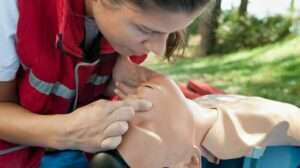
- Use a face shield or pocket mask for rescue breaths. These create a barrier between your mouth and the casualty’s. If you do not have one, or are unwilling, give chest compressions only, which is much better than doing nothing. See our guide to adult CPR step by step.
5. Use a disposable apron if there is a lot of blood or fluid
An apron protects your clothing, and is useful when dealing with heavy bleeding or vomit.
6. Avoid sharps
Be careful with needles, broken glass, blades and other sharp objects. Do not pick up a used needle with your hands. Use tongs, a dustpan and brush or a sharps tool, and place it in a sharps bin, or call for help. Never try to put a cap back on a used needle.
7. Use sterile dressings and keep wounds clean
Use sterile dressings from the first aid kit. Do not touch the part of a dressing that will touch the wound. Do not cough or breathe over a wound. This also protects the casualty from infection.
8. Clean up safely
Blood and body fluid spills need careful handling. See the section below.
9. Dispose of waste safely
Place used gloves, dressings and other contaminated items in a suitable bag, following your employer’s procedure. Do not put them in an ordinary bin if your workplace has a separate system for clinical waste.
10. Wash your hands again
After you have finished, remove your gloves and any apron, dispose of them, wash your hands thoroughly and dry them. If clothing is heavily soiled, change if you can, and wash it on a hot wash.
Protecting Against Coughs, Colds and Other Infections
Some infections spread through the air, by droplets, or by contact. If a casualty has a cough, fever or other signs of respiratory infection:
- Wash hands often, and avoid touching your face.
- Keep your distance where it is possible to do so without affecting care.
- Consider wearing a face covering if one is available and recommended by your employer or current guidance.
- For CPR, compression only CPR is an option if you are worried about giving breaths, and is much better than doing nothing.
- Follow your employer’s and national guidance. It may change over time.
Do not delay emergency first aid, but use the precautions you can.
Hepatitis B Vaccination
Hepatitis B is the blood borne virus that is most easily passed on at work, but it can be prevented with a vaccine. Whether your workplace should offer vaccination to first aiders depends on a risk assessment. In some higher risk settings, such as healthcare, social care, the prison service, and some others, it is offered routinely. In many offices and shops, the risk is low, and vaccination may not be needed, but it may be available privately or through your GP or occupational health service. If you are concerned, ask your employer or occupational health provider. Vaccination is a supplement to other precautions, not a replacement.
Cleaning Up Blood and Body Fluid Spills
Spills of blood, vomit, urine and other body fluids need to be cleaned up carefully. Your employer should have a procedure, and may have a spill kit. A typical approach is:
- Keep people away. Cordon off the area.
- Put on gloves and an apron, and eye protection if there is a risk of splashing.
- Cover the spill with absorbent material, such as paper towels or granules from a spill kit.
- Pick up the material carefully, and place it in a waste bag.
- Clean the area with detergent and warm water.
- Disinfect the area with a suitable disinfectant, following the manufacturer’s instructions, or your employer’s procedure. Some procedures use a chlorine based product at a specified strength for blood spills.
- Dispose of waste in a sealed bag, in line with your employer’s waste procedure.
- Take off gloves and apron, dispose of them, and wash your hands thoroughly.
- Let the area dry, and warn others if the floor is wet.
Do not use a mop that will be reused elsewhere without proper cleaning and disinfecting. Do not touch broken glass or sharps with your hands.
What to Do If You Are Exposed
Sometimes, despite your precautions, something goes wrong. A glove tears, you are splashed, you cut yourself on broken glass or a needle or you notice a cut you did not realise was there. Quick action reduces the risk. HSE guidance on blood borne viruses and healthy working lives guidance say the following.
If your skin is broken or punctured
- Encourage the wound to bleed gently, ideally by holding it under running water.
- Do not suck the wound.
- Wash it thoroughly with soap and running water.
- Do not scrub it, which can damage the skin.
- Dry it and cover it with a waterproof dressing.
If blood or body fluid splashes into your eyes
Rinse the eyes immediately with plenty of clean running water or sterile saline, for several minutes, keeping the eyelids open. Do not rub them. If you wear contact lenses, remove them if you can, and keep rinsing. Some procedures recommend rinsing for at least 5 to 10 minutes.
If it splashes into your nose or mouth
Wash out with plenty of water. Rinse your mouth several times, and spit it out. Do not swallow the water, and do not make yourself vomit.
If it is on intact skin
Wash the area with soap and water. Intact skin is a good barrier, but wash anyway.
Then, act quickly
- Get urgent medical advice straight away. Do not wait. Contact your employer’s occupational health service if you have one, your GP, NHS 111 or an emergency department. HSE guidance says it is important to get prompt medical advice on any treatment needed.
- Say what happened, and what the source was, if known, for example a used needle or a known infection.
- Be aware that medicines may be available. Treatments called post exposure prophylaxis, or PEP, can reduce the chance of infection, particularly after exposure to HIV, but must be started as soon as possible. Some local procedures say it should ideally be given within an hour, and no later than 72 hours. Hepatitis B vaccination or immunoglobulin may also be offered.
- Report the incident to your manager. And make sure it is recorded in the accident book. Some work related diseases and exposures may be reportable, and your employer decides what is needed.
- Follow up. You may be offered blood tests and follow up appointments. This can feel worrying, but the support is there to help.
- Look after your wellbeing. An exposure can be stressful. Talk to someone you trust, and use any support your employer offers.
If in doubt, report it. It is much better to be checked and reassured than to wait.
What If a Casualty Is Known to Have an Infection?
A first aider should treat every casualty in the same way, whatever their health condition. Standard precautions apply to all. Do not treat anyone differently because of an infection, and respect their confidentiality. If a casualty tells you about a condition, you do not need to share it with others, other than the emergency services if relevant.
Protecting the Casualty Too
Infection control works both ways. Clean hands, gloves and sterile dressings protect the casualty from infection from you, and from the environment. Do not touch wounds with bare hands, breathe or cough over a wound or reuse dressings.
What Should Be in Your First Aid Kit
To follow standard precautions, make sure your kit and workplace have:
- Disposable gloves, in suitable sizes, and non latex options.
- Disposable aprons.
- Face shields or pocket masks for rescue breaths.
- Eye protection, if there is a splash risk.
- Waterproof plasters to cover cuts.
- Individually wrapped wipes or hand sanitiser, for use when there is no water.
- Waste bags, for contaminated items.
- A sharps bin, where sharps are used.
- A spill kit, where appropriate.
Check the kit regularly, and restock after use. For what a kit should hold and how often to check it, see our guide on what is in a workplace first aid kit.
Common Mistakes to Avoid
- Not wearing gloves when they are available.
- Wearing the same gloves for more than one casualty.
- Touching your face with gloved or dirty hands.
- Not washing your hands afterwards.
- Using damaged gloves.
- Not covering your own cuts.
- Picking up sharps with your hands.
- Sucking or scrubbing a wound after exposure.
- Delaying medical advice after an exposure.
- Hesitating to give CPR because of infection fears. Compression only CPR is an option.
- Not reporting or recording an exposure.
- Using the wrong disinfectant, or not following procedures for spills.
Where an EFAW Course Fits
An Emergency First Aid at Work course includes infection control as part of the role of a first aider. On the day, you can expect to:
- Learn about the risks and how infections spread.
- Practise putting on and taking off gloves safely.
- Learn about hand hygiene, covering cuts and avoiding contamination.
- Use a face shield or pocket mask during CPR practice.
- Learn about safe disposal of waste.
- Learn what to do after an exposure.
- Work through scenarios, such as controlling bleeding while wearing gloves.
- Be assessed in person. A qualified trainer watches your skills.
The course is a one day, regulated Level 3 qualification, and HSE guidance says it should include at least six hours of training time, not counting breaks. You also learn how to assess an incident safely, give adult CPR, use an AED, place someone in the recovery position, help a choking adult, control serious bleeding, manage shock and treat minor injuries. The certificate is valid for three years. HSE strongly recommends a short refresher each year, although it is not a legal requirement.
What Employers Should Do
The Health and Safety (First Aid) Regulations 1981 require employers to provide adequate and appropriate first aid for their employees. For infection control, employers should:
- Assess the risks, as part of the first aid needs assessment and risk assessments.
- Provide equipment. Gloves, aprons, face shields, wipes, waste bags and spill kits, as appropriate.
- Train first aiders. As a starting point for low hazard workplaces, HSE suggests at least one appointed person for fewer than 25 employees, at least one first aider trained in Emergency First Aid at Work for 25 to 50 employees, and at least one first aider trained in First Aid at Work for every 100 employees above that, or part of 100. Higher hazard workplaces need more. A first aid needs assessment gives the best answer.
- Have clear procedures. For waste, spills and exposure incidents, so everyone knows what to do.
- Provide access to advice. Occupational health or a named contact, and information about what to do after hours.
- Consider vaccination. Where the risk assessment shows it is needed.
- Record and review incidents.
- Support staff. An exposure can be worrying, so offer support.
Choosing a Good Course in London
Look for:
- A regulated Level 3 Award in Emergency First Aid at Work (RQF) from a recognised awarding organisation.
- At least six hours of training time, not counting breaks.
- Hands on practice, including gloves, face shield use and bleeding control.
- Practical assessment in person. HSE guidance expects this for a workplace first aider, so online only courses are generally not suitable.
- Qualified, experienced trainers.
- Small classes. Many awarding organisations set a maximum of around 12 learners per trainer.
- A clear certificate and a clear total price.
HSE stopped approving first aid training providers in 2013, so be cautious of any claim that a course is HSE approved. In London in 2026, public prices for a one day course commonly range from about £65 to £150 per person. One provider page, linked above, lists £89 per person for classroom training and £75 per person for groups of five or more, at the time of writing in October 2026. Prices change, so always confirm. You can review the Emergency First Aid at Work training page to see how one provider presents its course, price and booking options.
Why London Workplaces Should Be Ready
London workplaces include busy kitchens, building sites, shops, offices and public facing venues, many shared by large numbers of people. Roads and public transport can be congested, so ambulances may take time to arrive, and first aiders who know how to protect themselves can act with confidence in those first minutes. There is also a very large number of training providers and dates in London, and many deliver training at your workplace, which is a practical way to teach a whole team good infection control habits.
Final Thoughts
So, how do you protect yourself from infection when giving first aid? Wash your hands before and after, wear disposable gloves, cover your own cuts, avoid touching your face and use a face shield for rescue breaths, or give compression only CPR. Handle sharps with care, clean up spills safely and dispose of waste properly. If you are cut, stabbed with a sharp or splashed, encourage the wound to bleed, wash it with soap and running water, rinse eyes and mouth with plenty of water, do not suck or scrub, and get urgent medical advice and report it. Never let fear of infection stop you from helping someone in need.
With a few simple habits, you can help safely. When you are ready to practise with a trainer, take a look at the Emergency First Aid at Work course in London and choose a date that suits you.
Frequently Asked Questions
1. How can I protect myself from infection when giving first aid?
Wash your hands before and after, wear disposable gloves, cover any cuts on your own hands, avoid touching your face, use a face shield or pocket mask for rescue breaths, take care with sharps and dispose of waste safely. Follow your employer’s procedures for spills and waste.
2. Should I give first aid if I do not have gloves?
If someone’s life is at risk, do not delay. Use a clean cloth or plastic bag as a barrier if you can, cover any cuts on your hands, avoid touching your face and wash thoroughly afterwards. Guidance says there is no need to withhold treatment because of fear of infection.
3. Can I catch a disease from giving CPR?
The risk is very low. If you are worried about giving rescue breaths, use a face shield or pocket mask, or give chest compressions only, which is much better than doing nothing. Wash your hands afterwards.
4. What should I do if I am splashed with blood in the eyes or mouth?
Rinse the eyes straight away with plenty of clean running water for several minutes. For the mouth, rinse well with water and spit it out, and do not swallow or make yourself vomit. Then get urgent medical advice and report the incident.
5. What should I do if I cut myself or am stabbed by a sharp while helping?
Encourage the wound to bleed gently, hold it under running water, wash it with soap and running water without scrubbing, do not suck it and cover it with a waterproof dressing. Get urgent medical advice straight away, because treatment is most effective when started quickly.
6. How quickly must I seek medical advice after an exposure?
As soon as possible. Treatments such as post exposure prophylaxis work best when started quickly, with some local procedures advising within about an hour and no later than 72 hours. Contact occupational health, your GP, NHS 111 or an emergency department.
7. Do first aiders need a hepatitis B vaccination?
It depends on a risk assessment. It is offered routinely in some higher risk settings, but may not be needed in low risk workplaces. If you are concerned, ask your employer or occupational health provider about it.
8. How do I clean up a blood spill at work?
Keep people away, wear gloves and an apron, cover the spill with absorbent material, pick it up and bag it, clean with detergent and water, disinfect following your employer’s procedure, dispose of waste safely and wash your hands. Never touch sharps with your hands.
9. Does an EFAW course cover infection control?
Yes. An Emergency First Aid at Work course covers hygiene, gloves, covering cuts, face shields for CPR, waste disposal and what to do after an exposure, as part of the role of a first aider. It is a one day regulated Level 3 qualification with at least six hours of training time.
10. Where can I learn first aid in London?
You can book an Emergency First Aid at Work course through a training provider that offers the regulated qualification, either as a public course or as training at your workplace. Check the practical content, the awarding organisation, the class size and the total price before you book.