What Really Happens During the Assessment
If you are preparing for an SIA security training course, one of the biggest questions you may have is, “What actually happens during the assessment?” Many learners feel nervous because they do not know what to expect. Some worry that the assessment will be very difficult, while others think it will involve challenging physical tasks or complicated scenarios.
The truth is that the assessment is designed to check whether you have understood the knowledge and skills taught during your course. If you attend your training, participate in class, complete your practical exercises, and revise your course materials, you should feel well prepared.
This guide explains what usually happens during an SIA course assessment, how to prepare, and what you can expect on the day.
Why Is There an Assessment?
The assessment helps confirm that learners have gained the knowledge and skills needed to work safely and professionally in the private security industry.
It allows training providers to assess whether students understand topics such as:
- Health and safety
- Customer service
- Conflict management
- Emergency procedures
- Professional responsibilities
- Communication skills
- Working within the law
- Incident reporting
The assessment is an important step before applying for your SIA licence.
What Does the Assessment Include?
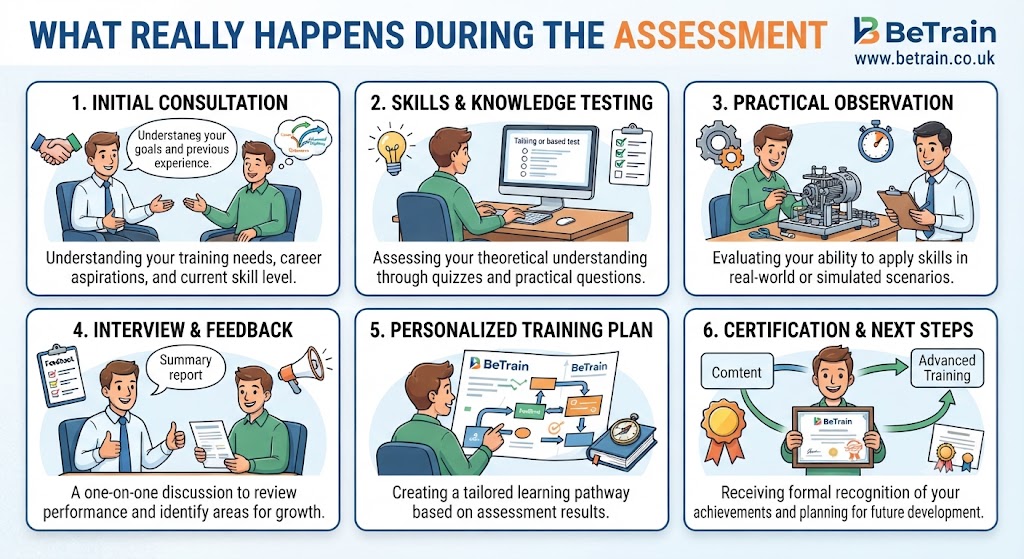
The exact assessment depends on the qualification you are taking.
For example, a Door Supervisor course may include:
- Knowledge-based assessments
- Multiple-choice questions
- Practical observations (where required)
- Scenario-based activities
Your training provider will explain the format before the assessment begins.
Knowledge Assessments
Many SIA qualifications include written or computer-based multiple-choice assessments.
These questions test your understanding of the topics covered during the course.
Questions may relate to:
- Safety procedures
- Professional behaviour
- Communication
- Conflict management
- Customer service
- Legal responsibilities
- Emergency situations
Reading each question carefully is very important.
Practical Assessments
Some qualifications, such as the Door Supervisor course, also include practical assessments.
These practical activities may involve:
- Communication exercises
- Conflict management scenarios
- Physical intervention techniques (where applicable)
- Teamwork activities
- Demonstrating safe working practices
Qualified instructors observe your performance during these exercises.
Arriving at the Training Centre
On assessment day, arrive early to give yourself enough time to settle in.
Bring:
- Valid photo identification
- Any documents requested by your training provider
- Course materials if advised
- A positive attitude
Arriving early helps reduce unnecessary stress.
Identity Checks
Before your assessment begins, the training provider may verify your identity.
Make sure your identification documents match the details you provided when booking your course.
Following these procedures helps maintain the integrity of the qualification process.
Listening to Instructions
Before the assessment starts, your instructor or assessor will explain:
- Assessment rules
- Time limits
- Instructions for completing questions
- Practical assessment procedures
- What to do if you need assistance
Listen carefully and ask questions before the assessment begins if anything is unclear.
During the Written Assessment
While completing the written section:
- Read every question carefully.
- Take your time.
- Avoid rushing.
- Think before selecting an answer.
- Check your work if time allows.
Many mistakes happen simply because candidates read questions too quickly.
During Practical Activities
If your course includes practical assessments:
- Listen carefully to instructions.
- Demonstrate safe techniques.
- Communicate clearly.
- Follow the procedures taught during training.
- Work respectfully with classmates.
Assessors understand that learners may be nervous, so focus on applying what you have practised.
Staying Calm
Feeling nervous is perfectly normal.
Helpful ways to stay calm include:
- Taking slow, steady breaths.
- Focusing on one task at a time.
- Avoiding comparisons with other learners.
- Trusting your preparation.
Confidence grows from good preparation rather than luck.
Common Mistakes During Assessments
Some mistakes are easily avoided.
These include:
- Arriving late.
- Forgetting identification.
- Rushing through questions.
- Misreading instructions.
- Not asking for clarification before the assessment starts.
- Becoming distracted by other candidates.
Preparation helps prevent these problems.
What Assessors Are Looking For
Assessors are not trying to catch learners out.
They are looking for evidence that you can:
- Work safely
- Follow procedures
- Communicate professionally
- Understand your responsibilities
- Apply your learning appropriately
The assessment reflects the skills needed in real security work.
If You Find a Question Difficult
Do not panic.
Instead:
- Read the question again.
- Eliminate answers that are clearly incorrect.
- Think about what you learned during training.
- Return to the question later if possible.
Staying calm helps you think more clearly.
Respect the Assessment Environment
Professional behaviour continues during the assessment.
Remember to:
- Follow instructions.
- Respect other learners.
- Avoid unnecessary conversations.
- Stay focused.
- Complete your own work.
Professional conduct is an important part of the learning experience.
Preparing Before Assessment Day
The best preparation begins well before the assessment.
Helpful habits include:
- Attending every training session.
- Revising regularly.
- Completing practice questions.
- Participating in classroom discussions.
- Asking questions whenever necessary.
Consistent preparation reduces stress.
After the Assessment
Once your assessment is complete:
- Follow your training provider’s instructions.
- Wait for your results.
- Ask about the next steps if you are unsure.
- Continue preparing for your SIA licence application if successful.
Passing your assessment is a significant milestone in your security career.
Learning from the Experience
Even after completing the assessment, continue developing your skills.
Areas worth improving include:
- Customer service
- Conflict management
- Communication
- Observation
- Report writing
- Teamwork
Professional development continues throughout your career.
Frequently Asked Questions
Is the assessment difficult?
Most learners who attend every lesson, participate in training, and revise their materials are well prepared for the assessment.
Will I have practical assessments?
Some qualifications include practical assessments, particularly those involving physical intervention.
Can I ask questions before the assessment begins?
Yes. If you are unsure about the assessment instructions, ask before the assessment starts.
Do I need to bring identification?
Yes. Most training providers require valid identification before allowing you to complete the assessment.
What happens after I pass?
After successfully completing your qualification, you can begin the process of applying for your SIA licence if you meet all licensing requirements.
Tips for Assessment Success
To improve your chances of success:
- Get enough sleep the night before.
- Eat a healthy meal.
- Arrive early.
- Stay calm.
- Read questions carefully.
- Trust your training.
- Manage your time wisely.
- Remain positive.
These simple steps can make a noticeable difference.
Final Thoughts
The assessment is an important part of your SIA security training, but it should not be something to fear. It is designed to measure the knowledge and practical skills you have developed during your course, not to catch you out with unexpected questions. By attending every session, taking part in practical activities, revising consistently, and following your instructor’s guidance, you will be well prepared for the assessment day.
Remember that feeling nervous is normal, especially if you have not taken an exam for some time. Stay organised, arrive early, listen carefully to instructions, and trust the work you have already put into your training. Passing your assessment is another step towards obtaining your SIA licence and starting a rewarding career in the UK private security industry.