Choosing the right training provider is one of the biggest decisions you’ll make before starting your career in the security industry. Two questions almost every learner asks before signing up are simple but important: how big will the class be, and how will I actually be taught? These two factors affect everything from how much attention you get from your trainer to how confident you’ll feel when it’s time to sit your exam.
If you’re planning to take a door supervisor course in London, this guide walks you through exactly what to expect from class sizes, teaching methods, and the overall learning experience. Whether you’re a complete beginner or switching careers into the security industry, understanding these details will help you choose a course that genuinely sets you up for success.
Why Class Size Actually Matters
Many people underestimate how much class size affects the quality of their training. A door supervisor course covers a wide mix of topics — conflict management, physical intervention, licensing law, emergency procedures, and communication skills. These aren’t subjects you can master by simply reading a slide and moving on. They require practice, feedback, and real interaction with a trainer.
In an overcrowded classroom, trainers can’t give individual attention. Questions get rushed, practical demonstrations become brief, and quieter students often get left behind. Smaller, well-managed class sizes mean:
- More one-on-one time with your instructor
- Better opportunities to practice physical intervention techniques safely
- A comfortable environment to ask questions without feeling embarrassed
- More realistic role-play scenarios with proper feedback
- A calmer, less overwhelming learning pace
Good training providers keep their door supervisor classes small and manageable on purpose. This isn’t just about comfort — it directly impacts how well you retain the information you need to pass your exam and later apply on the job.
What the Learning Style Looks Like in a Good Door Supervisor Course
A well-structured door supervisor course doesn’t rely on one single teaching method. Instead, it blends different learning styles so that people who learn in different ways — visual, auditory, or hands-on — can all absorb the material effectively.
1. Classroom-Based Instruction
Most of the course is delivered face-to-face in a classroom setting. Trainers explain core concepts like licensing law, health and safety, and emergency procedures using presentations, discussions, and real-world examples. This format allows learners to ask questions immediately and clarify anything that’s confusing.
2. Practical, Hands-On Training
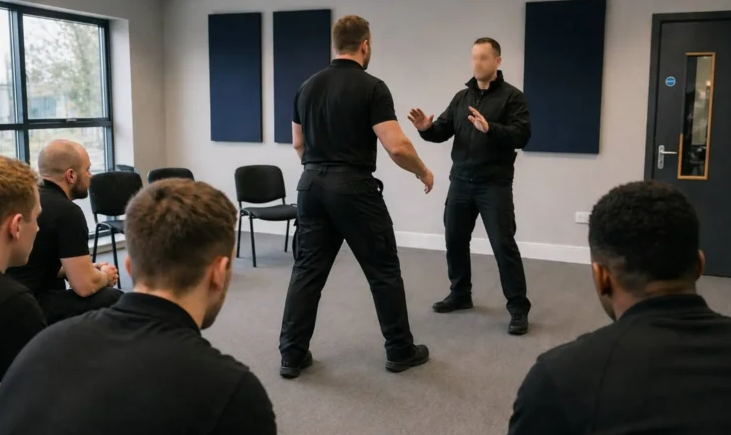
Physical intervention and conflict management modules are taught through practical demonstration and supervised practice. You won’t just watch a video and be expected to understand it — you’ll physically walk through techniques with guidance from an experienced trainer, so you build muscle memory and confidence.
3. Group Discussions and Role-Play
Scenario-based learning is a major part of door supervisor training. Trainers often set up real-life situations — such as handling an aggressive customer or dealing with a medical emergency — and let learners work through them as a group. This builds confidence and teaches you to think on your feet, which is exactly what the job demands.
4. Visual Aids and Case Studies
Videos, diagrams, and real security case studies are frequently used to reinforce lessons. Seeing how a situation unfolded in real life (or in a realistic simulation) often makes the lesson stick better than text alone.
5. Continuous Assessment and Feedback
Rather than saving all the pressure for a final exam, good courses build in regular check-ins, quizzes, and feedback throughout the training. This keeps learners on track and highlights any weak areas early, so nothing comes as a surprise at the end.
A Typical Day in a Door Supervisor Course
If you’re wondering what an actual day looks like, here’s a general idea of what most in-person courses in London follow:
- Morning session: Introduction to the module topic, classroom discussion, and theory-based learning
- Mid-morning: Group activities, case studies, or short quizzes to reinforce the theory
- Afternoon session: Practical demonstrations, especially for physical intervention and conflict management
- Late afternoon: Recap, Q&A, and preparation for the next day’s topics
This structure keeps the day varied so learners don’t lose focus, and it balances theory with the physical practice that’s essential for this line of work.
How Long Does the Course Take?
Door supervisor courses in London are typically delivered over a short, intensive period — often around 4 to 6 days, depending on the provider and whether you’re doing the full Level 2 SIA-approved course or a top-up if you already hold a related qualification. Because the course is compact, having smaller class sizes becomes even more important — there’s limited time to cover everything, so efficient teaching and real engagement matter a lot.
What to Look for When Choosing a Course Provider
If class size and learning style matter to you (and they should), here are a few practical things to check before booking:
- Ask the provider directly how many learners are typically in a class.
- Check if trainers are SIA-licensed and experienced in real security work, not just teaching.
- Look for a mix of teaching methods — not just PowerPoint slides for four days straight.
- Read reviews from past learners about the classroom experience.
- Ask about support after the course, such as help with SIA licence applications or job placement.
A reputable training center will be happy to answer these questions upfront, since it shows they genuinely care about learner outcomes rather than just enrollment numbers.
Final Thoughts
Class size and learning style aren’t just small details — they shape your entire training experience and how prepared you’ll feel once you’re out on the job. A door supervisor course that keeps classes small and blends classroom teaching with hands-on practice gives you the best chance to build real confidence, not just pass an exam.
If you’re based in or around London and looking for a well-structured, supportive training environment, it’s worth comparing a few providers before committing. Look beyond the price tag and ask about the actual classroom experience — it makes a real difference to how ready you’ll feel for the job.
Frequently Asked Questions
1. How many students are usually in a door supervisor course class in London? Most reputable providers keep class sizes small, often between 8 and 15 learners, to ensure everyone gets enough individual attention, especially during practical training sessions.
2. Is the door supervisor course taught in person or online? The core theory can sometimes include online elements, but the majority of the course — particularly physical intervention and conflict management — must be delivered in person, as these are practical, SIA-regulated skills.
3. How long does a door supervisor course take to complete? Most courses run for around 4 to 6 days, depending on whether you’re taking the full course or a shorter top-up if you already hold a related security qualification.
4. Do I need any prior experience to join a door supervisor course? No prior experience is required. Courses are designed for complete beginners as well as people transitioning from other industries into security work.
5. What topics are covered in the training? The course typically covers conflict management, physical intervention, licensing law, health and safety, emergency procedures, drugs awareness, and customer service skills relevant to door supervision.
6. Will I get hands-on practice during the course? Yes, hands-on practice is a core part of the training, especially for physical intervention techniques, which are taught through supervised, practical demonstrations rather than theory alone.
7. What happens if I struggle with a topic during the course? Good training providers offer continuous feedback and support throughout the course, so instructors can identify and help with any weak areas before the final assessment.
8. Is there an exam at the end of the door supervisor course? Yes, learners are assessed through written exams and practical assessments covering all the modules taught during the course, which must be passed to apply for an SIA licence.
9. How soon can I start working after completing the course? Once you pass the course and successfully apply for your SIA licence, you can typically start working as a licensed door supervisor, though licence processing times can vary.
10. What should I look for when choosing a door supervisor course provider? Look for small class sizes, experienced SIA-licensed trainers, a mix of practical and classroom teaching, positive learner reviews, and support with SIA licence applications after the course.
Looking for a door supervisor course in London with small class sizes and a hands-on learning approach? Explore the course details here to find a training schedule that fits your goals.