Transitioning from the Armed Forces into Civilian Security Work
Leaving the Armed Forces is a major life change. After years of military service, many veterans begin looking for careers where they can continue using their valuable skills and experience. One of the most popular choices is the private security industry.
Across the UK, employers actively recruit former members of the Armed Forces because they often bring discipline, leadership, teamwork, and the ability to remain calm under pressure. These qualities are highly valued in security roles, making the transition into civilian security work a natural career move for many veterans.
Whether you served in the British Army, Royal Navy, Royal Air Force, or another military organisation, this guide explains how to move into the security industry, what qualifications you need, the types of jobs available, and how to build a successful civilian career.
Why Veterans Choose the Security Industry
Many of the skills developed during military service are directly relevant to civilian security work.
Former service personnel often have experience in:
- Following procedures
- Managing risk
- Protecting people and property
- Working under pressure
- Team leadership
- Situational awareness
- Emergency response
- Communication
- Problem-solving
- Maintaining professionalism
Because of these transferable skills, many veterans adapt quickly to security roles.
Is Military Experience Enough?
Military experience is highly respected by employers, but it does not automatically replace the legal requirements for civilian security work.
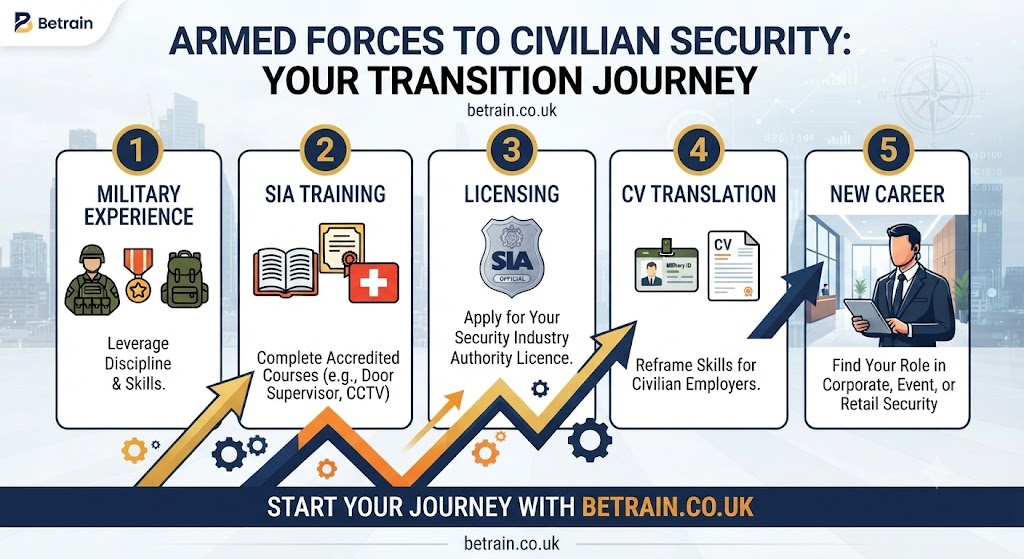
Most frontline security roles require an SIA licence.
Before applying for many security jobs, you will usually need to:
- Complete an approved security training course.
- Meet the SIA licensing requirements.
- Pass identity and background checks.
- Obtain the appropriate SIA licence.
- Have the legal right to work in the UK.
Military service provides an excellent foundation, but completing the required civilian qualifications is still essential.
Why Employers Value Veterans
Security companies often recruit former Armed Forces personnel because they typically demonstrate:
- Reliability
- Discipline
- Leadership
- Honesty
- Professionalism
- Strong work ethic
- Decision-making skills
- Teamwork
- Confidence
- Respect for procedures
These qualities can make veterans strong candidates during the recruitment process.
Choosing the Right Security Role
The security industry offers a wide range of career options.
Popular roles include:
- Door Supervisor
- Security Officer
- CCTV Operator
- Corporate Security Officer
- Mobile Patrol Officer
- Event Security Officer
- Retail Security Officer
- Hospital Security Officer
- Concierge Security Officer
- Security Supervisor
As you gain civilian experience, opportunities for promotion become available.
Completing Your Training
Most veterans begin by completing an approved Door Supervisor qualification.
Training usually includes:
- Working in the private security industry
- Conflict management
- Customer service
- Physical intervention
- Emergency procedures
- Health and safety
- Communication skills
Choose a reputable training provider with experienced instructors and good student support.
Applying for an SIA Licence
After successfully completing your training, you can apply for your SIA licence.
The application process generally includes:
- Identity verification
- Criminal record checks
- Qualification verification
- Licence application
Once approved, you can legally apply for licensed security positions across the UK.
Building Your Civilian CV
Many veterans underestimate the value of their military experience.
Your CV should clearly highlight transferable skills such as:
- Leadership experience
- Team management
- Risk assessment
- Patrol duties
- Emergency response
- Incident reporting
- Communication
- Training responsibilities
- Operational planning
- Problem-solving
Translate military responsibilities into language that civilian employers understand.
Understanding Civilian Security
Although military and civilian security share similarities, there are important differences.
Civilian security focuses heavily on:
- Customer service
- Public interaction
- Conflict prevention
- Communication
- Observation
- Reporting
- Protecting business assets
- Supporting visitors and staff
Professional communication often plays a bigger role than physical intervention.
Customer Service Is Essential
Many veterans are surprised by how much customer service is involved in security work.
Security professionals regularly:
- Welcome visitors.
- Answer questions.
- Provide directions.
- Assist customers.
- Support staff.
- Handle complaints professionally.
Being approachable and respectful is just as important as maintaining security.
Additional Qualifications
As your career develops, additional training can improve your opportunities.
Popular courses include:
- CCTV Operations
- Emergency First Aid
- Fire Marshal Training
- Health and Safety
- Leadership Courses
- Risk Assessment
- Customer Service
- Mental Health Awareness
Continuous learning demonstrates professionalism and commitment.
Career Progression
Many veterans progress quickly because of their leadership experience.
Possible career paths include:
- Security Supervisor
- Site Supervisor
- Security Manager
- Operations Manager
- Control Room Manager
- Security Consultant
- Training Instructor
- Regional Security Manager
Experience, professionalism, and continued learning often lead to promotion.
Industries That Recruit Veterans
Security professionals work in many sectors.
Examples include:
- Corporate offices
- Shopping centres
- Hospitals
- Airports
- Hotels
- Construction sites
- Universities
- Government buildings
- Distribution centres
- Sporting venues
Each environment offers different experiences and career opportunities.
Working Hours
Security jobs often offer flexible schedules.
Common shift patterns include:
- Day shifts
- Night shifts
- Weekend work
- Rotating shifts
- Full-time positions
- Part-time positions
Many veterans appreciate the flexibility available within the industry.
Salary Expectations
Pay depends on factors such as:
- Experience
- Employer
- Location
- Qualifications
- Shift patterns
- Overtime
Veterans who continue developing their skills and move into supervisory or management positions often enjoy higher earning potential.
Networking Can Help
Building professional relationships is important after leaving the Armed Forces.
Consider:
- Speaking with former colleagues already working in security.
- Connecting with recruiters.
- Attending career events.
- Using LinkedIn.
- Joining veteran employment groups.
Networking often leads to valuable job opportunities.
Challenges During the Transition
Changing from military life to civilian employment can take time.
Some common challenges include:
- Adjusting to civilian workplace culture.
- Learning commercial security procedures.
- Developing customer service skills.
- Understanding company policies.
- Building civilian work experience.
Most veterans adapt successfully with experience and ongoing support.
Interview Tips
When attending interviews:
- Dress professionally.
- Arrive early.
- Highlight transferable military skills.
- Explain leadership experience.
- Demonstrate professionalism.
- Show willingness to learn.
- Discuss teamwork and communication.
Employers appreciate candidates who remain confident without overstating their experience.
Long-Term Career Opportunities
Security is not simply an entry-level job.
With dedication and continued professional development, veterans can build long-term careers in:
- Security Management
- Corporate Security
- Operations Management
- Risk Management
- Security Consultancy
- Facilities Management
- Training and Development
Many former military personnel go on to hold senior leadership positions within private security companies.
Tips for Success
To build a successful civilian security career:
- Complete an approved security qualification.
- Obtain your SIA licence.
- Continue learning throughout your career.
- Develop customer service skills.
- Build a strong professional reputation.
- Be reliable and punctual.
- Stay physically and mentally prepared.
- Learn modern security technologies.
- Take opportunities for promotion.
Small improvements over time can lead to significant career growth.
Final Thoughts
Transitioning from the Armed Forces into civilian security work is a natural step for many veterans. The discipline, teamwork, leadership, and professionalism gained during military service provide an excellent foundation for a successful career in the private security industry.
Although you will need to complete the required civilian training and obtain an SIA licence, your military background gives you valuable transferable skills that many employers actively seek. By combining your service experience with recognised qualifications, ongoing learning, and a customer-focused approach, you can build a rewarding long-term career in one of the UK’s fastest-growing industries.
Whether your goal is to become a Security Officer, Door Supervisor, CCTV Operator, or Security Manager, the opportunities available to former Armed Forces personnel have never been greater. With commitment and professionalism, your next mission can be a successful future in civilian security.