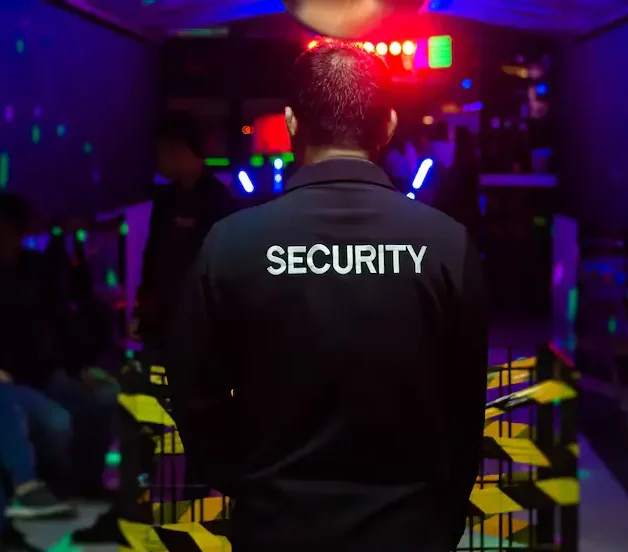
Working as a door supervisor is sometimes portrayed as a job where physical confrontations happen every night. Films, television programmes and social media can create the impression that door supervisors spend most of their shifts dealing with fights and removing aggressive customers. The reality is more balanced.
Door supervision can involve difficult and unpredictable situations, particularly in busy nightlife venues and entertainment environments. However, physical intervention is not normally the first response to conflict. Professional door supervision places considerable importance on communication, observation, prevention and de-escalation.
For anyone considering a career in the security industry, understanding this distinction is important. A door supervisor is not simply someone employed to deal with fights. The role involves protecting customers, staff and premises while helping maintain a safe and controlled environment.
The Security Industry Authority (SIA) specifically places conflict management and physical intervention within door supervisor training. Its guidance states that physical intervention should be used as a last resort, with communication and de-escalation given importance before physical intervention is considered.
So, Do Door Supervisors Fight Often?
There is no single frequency that applies to every door supervisor.
The likelihood of encountering a physical confrontation depends heavily on the venue, location, operating hours, type of customers, event and circumstances of the particular shift. A supervisor working at a busy nightclub on a Saturday night may encounter very different situations from someone working at a restaurant, hotel or quieter licensed venue.
Even within the same venue, one shift can be completely different from another.
A door supervisor may spend an entire evening checking identification, monitoring queues, communicating with customers, assisting venue staff and observing potential problems without needing to use physical intervention.
On another night, an incident could develop involving an intoxicated or aggressive individual. The supervisor may then need to use communication and established procedures to prevent the situation from escalating.
This is why it would be misleading to describe door supervision as either a completely peaceful job or a job where fights are inevitable.
The Main Purpose Is Prevention
One of the most important aspects of professional security work is preventing incidents before they become serious.
Door supervisors are often positioned at points where they can observe people entering and leaving a venue. This gives them an opportunity to identify potential problems early.
For example, a supervisor may notice that someone appears highly intoxicated, is behaving aggressively towards other customers or is attempting to enter despite being refused admission. Addressing the situation calmly at an early stage may prevent a much larger incident later.
The same principle applies inside a venue. Good observation can help security staff recognise disagreements, crowding, unusual behaviour or emerging conflicts before they become physical.
Prevention is therefore an important part of the role.
A professional door supervisor is not looking for an opportunity to become involved in a confrontation. The objective is generally to maintain safety and resolve problems using the least risky appropriate approach.
Communication Can Prevent Physical Confrontations
Communication is one of the most valuable skills a door supervisor can develop.
People who are angry or frustrated may react differently depending on how they are approached. A confrontational tone can increase tension, while calm and professional communication may help reduce it.
Door supervisor training includes conflict management because communication can play a major role in resolving difficult situations.
SIA training guidance includes areas such as avoiding conflict, reducing personal risk, defusing conflict, resolving conflict and applying communication skills.
This means the job involves much more than physical capability.
A supervisor may need to explain why someone cannot enter a venue, ask an individual to change their behaviour, deal with complaints or manage a disagreement between customers. These situations require patience and professional judgement.
What Happens When Someone Becomes Aggressive?
If a person becomes verbally aggressive, the situation does not automatically mean that physical intervention is necessary.
The appropriate response depends on the circumstances and the risks involved.
A door supervisor may attempt to maintain distance, communicate clearly, seek assistance from colleagues and follow the venue’s procedures. They may also consider whether the situation can be resolved without physical contact.
Every incident should be assessed according to its circumstances rather than treated as a standard scenario.
The SIA’s guidance on physical intervention emphasises risk reduction and states that physical intervention carries risks. It also highlights the importance of duty of care and dynamic assessment of situations.
This is an important point for anyone entering the profession: physical intervention is a serious responsibility.
When Physical Intervention May Be Necessary
There are circumstances where physical intervention may become necessary.
For example, a situation could involve an immediate threat to the safety of a customer, member of staff, security colleague or the individual themselves. In such circumstances, simply continuing a verbal conversation may not be sufficient.
Door supervisors receive specific training in physical intervention as part of the licence-linked qualification. The training covers practical skills including disengagement and escorting techniques.
The purpose of this training is not to encourage security professionals to fight. Instead, it is intended to help them understand how physical intervention can be carried out responsibly and safely when it becomes necessary.
This distinction is particularly important.
A fight is generally uncontrolled and unpredictable. Professional physical intervention is based on training, assessment, legal responsibilities and an attempt to minimise unnecessary risk.
Physical Intervention Is Not the Same as Fighting
The words “physical intervention” and “fighting” are sometimes used as though they mean the same thing. They do not.
A fight may involve two or more people exchanging uncontrolled physical force. A professional security intervention has a different objective.
The aim is to manage a particular risk and protect people or property while using appropriate methods.
SIA guidance describes physical intervention training in terms of non-aggressive physical skills and techniques for situations where intervention becomes necessary.
This is why people considering the profession should not assume that becoming a door supervisor means learning how to fight.
The emphasis is on control, safety, judgement and appropriate response.
Why Conflict Management Matters So Much
Conflict management can be more important to a door supervisor’s daily work than physical strength.
Imagine a customer is refused entry because they are considered unsuitable to enter a venue. The person becomes frustrated and starts arguing with the security team.
The situation could develop in several ways.
A poor response might increase the person’s anger and attract attention from others. A professional response could involve explaining the decision calmly, maintaining appropriate boundaries and attempting to prevent the disagreement from escalating.
The SIA’s training material specifically includes communication skills, empathy, managing customer expectations, problem solving and finding mutually acceptable solutions as elements of conflict management.
These skills can help security professionals deal with difficult conversations without automatically turning them into confrontations.
The Venue Makes a Difference
The type of venue can have a significant effect on the situations a door supervisor encounters.
A large nightclub in central London may have a different risk profile from a hotel, restaurant, bar or private event.
Busy venues can involve large crowds, queues, alcohol consumption and people arriving or leaving at the same time. These conditions can create opportunities for disagreements and disorder.
Events can also introduce additional challenges. Large crowds may require careful movement management, communication between security staff and coordination with venue management.
The SIA notes that every venue and event is different and that employers and venue management should conduct risk assessments and provide additional training where necessary.
Consequently, there is no universal answer to how often a door supervisor will face physical confrontation.
London and the Security Industry
London has one of the UK’s largest concentrations of licensed security professionals.
The SIA reported 368,546 active Door Supervision licences as of February 2026, while 40% of active licence holders overall were based in London and the South-East.
The capital contains a wide variety of venues, including entertainment locations, hospitality businesses, commercial properties and large-scale events.
This creates opportunities for people with the appropriate training and licence, but it also means that security professionals need to be prepared for different working environments.
Someone researching a Door Supervisor Course London should therefore look beyond the idea of physical confrontation and consider the wider responsibilities of the occupation.
What Is Taught During Door Supervisor Training?
Door supervisor training covers several areas that are directly relevant to handling difficult situations.
The SIA’s published training requirements include common security industry knowledge, the door supervisor specialist module, conflict management and physical intervention skills.
The specialist content includes subjects such as:
- Behavioural standards
- Civil and criminal law
- Searching
- Arrest
- Drugs awareness
- Incident recording
- Licensing law
- Emergency procedures
- Vulnerable individuals
- Queues and crowds
Conflict management training focuses on avoiding conflict, reducing personal risk, defusing situations and resolving conflict.
Physical intervention training then covers practical skills that may be needed if other approaches are unsuccessful.
This structure demonstrates that physical intervention is only one part of the wider professional skill set.
Do You Need to Be Physically Strong?
Being reasonably fit can certainly be useful in security work, but physical strength is not the only quality that matters.
A successful door supervisor needs to be observant, confident, patient and capable of communicating with different types of people.
Good judgement can sometimes prevent a situation from becoming physical in the first place.
A person who is extremely strong but lacks communication skills may not necessarily be an effective security professional. Conversely, someone with strong communication and observation skills may be able to prevent many difficult situations from escalating.
Physical intervention training exists so that personnel understand appropriate techniques, but the overall role involves considerably more than physical ability.
The Importance of Working as a Team
Door supervisors rarely operate in complete isolation at busy venues.
Security teams normally communicate with each other and work according to procedures established by the employer and venue.
Teamwork can reduce the need for individual confrontation because colleagues can provide support, communicate information and help manage developing situations.
For example, one supervisor may be dealing with an individual while another monitors the surrounding crowd. This can provide greater awareness of what is happening and help reduce the risk of a situation spreading.
Clear communication between security staff and venue management is also important.
What About Injuries and Assaults?
Physical risks should not be ignored.
The SIA published information in May 2026 concerning reported injuries and assaults involving SIA-licensed operatives during 2024. However, the regulator specifically warned that its figures are unlikely to represent the true prevalence of violence against security personnel because many incidents may be reported to police rather than to the SIA.
This means it would be inaccurate to use SIA-reported figures as a complete measurement of how often security workers are assaulted.
The existence of this risk also reinforces why appropriate training, risk assessment, workplace procedures and professional conduct are important.
Security professionals should understand that physical intervention can create risks for everyone involved, including the security operative, the person being managed and bystanders.
Staying Calm Under Pressure
One of the most valuable characteristics for a door supervisor is the ability to remain calm.
A security professional may encounter shouting, insults, pressure from customers or rapidly changing circumstances. Reacting emotionally can make a situation worse.
Remaining calm does not mean ignoring inappropriate behaviour. It means maintaining professional control while deciding what action is appropriate.
This can include asking for assistance, creating distance, communicating clearly, following venue procedures and documenting an incident afterwards.
The objective is to manage the situation rather than win an argument.
Incident Reporting Is Also Important
The job does not necessarily end when an incident has been resolved.
Depending on the circumstances and workplace procedures, security personnel may need to record what happened.
Accurate reporting can help employers understand recurring problems, review security arrangements and provide information if an incident is investigated later.
Training for door supervisors includes recording incidents and crime preservation as part of the specialist module.
Good documentation should be factual and professional rather than emotional or exaggerated.
What Should Someone Expect From the Job?
Anyone considering door supervision should have realistic expectations.
It is not accurate to assume that every shift will involve fights. Many shifts may involve routine duties such as checking entry requirements, monitoring queues, assisting customers, communicating with colleagues and observing the venue.
At the same time, it would also be unrealistic to assume that physical confrontation can never happen.
Door supervision involves working around members of the public, and some environments can involve unpredictable behaviour. The role therefore requires preparedness without encouraging unnecessary confrontation.
A good professional understands that avoiding an incident is often a successful outcome.
Is Door Supervision Suitable for Everyone?
Door supervision can be a demanding occupation. Working late hours, standing for long periods, dealing with members of the public and responding to unexpected incidents can all be part of the job.
People considering this career should think about whether they are comfortable working in environments where situations can change quickly.
They should also be willing to follow legal requirements, employer procedures and professional standards.
Those who are interested only because they expect frequent physical confrontations may have an unrealistic understanding of the profession.
The strongest candidates are often those who understand that security is primarily about protecting people and maintaining order.
Final Thoughts
So, do door supervisors get into physical fights often?
There is no universal answer, because the frequency of physical incidents depends on the venue, environment, customers, event and circumstances. Physical confrontation is a genuine occupational risk in some security environments, but it should not be considered the normal objective of the job.
Professional door supervision places strong emphasis on prevention, communication, conflict management and de-escalation. Physical intervention is intended for situations where it becomes necessary and should be approached with an understanding of safety, risk and professional responsibility.
For anyone considering entering the industry, the better question is not simply whether they will have to fight. It is whether they can remain professional when confronted with difficult behaviour, communicate effectively, assess risks and take appropriate action when required.
A quality Door Supervisor Course London can provide the foundation for understanding these responsibilities, including conflict management and physical intervention training. However, becoming an effective security professional also requires sound judgement, communication, teamwork and a commitment to keeping people safe.