How Big Are the Classes and What’s the Learning Style?
One question that doesn’t always get answered clearly before booking is simple but important: what will the classroom itself actually feel like? Knowing the typical class size and teaching style of a door supervisor course in London can help you set realistic expectations and choose a provider that matches how you learn best. This guide breaks down what to expect from class sizes, teaching methods, and the overall learning environment.
Why Class Size Matters
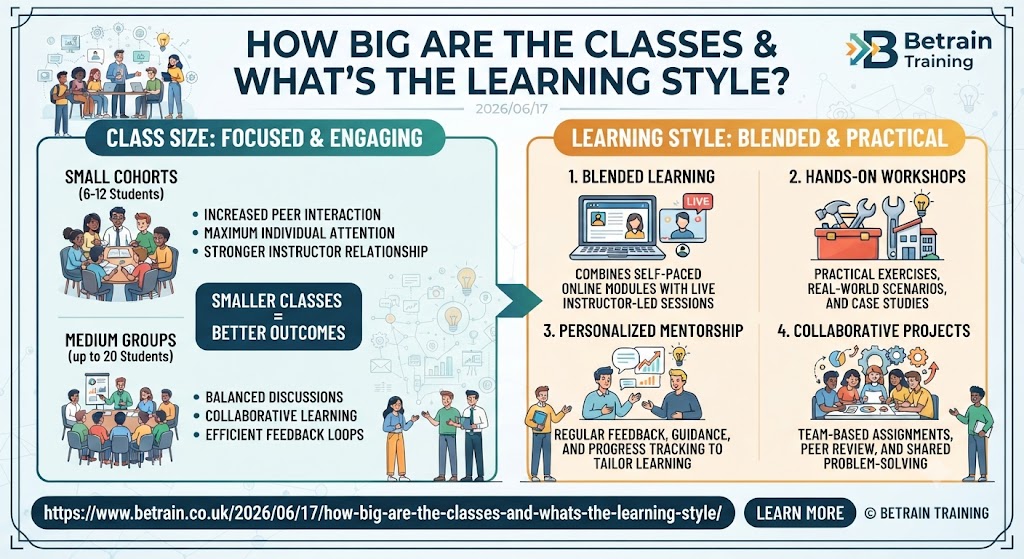
Class size affects almost every part of the training experience, from how much individual attention you get from trainers, to how comfortable you feel participating in role-play exercises, to how much hands-on practice you get during physical intervention sessions. Before booking a course, it’s worth understanding roughly what to expect, since this can vary noticeably between providers.
Typical Class Sizes for Door Supervisor Courses
There’s no single fixed number across the industry, since class sizes depend on the individual training provider, their venue capacity, and their teaching approach. However, most door supervisor course in London programmes generally fall into a few common patterns.
Smaller Classes (Around 8–12 Trainees)
Some providers deliberately keep groups small, prioritising individual attention and more personalised feedback, particularly during practical sessions like conflict management role-play and physical intervention practice. Smaller classes often suit people who prefer a more supported, closely guided learning experience.
Medium-Sized Classes (Around 12–20 Trainees)
This is a common middle ground, balancing group interaction with a reasonable amount of individual attention. Many providers settle around this size, since it allows for varied group exercises, such as pair and small-group role-play, while still keeping the environment manageable for trainers.
Larger Classes (20+ Trainees)
Some providers run larger sessions, often to keep course prices more competitive. While this can still deliver effective training, it generally means less one-to-one attention from trainers, and practical exercises may be organised in larger rotating groups rather than smaller, closely supervised pairs.
Why Class Size Can Vary Between Providers
Training venues, trainer availability, and business models all influence how large a class ends up being. It’s always worth asking your specific provider directly about their typical class size before booking, rather than assuming based on price alone. A lower-cost course isn’t automatically a larger class, and a more expensive course doesn’t automatically guarantee smaller groups, so it’s best to simply ask.
What Teaching Methods Are Used?
A door supervisor course in London typically blends several different teaching styles across the week, rather than relying on just one approach.
Classroom-Based Learning
Certain units, particularly “Working in the Private Security Industry” and “Licensing Law,” rely heavily on classroom-based teaching. This usually involves a trainer presenting information, often supported by slides, handouts, or workbooks, followed by discussion and question-and-answer sessions.
Group Discussions
Many providers encourage open discussion throughout the course, allowing trainees to ask questions, share relevant experiences, and work through real-world examples together. This helps make theoretical content, such as legal responsibilities, feel more practical and relatable.
Role-Play Exercises
Conflict management training almost always includes role-play, where trainees practise realistic scenarios in pairs or small groups. One person might act as a difficult customer, while the other practises de-escalation techniques, before switching roles. This hands-on approach helps build real confidence, rather than just theoretical understanding.
Practical Physical Training
Physical intervention sessions are naturally hands-on, involving demonstrations from trainers followed by supervised practice between trainees. This is typically taught in a step-by-step manner, gradually building from basic positioning to more specific techniques, always with safety as the main priority.
Scenario-Based First Aid Training
Emergency first aid sessions often use realistic scenarios and practice equipment, such as training manikins, to help trainees build confidence in areas like CPR and using a defibrillator.
What Kind of Learning Style Suits This Course?
Because a door supervisor course in London blends classroom learning with hands-on practice, it tends to suit a fairly wide range of learning styles.
Visual Learners
Those who learn well through demonstrations, diagrams, and visual explanations tend to benefit from the physical intervention and first aid components, where trainers regularly demonstrate techniques before trainees practise them.
Auditory Learners
People who absorb information well through listening and discussion often do well during classroom-based sessions, particularly units like licensing law, which rely heavily on verbal explanation and group discussion.
Kinaesthetic (Hands-On) Learners
Since a significant portion of the course involves physical practice, role-play, and scenario-based exercises, those who learn best by doing rather than simply listening often find these sections particularly effective.
Because the course naturally combines all these approaches, most trainees find at least some part of the teaching style suits how they personally learn best, even if certain sections feel more comfortable than others.
What a Typical Day Might Look Like
While exact structures vary by provider, a typical day often includes a mix of:
- A short introduction or recap of previous learning
- Classroom-based teaching on a specific topic
- A break, often mid-morning
- Group discussion or a related activity
- Lunch
- A more practical, hands-on session in the afternoon, such as role-play or physical training
- A short recap or question session before finishing for the day
This structure helps break up long training days, avoiding too much continuous classroom-based learning in one sitting.
How Much Individual Attention Should You Expect?
This largely depends on class size, but most providers aim to give every trainee a reasonable amount of individual feedback, particularly during physical intervention and role-play exercises, since these require direct observation to ensure techniques are being practised safely and correctly.
If personalised attention is particularly important to you, perhaps because you’re less confident with group learning, it’s worth specifically asking providers about their average class size and how feedback is typically given during practical sessions.
Questions to Ask Before Booking
If class size and teaching style matter to you, consider asking potential providers:
- What is your typical class size for this course?
- How much of the course is classroom-based versus practical?
- How do you handle feedback during role-play and physical intervention sessions?
- Is there time built in for individual questions throughout the day?
- What happens if I need extra help understanding a specific topic?
Asking these questions upfront helps you choose a provider whose teaching style genuinely matches how you learn best, rather than discovering a mismatch once you’ve already started.
How This Affects Your Learning Experience
Class size and teaching style directly affect how confident you’ll feel by the end of the course. For example:
- Smaller classes often lead to more personalised feedback during physical intervention training, which some trainees find particularly reassuring, especially if they feel nervous about this part of the course.
- Larger classes can still be highly effective, particularly if trainers are experienced at managing group dynamics and rotating practical exercises efficiently.
- A good mix of teaching styles, rather than relying solely on lecture-style teaching, generally leads to better retention of information, especially for topics that will later appear in exams.
Tips for Getting the Most Out of Any Class Size
Regardless of whether your door supervisor course in London ends up being a smaller or larger group, there are ways to make the most of the experience:
- Sit near the front if you’re someone who benefits from closer engagement with the trainer.
- Don’t hesitate to ask questions, even in larger groups. Most trainers welcome questions and would rather clarify something than have trainees leave confused.
- Engage actively during role-play and group exercises, rather than hanging back. The more you participate, the more confidence you’ll build.
- Form informal study connections with classmates. Discussing tricky topics with fellow trainees, even briefly during breaks, can reinforce your understanding.
Common Questions About Class Size and Teaching Style
Does class size affect my chances of passing the exams?
Not directly, since exam content remains the same regardless of class size. However, smaller classes may offer more opportunity for individual clarification, which some trainees find helpful for exam preparation.
Will I get enough practice time in a larger class?
Providers generally structure larger classes to ensure everyone gets adequate practice time, often through rotating small groups during physical intervention and role-play sessions.
Is one teaching style better than another?
Not necessarily. Since the course blends multiple teaching approaches, most trainees benefit from the variety, even if certain sections feel more naturally suited to their personal learning style.
Can I ask about class size before booking?
Yes, and it’s a completely reasonable question to ask any training provider directly before committing to a course.
Do all providers use the same teaching methods?
While the core structure (classroom learning, role-play, physical training, and exams) remains fairly consistent across the industry, exact delivery styles and class sizes can vary between individual training providers.
Final Thoughts
Understanding class size and teaching style before booking a door supervisor course in London can help you choose a provider that genuinely suits how you learn best. Whether you prefer smaller, closely supported groups or don’t mind a larger, more dynamic classroom environment, most courses blend classroom teaching, group discussion, and hands-on practical training in a way that supports a wide range of learning styles. Asking the right questions in advance, and staying actively engaged throughout the course, will help you get the most out of whatever class size and teaching format you end up training in.