
Are There Any Genuinely Free Routes into This Career?
Starting a career in the UK private security industry can open the door to stable employment, flexible working hours, and long-term career progression. However, many people hesitate because they are concerned about the cost of training and obtaining an SIA licence. A common question is, “Can I become a security officer or door supervisor for free?”
The answer is yes, in some situations. While there is no universal scheme that provides free training for everyone, there are several legitimate ways to reduce or even eliminate the cost of getting qualified. Government-funded programmes, employer-sponsored training, job centres, and local initiatives may help eligible individuals begin a security career without paying the full cost themselves.
This guide explains the genuine free routes into the UK security industry, who may qualify, and how to avoid misleading offers.
Understanding the Usual Costs
Before exploring free options, it helps to understand the normal costs involved.
Most people need to pay for:
- An approved security training course
- Emergency First Aid training (if required)
- The SIA licence application
- Travel to the training centre
- Any additional learning materials
The total amount varies depending on the course and training provider.
Are Free Security Courses Available?
Yes, but eligibility requirements often apply.
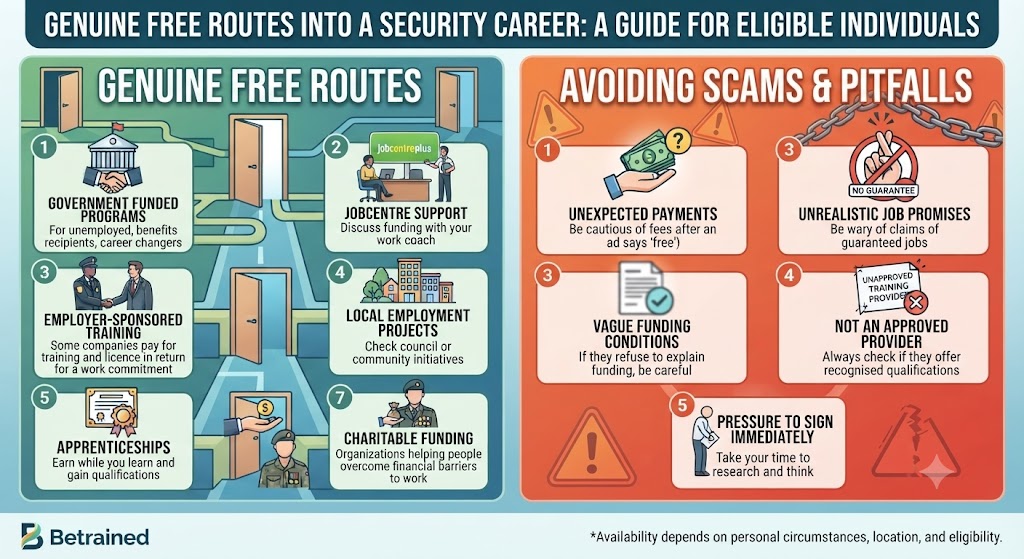
Free or funded courses may be available through:
- Government-funded education programmes
- Jobcentre support
- Local councils
- Adult learning providers
- Employment support organisations
- Employer-sponsored training
- Charitable organisations helping people into work
Availability depends on your personal circumstances and where you live.
Government-Funded Training
Some approved training providers offer funded security courses through government education programmes.
These courses are often designed to help:
- Unemployed adults
- People receiving certain benefits
- Individuals returning to work
- Career changers
- Adults looking to improve their employability
Funding rules change over time, so eligibility should always be confirmed before enrolling.
Support Through Jobcentre
If you are unemployed and actively seeking work, your local Jobcentre may be able to help.
Depending on your circumstances, you may receive support with:
- Security training
- Course fees
- Employment advice
- Job applications
- Interview preparation
Discuss your career goals with your work coach to find out what support may be available.
Employer-Funded Training
Some security companies recruit people with little or no previous experience.
In certain cases, employers may:
- Pay for training
- Cover licence costs
- Provide on-the-job learning
- Offer guaranteed interviews
- Support career development
These opportunities are competitive, so applying early is beneficial.
Adult Education Programmes
Adult education providers sometimes deliver funded security-related courses as part of employability programmes.
These programmes may include:
- Security qualifications
- Customer service training
- Employability skills
- Interview preparation
- CV support
They are often aimed at helping learners move directly into employment.
Local Employment Projects
Many councils and community organisations run employment projects that support local residents.
Depending on funding, these initiatives may provide:
- Free training
- Careers advice
- Job search assistance
- Employer introductions
- Work-readiness programmes
Check with local organisations to see what opportunities are available in your area.
Military Resettlement Support
Former members of the Armed Forces may be eligible for financial support when moving into civilian employment.
Some resettlement programmes help cover:
- Security training
- Professional qualifications
- Career guidance
- Employment support
Veterans should explore the support available through military transition services.
Apprenticeships
Some employers offer apprenticeships that combine paid work with structured learning.
Benefits can include:
- A salary while learning
- Practical experience
- Professional qualifications
- Career progression
- Employer support
Apprenticeships may not be available in every area, but they are worth exploring.
Scholarships and Charitable Funding
Some charities and employment support organisations help people facing financial barriers to work.
Depending on the organisation, assistance may include:
- Training fees
- Equipment
- Travel costs
- Interview clothing
- Career mentoring
Availability varies, and eligibility criteria usually apply.
Be Careful of “Too Good to Be True” Offers
Unfortunately, not every advertisement offering “free security training” is genuine.
Be cautious if a provider:
- Requests unexpected payments after advertising a free course.
- Makes unrealistic promises of guaranteed jobs.
- Refuses to explain funding conditions.
- Is not approved to deliver recognised qualifications.
- Pressures you into signing agreements immediately.
Always research the provider before enrolling.
Choosing a Reputable Training Provider
Whether your course is funded or self-funded, quality still matters.
Look for providers with:
- Recognised qualifications
- Experienced trainers
- Positive student reviews
- Clear pricing
- Good customer support
- Transparent course information
A reputable provider can improve both your learning experience and your future employment prospects.
Do Free Courses Lead to the Same Qualification?
Yes.
If the course is approved and successfully completed, the qualification is the same regardless of whether you paid for it yourself or received funding.
Employers generally care about:
- Your qualification
- Your SIA licence
- Your professionalism
- Your communication skills
- Your reliability
How the course was funded is rarely a factor during recruitment.
Can You Get a Free SIA Licence?
In some cases, funding programmes or employers may also help cover the cost of the SIA licence.
However, this depends on the specific scheme and eligibility requirements.
Always confirm exactly what is included before enrolling.
Improving Your Chances of Finding Funding
To increase your chances of accessing free support:
- Contact several approved training providers.
- Ask about funded places.
- Speak with your Jobcentre work coach if applicable.
- Explore local adult education programmes.
- Monitor employer recruitment campaigns.
- Apply early because funded places may be limited.
Being proactive often leads to more opportunities.
What Happens After Training?
After completing your qualification and obtaining your SIA licence, you can apply for positions such as:
- Door Supervisor
- Security Officer
- CCTV Operator
- Retail Security Officer
- Corporate Security Officer
- Event Security Officer
- Concierge Security Officer
Many employers recruit newly licensed professionals throughout the year.
Building a Long-Term Career
Your first security role can be the beginning of a rewarding career.
With experience and continued learning, you may progress into roles including:
- Security Supervisor
- Site Manager
- Operations Manager
- CCTV Control Room Manager
- Security Consultant
- Training Instructor
Continuous professional development can improve both your skills and earning potential.
Common Myths
Myth 1: Every Free Course Is a Scam
False.
Many genuine government-funded and employer-supported programmes exist, although eligibility rules often apply.
Myth 2: Free Qualifications Are Worth Less
Not true.
Approved qualifications carry the same value whether you paid for them yourself or received funding.
Myth 3: You Can Skip the Licensing Process
False.
Even if your training is fully funded, you must still meet all legal requirements for obtaining an SIA licence.
Final Thoughts
There are genuine free routes into the UK security industry, but they are usually aimed at specific groups, such as unemployed job seekers, eligible adult learners, veterans, or people taking part in funded employment programmes. Employer-sponsored training and apprenticeships can also provide valuable opportunities to enter the industry without paying the full cost yourself.
The most important step is to research your options carefully, check your eligibility, and choose a reputable training provider. Avoid offers that seem too good to be true, and make sure any course you choose leads to a recognised qualification.
With the right support, determination, and a commitment to learning, it is entirely possible to begin a successful career in the private security industry while keeping your personal costs to a minimum.