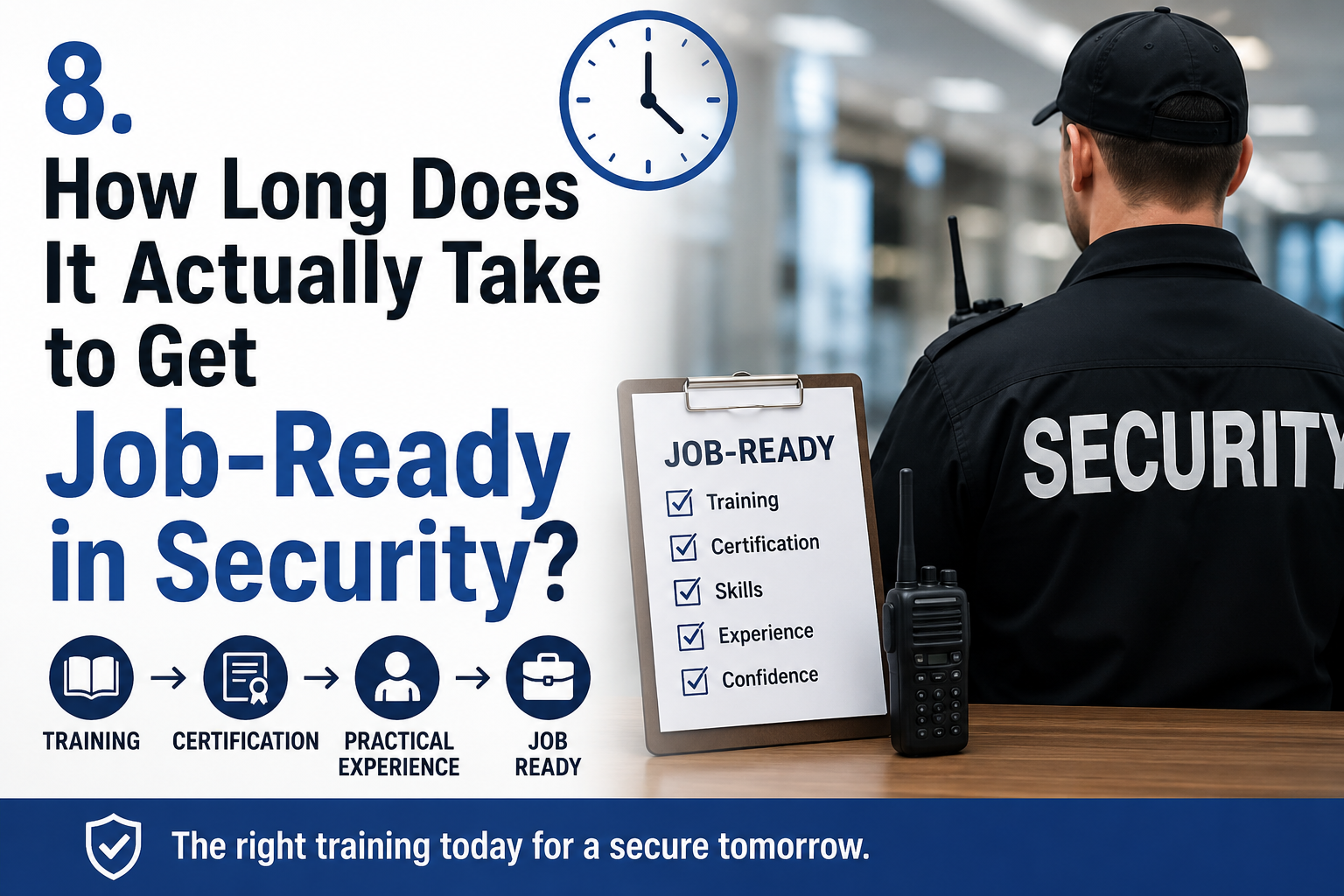
How Long Does It Actually Take to Get Job-Ready in Security?
Starting a career in the security industry is an exciting step for people looking for stable employment and long-term career opportunities. One of the first questions many beginners ask is, “How long does it actually take to become job-ready?” The answer depends on several factors, including the type of security role you want, the training you complete, and how quickly you finish the licensing process.
The good news is that becoming job-ready usually takes much less time than many people expect. With the right preparation and commitment, you can move from complete beginner to a qualified job applicant within a relatively short period.
This article explains each stage of the journey so you know what to expect before starting your security career.
What Does “Job-Ready” Mean?
Being job-ready means you have completed the necessary training, received your licence where required, and developed the basic skills employers expect from a professional security officer.
It also means you understand how to:
- Communicate professionally
- Follow security procedures
- Handle difficult situations calmly
- Protect people and property
- Work safely and responsibly
Being job-ready is about more than simply passing a course. It means you are prepared to perform well in a real working environment.
Step One: Choosing the Right Training Course
Your journey begins by selecting a recognised security training provider.
Before booking a course, take time to compare different providers by looking at:Building Your Confidence Before Your First Job
Starting your first security role can feel exciting and challenging at the same time. Even after completing your training, it is normal to feel nervous about your first shift. Confidence grows with experience, and every day on the job helps you develop new skills.
One of the best ways to prepare is by learning about the company you are applying to and understanding the type of security work they provide. Different workplaces have different responsibilities, so researching the role before your interview can make a positive impression.
Finding Your First Security Job
Once you have completed your training and received your licence, you can begin applying for security positions.
Many employers recruit for roles in:
- Retail stores
- Shopping centres
- Office buildings
- Hotels
- Hospitals
- Warehouses
- Construction sites
- Residential properties
- Sporting events
- Concerts and festivals
Entry-level positions are an excellent way to gain practical experience and build your confidence.
Preparing for Interviews
A successful interview is about more than showing your qualification. Employers also want to know that you are reliable, professional, and able to communicate effectively.
Before attending an interview:
- Dress smartly.
- Arrive on time.
- Bring any required documents.
- Learn about the company.
- Prepare answers for common interview questions.
- Speak clearly and confidently.
Showing enthusiasm and a willingness to learn can leave a strong impression on employers.
Continuing to Learn
Becoming job-ready does not mean your learning has finished. The security industry changes over time, and continuing to improve your skills will help you progress.
You can increase your knowledge by:
- Attending refresher training
- Learning new security procedures
- Improving customer service skills
- Developing leadership abilities
- Gaining experience in different environments
Continuous learning makes you a stronger candidate for future promotions.
Career Progression
Many people begin in entry-level security positions before moving into more senior roles.
With experience, you may progress to positions such as:
- Security Team Leader
- Security Supervisor
- CCTV Operator
- Mobile Patrol Officer
- Corporate Security Officer
- Security Manager
- Operations Manager
Building experience and maintaining a professional attitude can create many long-term career opportunities.
Tips for Starting Strong
Your first few months are important because they help establish your professional reputation.
Remember to:
- Be punctual every day.
- Follow company procedures.
- Stay alert throughout your shift.
- Communicate respectfully with colleagues and visitors.
- Report incidents accurately.
- Continue developing your skills.
- Ask questions if you are unsure about anything.
Small habits like these can make a big difference in your career.
Frequently Asked Questions
1. How quickly can I become job-ready?
Many people become job-ready within a few weeks after completing their training and receiving their licence.
2. Do I need previous experience?
No. Many security officers begin their careers with no previous experience.
3. Can I apply for jobs before receiving my licence?
You can prepare your CV and search for vacancies, but most employers require a valid licence before you start work.
4. What skills do employers value most?
Communication, reliability, observation, customer service, and professionalism are highly valued.
5. What if I fail an assessment?
Most training providers offer opportunities to retake assessments if necessary.
6. Is security a good long-term career?
Yes. Many people enjoy stable employment and progress into supervisory or management roles.
7. Can I work in different industries?
Yes. Security officers work in retail, healthcare, hospitality, construction, events, transport, and many other sectors.
8. How can I improve my chances of getting hired?
Complete your training successfully, prepare a professional CV, practise interview skills, and apply for suitable roles as soon as your licence is issued.
9. Should I continue learning after getting a job?
Yes. Ongoing learning helps you improve your skills and increases your opportunities for promotion.
10. Is becoming job-ready worth the effort?
Absolutely. With the right training, preparation, and commitment, you can begin a rewarding career with opportunities for long-term growth.
Conclusion
Becoming job-ready in the security industry is often faster than many people expect. By completing your training, passing the required assessments, obtaining your licence, and preparing for interviews, you can position yourself for success in a relatively short time.
The journey does not end once you find your first job. Continuing to develop your skills, maintaining a professional attitude, and gaining practical experience will help you build a successful and rewarding career in the security industry. Every step you take today brings you closer to long-term career opportunities and personal growth.
- Course content
- Trainer experience
- Student reviews
- Class schedules
- Location
- What is included in the course fee
Choosing a reputable provider gives you a strong foundation and helps prepare you for your future career.
Step Two: Completing Your Training
Training is one of the most important parts of becoming job-ready. During your course, you will learn both theoretical knowledge and practical skills.
Topics often include:
- Roles and responsibilities
- Customer service
- Health and safety
- Emergency procedures
- Conflict management
- Communication skills
- Professional behaviour
- Legal responsibilities
Some courses also include practical exercises that help learners apply their knowledge in realistic situations.
Attending every lesson and participating fully will help you gain confidence before entering the workplace.
Step Three: Passing Your Assessments
At the end of your training, you will normally complete assessments to demonstrate your understanding of the course material.
The assessments are designed to confirm that learners understand important topics such as:
- Security procedures
- Workplace safety
- Communication
- Professional standards
- Responding to incidents
Preparing by reviewing your notes and participating during the course usually gives you a good chance of success.
Step Four: Applying for Your Licence
Once you have completed your training successfully, the next step is applying for your security licence if your chosen role requires one.
The application process usually involves:
- Completing an application
- Confirming your identity
- Providing supporting documents
- Undergoing background checks
Processing times may vary, so applying as soon as possible after training helps avoid unnecessary delays.
Step Five: Preparing for Employment
While waiting for your licence, you can begin preparing for job applications.
Useful activities include:
- Creating a professional CV
- Collecting references
- Practising interview questions
- Researching local employers
- Learning more about different security roles
Using this time wisely can help you start your job search immediately after receiving your licence.
Skills Employers Want
Employers look for more than qualifications. They also value candidates with strong personal and professional skills.
Important qualities include:
Good Communication
Security officers speak with customers, staff, visitors, and emergency services every day. Clear communication helps prevent misunderstandings and resolve situations calmly.
Professional Appearance
A neat appearance creates a positive first impression and reflects professionalism.
Reliability
Employers need security staff who arrive on time, follow instructions, and can be trusted to carry out their responsibilities.
Observation Skills
Being alert and paying attention to your surroundings helps identify potential risks before they become serious problems.
Calm Decision-Making
Security officers sometimes deal with stressful situations. Remaining calm and making sensible decisions is an important part of the role.
Common Reasons for Delays
Although many learners become job-ready quickly, some people experience delays.
Common reasons include:
- Missing training sessions
- Delaying the licence application
- Providing incorrect documents
- Failing assessments
- Waiting too long to prepare a CV
Planning ahead helps keep your journey on schedule.
How You Can Become Job-Ready Faster
There are several ways to speed up the process without reducing the quality of your preparation.
These include:
- Booking your training early.
- Attending every class.
- Revising your notes regularly.
- Preparing your identification documents in advance.
- Applying for your licence immediately after passing your assessments.
- Creating your CV before your licence arrives.
Taking these simple steps can save valuable time and help you begin applying for jobs sooner.