Accidents do not wait for a good time. A colleague faints on a busy Tube commute. A customer chokes in a café. A builder slips on a site in Croydon. In the first few minutes, the person who knows what to do can change the outcome. That is why so many people ask the same question: who actually needs an Emergency First Aid at Work certificate in London?
The short answer is this. Any workplace that has been assessed as low risk, and that needs a trained first aider, will usually need someone with an Emergency First Aid at Work (EFAW) certificate. But the full answer depends on your business, your staff numbers and your risks. This guide explains it in plain English, so you can decide with confidence. If you are ready to book, you can find an Emergency First Aid at Work course in London at the end of this article.
What Is an Emergency First Aid at Work Certificate?
Emergency First Aid at Work is a one-day training course. It lasts around six hours. It teaches people how to give safe, quick help when someone is injured or suddenly ill at work.
The certificate is valid for three years. After that, you need to retake the course to stay qualified. Many training providers in London offer the course in classrooms, at your office, or at a venue near you.
The course is for people who will act as first aiders in low-risk workplaces. It is shorter and simpler than the three-day First Aid at Work (FAW) course. Both are recognised by the Health and Safety Executive (HSE) when taken from a good, regulated provider.
The Legal Rule Behind First Aid at Work
In the UK, the Health and Safety (First-Aid) Regulations 1981 say that employers must provide adequate and appropriate first aid. This means three things:
- Enough equipment, such as a stocked first aid box.
- Enough facilities, where the job needs them.
- Enough trained people to give first aid.
The law does not tell you exactly how many first aiders to have. Instead, you must do a first aid needs assessment. You look at your workplace, your people and your risks. Then you decide what is right for you.
This rule applies to every employer in London, from a small start-up in Shoreditch to a large company in Canary Wharf. If you employ people, you have a duty to look after them if they get hurt or fall ill at work.
So, Who Needs an Emergency First Aid at Work Certificate?
Let us go through the groups of people and businesses that most often need this certificate.
1. Low-risk offices and small businesses
If you run an office, a studio, a small shop or a consultancy, your work is probably low risk. HSE guidance says that in a small, low-risk business with fewer than 25 employees, you may only need an appointed person. An appointed person takes charge in an emergency and calls an ambulance. They do not need a full certificate.
However, many employers choose to train someone to EFAW level. Why? Because an appointed person cannot give first aid treatment unless they have been trained. An EFAW-trained first aider can do CPR, help a choking person and control bleeding. That is real, life-saving value for a small cost.
If you have 25 to 50 employees in a low-risk workplace, HSE suggests at least one first aider trained in EFAW. So many mid-sized London offices need this certificate by default.
2. Shops, cafés, restaurants and hospitality
London has thousands of shops, restaurants, pubs and hotels. Staff deal with hot liquids, knives, wet floors and heavy lifting. Customers can also become ill on your premises. Choking, burns, cuts and fainting are all common.
Most of these businesses are classed as lower risk, so EFAW is often the right level. Some larger venues may need a higher level, depending on the assessment.
3. Construction and trades
Building sites carry higher risks. Falls, cuts, crush injuries and electric shocks can happen. For many sites, HSE recommends the three-day First Aid at Work course.
But there are cases where EFAW is enough. A small team doing light work, a site office, or a trade business with very low risk activity may meet the need with EFAW. Your needs assessment will guide you. Many site managers also keep EFAW-trained staff in addition to full FAW first aiders, so there is always cover.
4. Warehouses, factories and logistics
London has many distribution centres and light industrial units. These have moving vehicles, forklifts and manual handling tasks. Most need FAW-trained staff. Yet EFAW is often useful for supervisors, drivers or extra staff who help cover shifts and holidays.
5. Schools, colleges and childcare settings
Schools and colleges often train many staff in EFAW. It gives teachers, teaching assistants and office staff the skills to help in a medical emergency.
A small note for early years settings: nurseries and childminders must follow the Early Years Foundation Stage rules. These require paediatric first aid, which is different. EFAW alone does not meet that requirement. Always check the rules for your type of setting.
6. Gyms, leisure centres and sports clubs
People exercise hard in gyms. Heart problems, sprains, fainting and asthma attacks can happen. Personal trainers, coaches and fitness staff often hold EFAW or a higher qualification. Many insurers also ask for a valid first aid certificate. It is worth checking your policy.
7. Care homes, clinics and health support roles
Health and social care staff are often trained in first aid as part of their jobs. Even so, support staff, receptionists, drivers and volunteers may need EFAW so that more people on site can respond quickly.
8. Charities, community groups and volunteers
Charities across London run events, shelters, youth clubs and food banks. If you are an employer, the duty applies to your paid staff. For volunteers, the law is less clear, but the HSE strongly encourages you to include them in your first aid planning. An EFAW-trained volunteer can make a real difference at a busy event.
9. Self-employed people and freelancers
The law does not require self-employed people to hold a certificate for themselves. But many clients, councils and venues ask contractors to prove they can handle an emergency. Photographers, event staff, tradespeople, tutors and drivers often take EFAW to win work and stay safe.
10. Remote and hybrid teams
With so many people working from home or in shared spaces, some employers ask where first aid fits in. Your duty applies to people while they are at your workplace. For hybrid teams, you should have first aiders on the days when people are in the office. Think about rotas, holidays and sickness so you are never left without cover.
When EFAW Is Not Enough
EFAW is not the right choice for every workplace. You may need the full First Aid at Work course if:
- Your business has hazards such as heavy machinery, dangerous tools or chemicals.
- You have more than 50 employees. HSE suggests at least one first aider for every 50 people, and more if the risk is high.
- Your site is large, spread across several floors or buildings, or has shift work.
- Your previous accident records show a pattern of serious injuries.
If you are not sure, do a needs assessment first. It takes less time than you think, and it puts your decision on firm ground.
How Many First Aiders Does Your London Workplace Need?
Here is a simple guide based on HSE advice for low-risk workplaces:
- Fewer than 25 employees: at least one appointed person. An EFAW first aider is a smart upgrade.
- 25 to 50 employees: at least one first aider trained in EFAW or FAW.
- More than 50 employees: at least one first aider for every 50 people, trained in FAW or EFAW depending on the risk.
Remember to plan for absence. People take holidays, fall sick and leave. Many London businesses train one extra person so there is always cover. Also think about night shifts, weekends and multi-site working.
What Will You Learn on the Course?
The EFAW course is practical and friendly. You do not need any previous knowledge. You will learn:
- The role and responsibilities of a first aider.
- How to check a casualty and manage an incident safely.
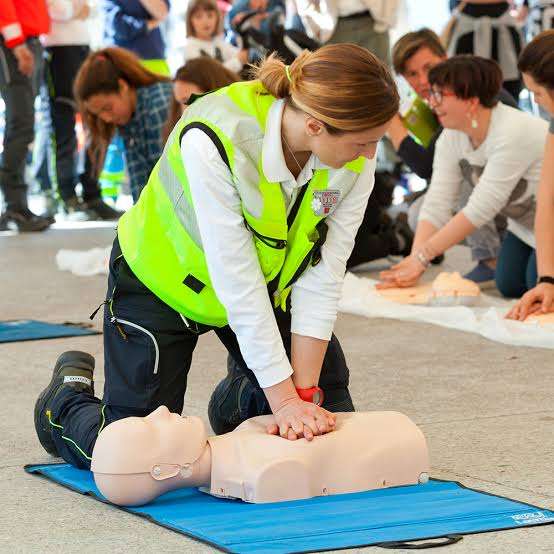
- How to do CPR on an adult, and how to use an automated external defibrillator (AED).
- How to help someone who is unresponsive and breathing.
- How to help someone who is choking.
- How to control bleeding and treat minor wounds.
- How to spot and manage shock.
- How to treat minor injuries such as small burns, cuts and grazes.
Most trainers use real equipment, practice dummies and role-play. This helps you remember what to do under pressure.
Why the Certificate Matters Especially in London
London is busy, crowded and fast-moving. Workplaces are packed together, many people travel long distances, and ambulances can sometimes take time to reach a patient in heavy traffic. In those first minutes, a trained colleague can keep someone safe until paramedics arrive.
There are also practical benefits for your business:
- Legal peace of mind: you can show you have met your duty of care.
- Insurance: some insurers expect a certified first aider on site.
- Staff confidence: people feel safer when they know help is nearby.
- Fewer lost days: quick, correct first aid can stop a small injury from becoming a big one.
- Better reputation: clients and visitors notice workplaces that take safety seriously.
How to Choose a Good First Aid Course in London
Not all courses are equal. Before you book, check these points:
- Regulated qualification. Look for a Level 3 Award that is regulated, such as one from a recognised awarding body.
- Experienced trainers. Good trainers have real-world emergency or medical experience.
- Clear course content. The provider should list what is covered and how long the course runs.
- Flexible options. Public courses, on-site training for your team and different dates make life easier.
- Practical learning. You should have hands-on practice, not just slides.
- Clear certificate and support. You should receive your certificate promptly and know when it expires.
If you want a straightforward option, take a look at this Emergency First Aid at Work course in London. You can check the course details and choose what suits your team.
Keeping Your Certificate Valid
Your EFAW certificate lasts three years. Put the expiry date in your diary and plan a renewal at least a couple of months early, so you do not lose cover. HSE also recommends that first aiders take a short refresher each year. This keeps skills like CPR fresh and helps you feel more confident.
If your certificate runs out, you will need to take the full course again. Some employers keep a simple spreadsheet showing who is trained, when their certificates end and who is next in line.
A Quick Checklist for Employers
Before you book, ask yourself:
- Have I done a first aid needs assessment?
- Do I know how many first aiders my workplace needs?
- Is my workplace low risk, or do I need the three-day course?
- Do I have cover for holidays, sickness and shifts?
- Is my first aid box stocked and easy to find?
- Do all staff know who the first aiders are?
If you answered no to any of these, now is a good time to act.
Final Thoughts
So, who needs an Emergency First Aid at Work certificate in London? Most low-risk workplaces with a trained first aider, many small and medium businesses, schools, shops, gyms, charities, and anyone who wants to be ready to help. The rules depend on your size and risk, but the benefit is the same for everyone: confidence, safety and the ability to act when it matters.
If you are ready to take the next step, explore this Emergency First Aid at Work course in London and give your team the skills to respond to an emergency.
Frequently Asked Questions
1. What is an Emergency First Aid at Work certificate?
It is a one-day, regulated first aid qualification of around six hours. It teaches you how to deal with common workplace emergencies, such as cardiac arrest, choking, bleeding and unresponsive casualties. It is valid for three years.
2. Is an Emergency First Aid at Work certificate a legal requirement in London?
The law requires employers to provide adequate and appropriate first aid. It does not name a specific certificate. But for many low-risk workplaces, an EFAW-trained first aider is the most common way to meet that rule.
3. How long does an Emergency First Aid at Work certificate last?
Three years from the date of the course. HSE recommends an annual refresher, but it is not compulsory. Once the three years end, you must retake the course to remain qualified.
4. How many hours is the Emergency First Aid at Work course?
The course usually takes one day, which is about six hours of training. Some providers may arrange the time slightly differently, so check the schedule before you book.
5. What is the difference between EFAW and First Aid at Work (FAW)?
EFAW is a one-day course for low-risk workplaces. FAW is a three-day course that covers more topics, such as managing injuries, illnesses and chronic conditions. Higher-risk or larger workplaces usually need FAW.
6. Do small businesses in London need a first aider?
Every employer needs to provide first aid. A very small, low-risk business may only need an appointed person. But training someone to EFAW level is a safer choice, as they can give hands-on first aid.
7. How many first aiders do I need for my workplace?
For low-risk workplaces, HSE suggests at least one appointed person if you have fewer than 25 staff. For 25 to 50 staff, at least one EFAW or FAW first aider. For over 50, one first aider per 50 employees. Higher-risk sites need more.
8. Can I take the Emergency First Aid at Work course if I have no experience?
Yes. The course is made for beginners. You do not need any medical background. The trainer explains each skill step by step and lets you practise with equipment.
9. Does EFAW cover CPR and defibrillator use?
Yes. The course teaches adult CPR and how to use an automated external defibrillator (AED). These are among the most important skills, because fast action can save a life.
10. Are self-employed people required to hold a first aid certificate?
There is no legal duty for self-employed people to hold a certificate for themselves. But many clients and venues ask for one, and the skills may protect you and the people you work with. It is a smart, low-cost investment.