New Regulations Every Trainee Should Be Aware Of
Starting a career in the private security industry is an exciting opportunity, but it also comes with important responsibilities. The Security Industry Authority (SIA) regularly updates its rules and training standards to make sure security professionals are prepared for modern challenges. Whether you are applying for your first licence or planning to begin a door supervisor course in London, understanding the latest regulations will help you start your career on the right path.
New regulations are designed to improve public safety, raise professional standards, and ensure that everyone working in the security industry has the skills and knowledge needed to perform their duties effectively. Knowing these requirements before you begin your training can save time, prevent delays, and help you succeed throughout your career. Current SIA guidance continues to emphasise updated training standards, licensing requirements, and stronger regulation across the private security sector.
Why Regulations Continue to Change
The role of a door supervisor has expanded over the years. Today’s security professionals do much more than control access to venues. They are expected to:
- Protect members of the public.
- Prevent conflicts.
- Respond to emergencies.
- Support vulnerable people.
- Follow legal procedures.
- Work alongside emergency services.
- Represent businesses professionally.
As these responsibilities grow, the regulations must also evolve to ensure every licensed professional is properly trained.
Updated SIA Training Standards
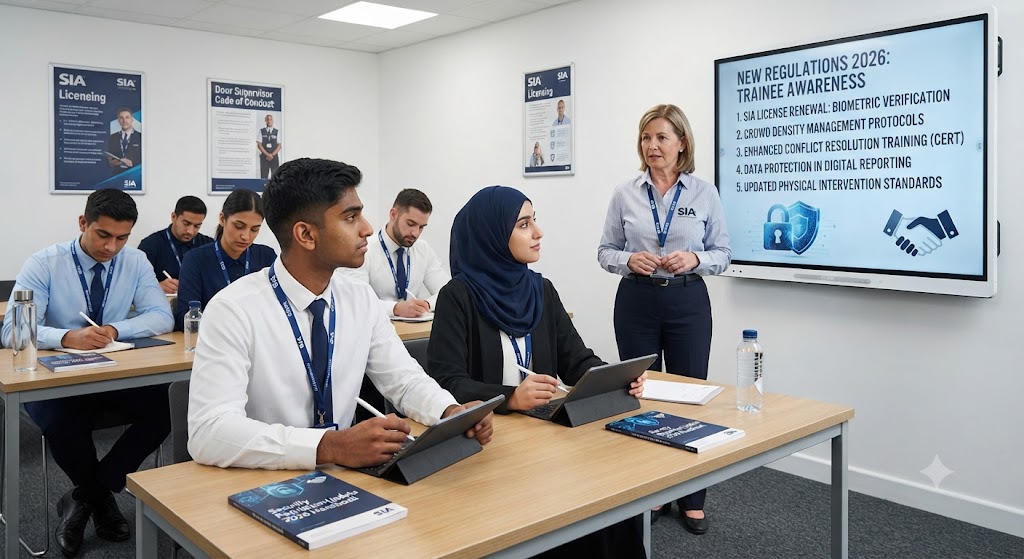
Anyone taking a door supervisor course in London must complete training that meets the latest SIA qualification requirements.
The updated training focuses on practical skills as well as theoretical knowledge. Instead of simply learning information for an exam, trainees now develop the confidence to handle real-life situations.
Training includes:
- Conflict management
- Customer service
- Physical intervention
- Searching procedures
- Emergency response
- Incident reporting
- Public safety
- Professional behaviour
These topics prepare learners for the challenges they may face every day.
First Aid Qualification Before Training
One regulation that every trainee should know is the first aid requirement.
Before beginning the Door Supervisor qualification, learners must normally hold a recognised Emergency First Aid at Work certificate or an accepted equivalent.
This ensures every future licence holder understands basic emergency care before entering the workplace.
Refresher Training for Licence Renewals
Training does not end after receiving your licence.
Door Supervisors renewing their licence are required to complete refresher training where applicable. This helps existing licence holders stay updated with changes in legislation, safety procedures, and industry best practices.
Greater Focus on Public Safety
Public safety is now at the centre of every door supervisor course in London.
Training helps learners understand how to:
- Protect customers.
- Reduce risks.
- Manage crowds safely.
- Respond during emergencies.
- Support emergency services.
- Keep public spaces secure.
These skills are essential in busy locations across London.
Better Conflict Management Skills
Conflict is one of the most common situations faced by security professionals.
The latest regulations encourage trainees to resolve problems through communication whenever possible.
Learners practise:
Recognising Early Warning Signs
Students learn how to identify behaviour that could become aggressive before it develops into violence.
Professional Communication
Good communication often prevents problems from becoming serious.
Training focuses on:
- Active listening
- Calm speaking
- Respectful behaviour
- Clear instructions
De-escalation Techniques
Instead of relying on force, trainees learn how to calm difficult situations through professional communication.
Updated Physical Intervention Training
Physical intervention remains an important part of security work, but regulations place strong emphasis on safety.
Training now covers:
- Safe restraint methods
- Legal responsibilities
- Risk assessment
- Teamwork
- Protecting vulnerable people
- Reducing injuries
Force should only ever be used when necessary and legally justified.
New Expectations for Customer Service
Modern security professionals are expected to provide excellent customer service as well as security.
Trainees learn how to:
- Welcome visitors politely.
- Handle complaints professionally.
- Remain calm under pressure.
- Build positive relationships.
- Represent employers positively.
Excellent customer service improves both safety and customer satisfaction.
Mental Health Awareness
The latest training regulations recognise that security professionals often interact with individuals experiencing mental health difficulties.
Trainees learn how to:
- Remain patient.
- Communicate respectfully.
- Recognise signs of distress.
- Avoid unnecessary confrontation.
- Seek additional support when required.
These skills help create safer outcomes for everyone involved.
Protecting Vulnerable People
Door supervisors regularly assist people who may need additional support.
Training now includes guidance on helping:
- Elderly individuals.
- People with disabilities.
- Young adults.
- Intoxicated customers.
- Individuals experiencing emotional distress.
Understanding vulnerability helps security professionals make better decisions.
Professional Searching Procedures
Many security roles require searching people or belongings.
Current regulations require searches to be carried out professionally, respectfully, and lawfully.
Training covers:
- Obtaining consent.
- Respecting privacy.
- Communicating clearly.
- Recording search outcomes.
- Identifying prohibited items.
Professional searching protects both the public and security staff.
Better Incident Reporting
Every trainee should understand the importance of accurate documentation.
Incident reports should be:
- Clear.
- Honest.
- Factual.
- Well organised.
- Completed promptly.
Good reports support employers, police investigations, and legal proceedings when necessary.
Greater Legal Awareness
Understanding the law is an important part of becoming a professional Door Supervisor.
Training covers:
- Criminal law.
- Civil law.
- Human rights.
- Equality legislation.
- Data protection.
- Licensing requirements.
- Reasonable use of force.
Knowing the law helps security professionals perform their duties with confidence.
Counter-Terrorism Awareness
Security professionals working in busy public places must remain alert to potential threats.
The latest regulations include increased awareness of:
- Suspicious behaviour.
- Suspicious items.
- Public safety risks.
- Emergency reporting procedures.
Although most days are routine, understanding these responsibilities improves overall public protection.
Practical Assessments
Modern qualifications place greater emphasis on practical ability.
Instead of relying only on written examinations, trainees complete:
- Multiple-choice exams.
- Practical demonstrations.
- Scenario-based exercises.
- Physical intervention assessments.
- Trainer observations.
These assessments better reflect real working environments.
Digital Licence Applications
Most licence applications are now completed through the SIA’s online services.
Applicants should:
- Create an online account.
- Keep personal information updated.
- Monitor licence expiry dates.
- Apply early when renewing.
Using online services helps speed up the licensing process.
Importance of Choosing an Approved Training Provider
Not every training provider offers the same learning experience.
When selecting a door supervisor course in London, choose a provider that offers:
- Qualified instructors.
- Current SIA-approved qualifications.
- Practical learning sessions.
- Flexible training schedules.
- Student support.
- Positive learner reviews.
Quality training helps learners gain both the qualification and the confidence needed to succeed.
Common Mistakes New Trainees Should Avoid
Many learners experience unnecessary delays because they overlook important requirements.
Avoid these common mistakes:
- Waiting until the last minute to book training.
- Forgetting to obtain a valid first aid certificate.
- Bringing incorrect identification documents.
- Missing practical training sessions.
- Not reviewing course materials before assessments.
Preparing properly makes the learning experience much smoother.
How These Regulations Improve Your Career
Although the updated regulations require more preparation, they provide significant long-term benefits.
Completing a modern door supervisor course in London helps you:
- Develop practical workplace skills.
- Improve communication.
- Build professional confidence.
- Increase employability.
- Meet current licensing standards.
- Prepare for real-world security situations.
Employers value candidates who understand current regulations and demonstrate professionalism from day one.
Why Train with BeTrain?
Choosing the right training provider is one of the most important decisions you will make.
BeTrain offers high-quality Door Supervisor training that follows the latest SIA requirements. Learners benefit from experienced instructors, practical learning, supportive guidance, and up-to-date course content designed to prepare them for success in London’s competitive security industry.
Whether you are starting your first security role or planning a long-term career, quality training provides the foundation for future success.
Conclusion
Understanding the latest regulations before starting your door supervisor course in London gives you a clear advantage. From first aid requirements and refresher training to practical assessments, customer service, conflict management, legal responsibilities, and public safety, every regulation has been introduced to create better-trained and more professional security personnel.
By choosing a trusted training provider such as BeTrain, staying informed about current SIA requirements, and taking your training seriously, you will be well prepared to obtain your licence and begin a successful career in the private security industry.