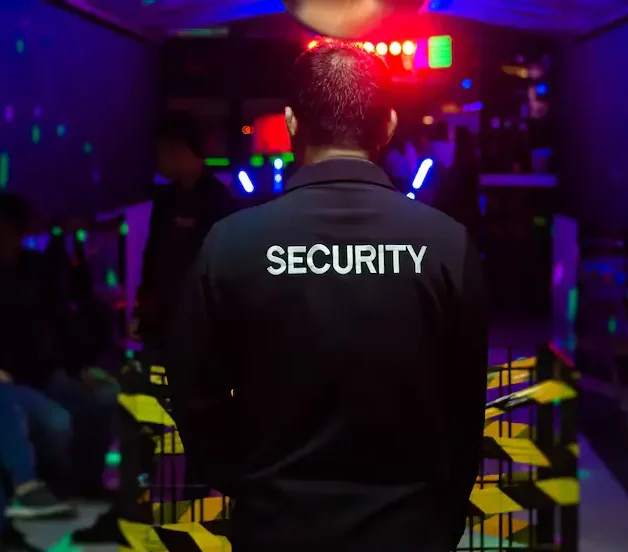
If you are looking to enter one of London’s most essential and dynamic professions, becoming a licensed door supervisor is an excellent choice. As a key part of the city’s nightlife, retail, and event management sectors, door supervisors play a critical role in maintaining public safety and ensuring that venues operate smoothly and legally.
With the security industry in London constantly evolving—particularly with new regulations coming into effect throughout 2026—the path to getting your Security Industry Authority (SIA) licence has become more structured and skills-focused than ever before. This guide will walk you through everything you need to know, from the mandatory prerequisites and the course syllabus to the essential soft skills that will help you excel in your career.
1. Understanding the Role of a Door Supervisor
Many people often ask: What is the difference between a Door Supervisor and a Security Guard? It is a simple but important distinction. While a Security Guard licence restricts you to roles like static guarding or retail security, a Door Supervisor licence is more versatile. It qualifies you to work in licensed premises like pubs, clubs, and bars, as well as all the roles a standard security guard can perform. Because of this, most employers prefer candidates who hold the Door Supervisor qualification.
As a door supervisor in a city as diverse and fast-paced as London, your responsibilities go beyond just standing at a door. You are a:
- Customer Service Representative: Often the first person a patron meets.
- Conflict Manager: Trained to de-escalate tensions before they turn into violence.
- First Responder: Trained to provide immediate care during medical emergencies.
- Safety Official: Responsible for monitoring crowd density, fire safety, and potential terror threats.
2. Mandatory Prerequisites: What You Must Do First
Before you can sit for your final door supervisor exams, you must meet several regulatory requirements. The most significant change in recent years is that first aid is now a mandatory prerequisite.
The Emergency First Aid at Work (EFAW) Requirement
Since 2021, you cannot be registered for your door supervisor training or exams unless you hold a valid Emergency First Aid at Work (EFAW) certificate (or a higher-level equivalent).
- Why it matters: You are often the “first line of response” when a medical emergency happens. Whether it is an injury, an asthma attack, or a cardiac arrest, your ability to perform CPR or manage bleeding can save lives while waiting for ambulances to arrive.
- Validity: Ensure your certificate is from a regulated, face-to-face training provider and has at least 12 months of validity remaining on the first day of your course.
- Strategic Tip: Many training providers in London offer “bundled” courses where you can complete your EFAW training and your Door Supervisor course as a single, integrated package. This is often more cost-effective and saves you the administrative headache of finding two separate providers.
3. The 2026 Door Supervisor Syllabus
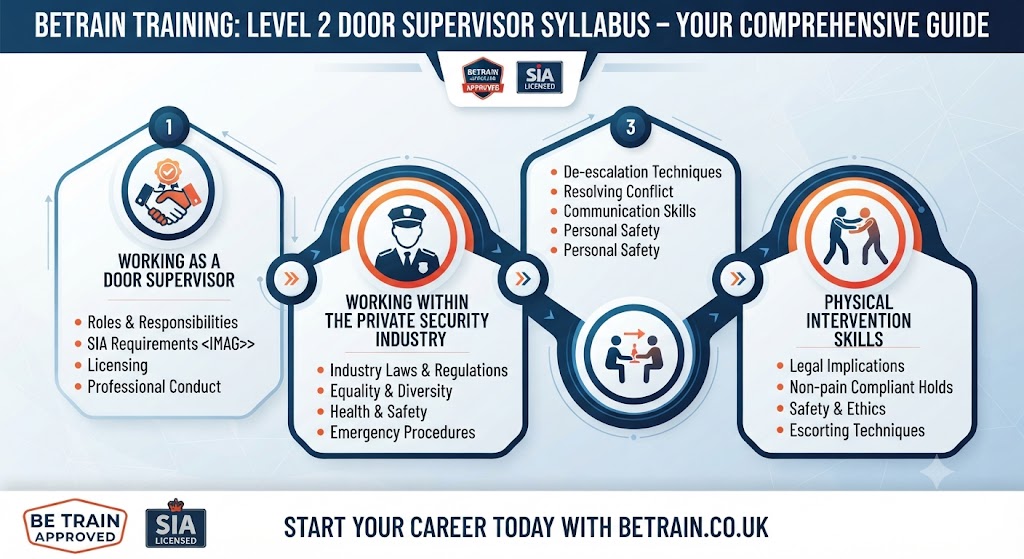
The Level 2 Award for Working as a Door Supervisor is typically delivered over a six-day, intensive program. The course is divided into four main units, designed to build your knowledge from foundational legal concepts to complex physical interventions.
Unit 1: Working in the Private Security Industry
This unit provides the legal and professional foundation for your career.
- Legal Aspects: You will cover the difference between civil and criminal law and understand the limits of your authority as a security operative.
- Health, Safety, and Fire: Crucial for venue safety, this includes identifying hazards and knowing how to conduct emergency evacuations.
- Counter-Terrorism (Martyn’s Law): With new legislation focusing on venue safety, you will learn how to identify suspicious behavior and assist in terror-preparedness plans.
- Communication Skills: Developing the ability to speak clearly and professionally with patrons, colleagues, and emergency services.
Unit 2: Working as a Door Supervisor
This is where the training becomes specific to your environment.
- Licensing Law: Essential for anyone working in a venue that serves alcohol.
- Searching Techniques: You will learn how to conduct searches of individuals and bags that are both effective and respectful of personal rights.
- Drug Awareness: How to identify substance use, manage suspected drug possession, and follow reporting procedures.
- Crime Scene Preservation: You will learn how to secure a scene, log incidents correctly, and ensure evidence is ready for the police.
Unit 3: Conflict Management for the Private Security Industry
Conflict management is widely considered the most “valuable” skill for long-term career success.
- De-escalation: Moving beyond “toughness,” you will learn the psychology of aggression and how to use calm, non-verbal cues to defuse situations.
- Verbal Skills: Learning how to use short, simple sentences and active listening to help patrons feel heard, which often prevents situations from turning physical.
- Risk Assessment: Recognizing the “triggers” of conflict and knowing when to disengage or request backup.
Unit 4: Physical Intervention Skills
The final unit focuses on the legal and physical application of force.
- The Law of Force: Understanding that any physical intervention must be “lawful, necessary, and proportionate”.
- Safety-First Techniques: The SIA emphasizes that physical contact should always be the absolute last resort. You will learn safe, non-pain-compliant techniques for guiding, holding, and escorting individuals.
4. How to Pass the First Time
The door supervisor exams are rigorous, but they are designed to be passed if you prepare correctly. With the 2026 shift toward more practical, scenario-based assessments, memorization alone is no longer enough.
- Active Recall: Don’t just read your notes. Close the book and try to explain concepts like “the law of arrest” or “the stages of conflict” in your own words.
- Scenario-Based Thinking: The exams will present you with “What would you do?” situations. When practicing, always ask: Is this action lawful? Is it proportionate? Does it follow venue policy?.
- Mock Tests: Utilize free online mock exams to get used to the timing and phrasing of the questions.
- Physical Preparation: The physical intervention sessions are tiring. Come ready to move, listen closely to the instructors, and focus on safety rather than “winning” a physical struggle.
5. Navigating the 2026 Industry Landscape
The security industry in London is currently undergoing a period of modernization.
The Rise of Technology and Social Media
Modern door supervisors are increasingly dealing with “social media auditors”—individuals who film staff to test their reactions. The new training modules address this head-on, teaching you how to remain professional, understand your legal rights regarding filming in public, and maintain your composure under the lens of a camera. Furthermore, you will likely encounter more digital reporting apps and body-worn camera systems, making “tech-savviness” a valuable asset on your CV.
Career Progression
One of the best things about obtaining your Door Supervisor licence is that it opens the door to higher-paying or more specialized roles. Once you have experience, you can pursue:
- CCTV Operations: Managing surveillance systems in central control rooms.
- Close Protection: For those seeking higher-level, high-risk security roles.
- Security Management: Moving into supervisor or site-management roles where you oversee teams rather than just working the door.
6. Important Reminders for Your Application
After passing your exams, you must apply for your official SIA licence through the government portal.
- Identity Checks: Be prepared to provide a valid, in-date passport or driving licence and proof of address. The SIA is strict with these, and missing documents can cause significant delays in your application.
- Stay Informed: Because the industry is changing so quickly in 2026, keep an eye on the official GOV.UK SIA guidance page to ensure you are up-to-date with the latest requirements.
Final Thoughts
Working as a door supervisor in London is a challenging but incredibly rewarding profession. You are the face of the venue and a guardian of public safety. By focusing on professional de-escalation, maintaining your first aid skills, and staying adaptable to new technologies, you will not only pass your course with flying colors but also set yourself up for a long, successful career in the security industry.
The industry is currently facing a demand for well-trained, professional operatives. By investing in your training now, you are making yourself a “must-have” candidate for the best venues in the city. Good luck with your studies—your journey into professional security starts here!