Can Non-UK Citizens Train and Work as Supervisors?
The UK security industry attracts people from many different countries. Every year, thousands of international applicants complete security training, obtain an SIA licence, and build successful careers as Security Officers, Door Supervisors, CCTV Operators, and eventually Security Supervisors.
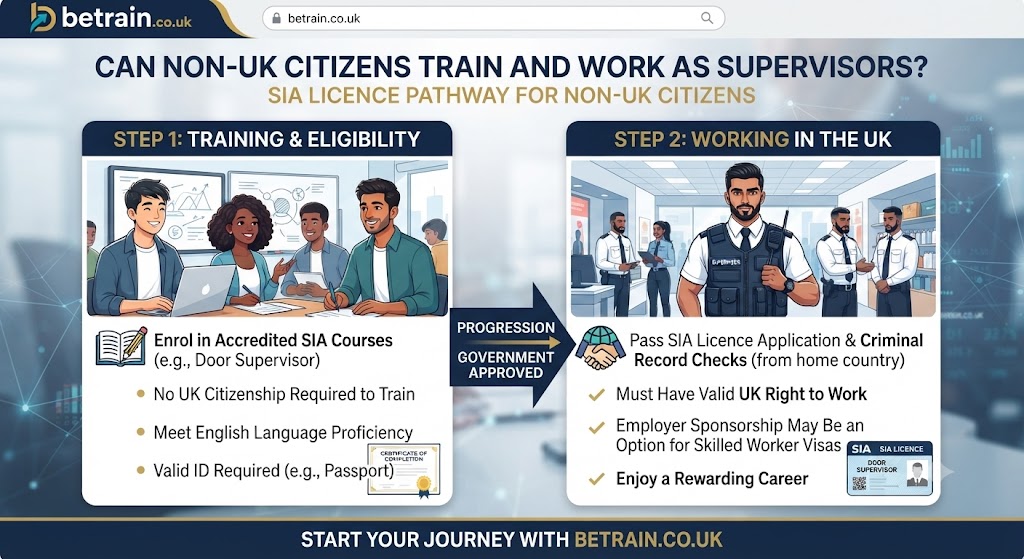
If you are not a UK citizen, you may be wondering whether you are allowed to take security training or work in a supervisory role. The good news is that UK citizenship is not required to become a Security Supervisor. However, you must meet certain legal requirements before you can work in the private security industry.
This guide explains who can apply, what documents you need, the training process, licensing requirements, and how non-UK citizens can build a successful career in security.
Can Non-UK Citizens Work in the UK Security Industry?
Yes. Many people working in the UK security industry are international workers.
You do not have to be a British citizen to work as a Security Supervisor.
However, you must:
- Have the legal right to work in the UK.
- Meet the Security Industry Authority (SIA) licensing requirements.
- Complete an approved security qualification.
- Pass the required identity and background checks.
- Meet the minimum age requirement.
- Demonstrate suitable English language skills for training and the workplace.
Meeting these requirements is far more important than your nationality.
Who Can Apply?
People from many different backgrounds successfully enter the UK security industry.
Applicants may include:
- Permanent UK residents
- Individuals with Indefinite Leave to Remain (ILR)
- People with valid work visas
- Refugees with permission to work
- Eligible Commonwealth citizens
- Other non-UK nationals who have legal permission to work in the UK
Before starting your training, always make sure your immigration status allows you to work legally.
The Importance of Right to Work
Employers in the UK must check that every employee has the legal right to work.
You may be asked to provide documents such as:
- Passport
- Biometric Residence Permit (if applicable)
- Visa documentation
- Share Code for online Right to Work checks
- Other Home Office-approved documents
Without legal permission to work, employers cannot hire you, even if you have completed security training.
Can You Take Security Training Before Finding a Job?
Yes.
Many people complete their training before applying for security jobs.
Training providers usually allow eligible learners to enrol if they meet the course entry requirements.
Completing your qualification first can make job searching much easier because employers often prefer applicants who already hold the required licence or are ready to apply for one.
Understanding the SIA Licence
The Security Industry Authority (SIA) regulates the private security industry in the UK.
Most frontline security roles require an SIA licence.
For example:
- Door Supervisor
- Security Guard
- CCTV Operator
- Close Protection
- Vehicle Immobiliser (where applicable)
If you plan to become a Security Supervisor, you will normally begin your career by obtaining the appropriate frontline SIA licence before gaining work experience and progressing into supervisory positions.
Complete the Required Training
Before applying for your licence, you must successfully complete an approved qualification.
Training often covers topics such as:
- Working in the private security industry
- Health and safety
- Customer service
- Conflict management
- Emergency procedures
- Physical intervention
- Communication skills
Choose a reputable training provider that delivers recognised qualifications.
Do You Need Perfect English?
No.
However, you should have a reasonable understanding of spoken and written English.
Security professionals regularly:
- Speak with customers.
- Write incident reports.
- Communicate with emergency services.
- Read workplace instructions.
- Understand safety procedures.
If English is your second language, many providers can advise you about the language level needed before enrolling.
Improving your English skills will also increase your confidence during interviews and at work.
Building Experience
Many non-UK citizens begin with entry-level security positions.
These may include:
- Door Supervisor
- Security Officer
- Retail Security
- Concierge Security
- CCTV Operator
- Event Security
After gaining practical experience, many professionals move into supervisory positions.
How to Become a Security Supervisor
Most Security Supervisors begin by working as frontline security officers.
Typical career progression looks like this:
- Complete an approved security qualification.
- Apply for your SIA licence.
- Find your first security job.
- Gain practical experience.
- Develop leadership skills.
- Take additional training.
- Apply for supervisory positions.
Experience is one of the most important factors employers consider when recruiting supervisors.
Skills Employers Value
Nationality is rarely the deciding factor when hiring.
Employers usually focus on qualities such as:
- Reliability
- Professionalism
- Communication
- Teamwork
- Leadership potential
- Customer service
- Problem-solving
- Time management
- Honesty
- Positive attitude
Demonstrating these skills can significantly improve your career prospects.
Additional Qualifications That Help
As your career develops, additional training can strengthen your CV.
Popular qualifications include:
- CCTV Operations
- Emergency First Aid
- Fire Marshal Training
- Mental Health Awareness
- Customer Service
- Leadership Courses
- Health and Safety
- Risk Assessment
Continuous learning often leads to better job opportunities and promotions.
Finding Your First Job
Once you have your licence, look for vacancies through:
- Security company websites
- Online job boards
- Recruitment agencies
- Employer careers pages
- Recommendations from training providers
Apply to multiple employers rather than waiting for one opportunity.
Interview Tips for International Applicants
During interviews:
- Dress professionally.
- Arrive on time.
- Speak clearly and confidently.
- Highlight your customer service skills.
- Explain your previous work experience.
- Show enthusiasm for learning.
- Demonstrate professionalism.
Employers appreciate applicants who are reliable, respectful, and eager to develop their careers.
Common Challenges
Some non-UK citizens may experience challenges when starting their careers.
Examples include:
- Understanding UK workplace culture.
- Improving English communication.
- Building local work experience.
- Learning company procedures.
- Becoming familiar with UK health and safety standards.
Most of these challenges become much easier with experience and ongoing training.
Career Progression
Once you have gained experience, there are many opportunities to progress.
Possible career paths include:
- Security Supervisor
- Site Supervisor
- Security Manager
- Operations Manager
- CCTV Control Room Manager
- Security Consultant
- Training Instructor
- Regional Security Manager
Many successful managers started as entry-level security officers after moving to the UK.
Benefits of Working in Security
The UK security industry offers many advantages for international workers.
These include:
- Stable employment
- Flexible working hours
- Career progression
- Competitive pay
- Opportunities to specialise
- Professional development
- Leadership opportunities
- Work across different industries
Security experience can also help you develop valuable communication and management skills.
Common Myths
Myth 1: Only UK Citizens Can Become Security Supervisors
False. Non-UK citizens can work in security if they have the legal right to work and meet the SIA licensing requirements.
Myth 2: Employers Only Hire British Workers
False. Many security companies employ people from diverse backgrounds and value skills, professionalism, and experience.
Myth 3: Promotion Is Difficult for International Workers
Not true. Many non-UK professionals progress into supervisory and management positions by gaining experience, demonstrating leadership, and continuing their professional development.
Final Thoughts
Being a non-UK citizen does not prevent you from building a successful career in the UK’s private security industry. As long as you have the legal right to work, complete an approved training course, obtain the appropriate SIA licence, and continue developing your skills, you can work your way from an entry-level position to becoming a Security Supervisor or even a senior manager.
Success in security depends on your professionalism, commitment, communication skills, and willingness to learn—not your nationality. By choosing a reputable training provider, gaining practical experience, and maintaining high standards throughout your career, you can build a rewarding future in one of the UK’s most important and growing industries.