Why Communication Training Is a Bigger Deal Than You Think
In the high-stakes, pressurized world of private security, there is a pervasive and dangerous myth that the job is primarily about physical presence, intimidating posture, or the ability to physically restrain an aggressor. However, the most experienced and successful security professionals understand that this view is fundamentally flawed. In reality, the most effective security operative is not the one who can win a physical fight; it is the one who possesses the sophisticated communication skills to ensure that a physical fight never becomes necessary in the first place. Communication is not merely a “soft skill” or a secondary requirement—it is the primary, most powerful tactical tool in your entire arsenal. It is the bridge between a volatile, chaotic situation and a controlled, peaceful resolution, and it is the single most important factor in determining your professional success, your personal safety, and your longevity in the industry.
Communication as the Ultimate Deterrent
When you are working a “door,” patrolling a busy shopping center, or securing a corporate event, you are constantly engaged in an invisible, high-stakes negotiation. Every single interaction you have is an exercise in influence. When you ask a patron to stop running, to vacate a restricted area, or to provide identification, you are attempting to influence their behavior in real-time.
If your communication is poor, aggressive, or unclear, the patron’s natural human instinct is to resist, defend their ego, or lash out. If your communication is professional, assertive, calm, and respectful, you create a “path of least resistance” that makes it significantly easier for them to comply. Communication training teaches you the fine art of projecting authority without appearing hostile. By mastering your tone, your volume, and your specific word choices, you can command a room without ever needing to raise your voice. This is the hallmark of a master professional; when you speak with calm authority, you are signaling to everyone in the vicinity—the patron, their peers, the witnesses, and potential troublemakers—that you are in complete, calm control of the environment.
The Science and Structure of De-escalation
De-escalation is not just “being nice”; it is the strategic, structured use of language to lower the physiological and emotional “temperature” of a situation. When a person is becoming aggressive, their brain is shifting into a “fight or flight” mode where rational thought, empathy, and social reasoning are significantly diminished. If you respond to this state with aggression, shouting, or sarcasm, you are merely pouring gasoline on the fire.
Communication training provides you with professional frameworks—such as the “Broken Record” technique, “Assertive Questioning,” and “Active Validation”—which allow you to maintain your firm boundaries while providing the aggressor with a “face-saving” way to back down. You learn to avoid inflammatory triggers—like the command “Calm down,” which almost universally makes a person angrier—and instead use phrases that validate their feelings while remaining firm on the venue policy. For instance, shifting from an accusatory “You can’t come in here” to a reasoned “I understand that you want to get in, but I cannot allow entry because the venue is at capacity, and I have a legal obligation to ensure everyone’s safety” provides a logical, non-confrontational reason that makes it much harder for the patron to find a rational basis for argument.
Protecting Yourself Legally and Professionally
The security industry is a heavily documented, highly scrutinized field. Your communication skills extend well beyond your spoken words to the way you construct your post-incident documentation. An incident report is not just a summary of what happened; it is a critical legal document that may be scrutinized in a court of law, in employment tribunals, or in complex insurance claims.
Communication training teaches you how to write reports that are Factual, Objective, and Detailed (the 5Ws: Who, What, Where, When, and Why). You learn to avoid emotional, subjective, or judgmental language—such as calling someone “crazy,” “stupid,” or “nasty”—which can be easily twisted by an opposing lawyer to undermine your credibility. Instead, you learn to describe behavior: “The male was shouting at a volume that disrupted nearby patrons, his eyes were bloodshot, and he was clenching his fists at his sides.” This level of professional, clinical communication acts as your strongest defense. If a complaint is filed against you, your ability to articulate exactly what you said, why you said it, and how the patron reacted is what protects your career and your reputation.
Enhancing Team Synergy and Operational Safety
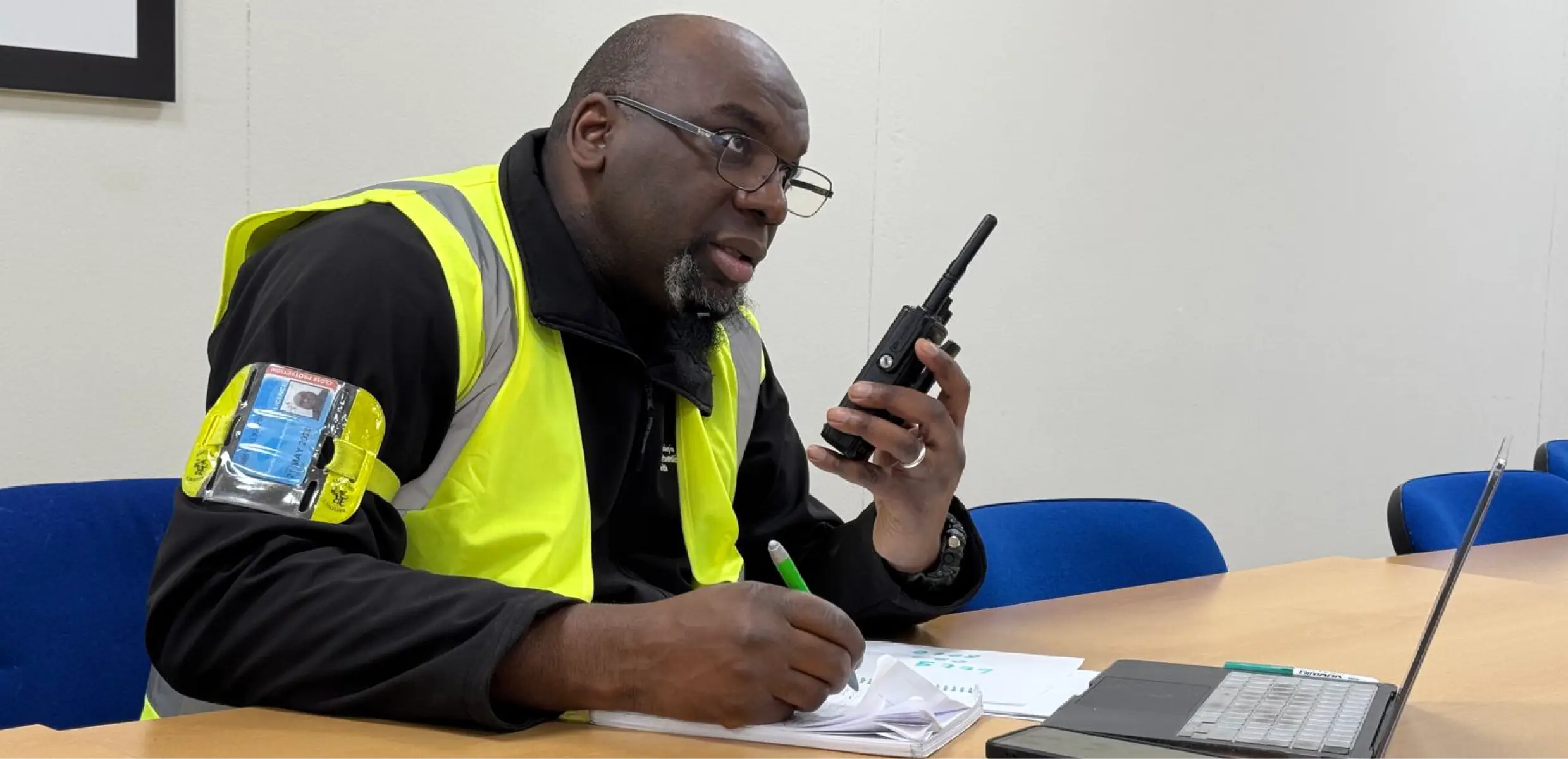
Security is rarely a solo endeavor. Your ability to communicate clearly with your team is a matter of life and safety. During a fast-moving, high-stress emergency, there is absolutely no time for long, rambling explanations. You must be able to use clear, concise, and standard radio protocols. Communication training ensures that when you call for assistance or report a threat, your message is received, understood, and acted upon immediately. Miscommunication on a radio—failing to give a clear location or misstating the nature of a threat—can lead to confusion, delay, and potentially tragic outcomes. By practicing consistent, disciplined radio communication, you are literally protecting the physical safety of your colleagues.
The Gateway to Career Advancement
Finally, communication is the primary skill that distinguishes a standard, entry-level security guard from a high-earning security consultant, regional manager, or site director. If you aspire to move up the career ladder, you must be able to communicate effectively with high-level stakeholders, police officials, local authority licensing officers, and corporate clients. These individuals generally do not care about your ability to physically restrain someone; they care about your ability to solve problems, represent their brand effectively, mitigate their legal liability, and lead a diverse team through a crisis.
By investing in your communication training, you are not just becoming “better at talking.” You are building the professional credibility that makes you truly indispensable. You are learning how to navigate delicate negotiations, manage complex stakeholder relationships, and lead a team with confidence. In the end, the most important and effective piece of equipment you carry is not your radio, your flashlight, or your boots—it is your voice.
Reflecting on your current role, have you identified a specific communication challenge—perhaps dealing with highly intoxicated individuals or reporting complex, multi-layered incidents—that you would like to refine, and what is one specific language-based technique you can start practicing on your next shift to better manage those interactions?